
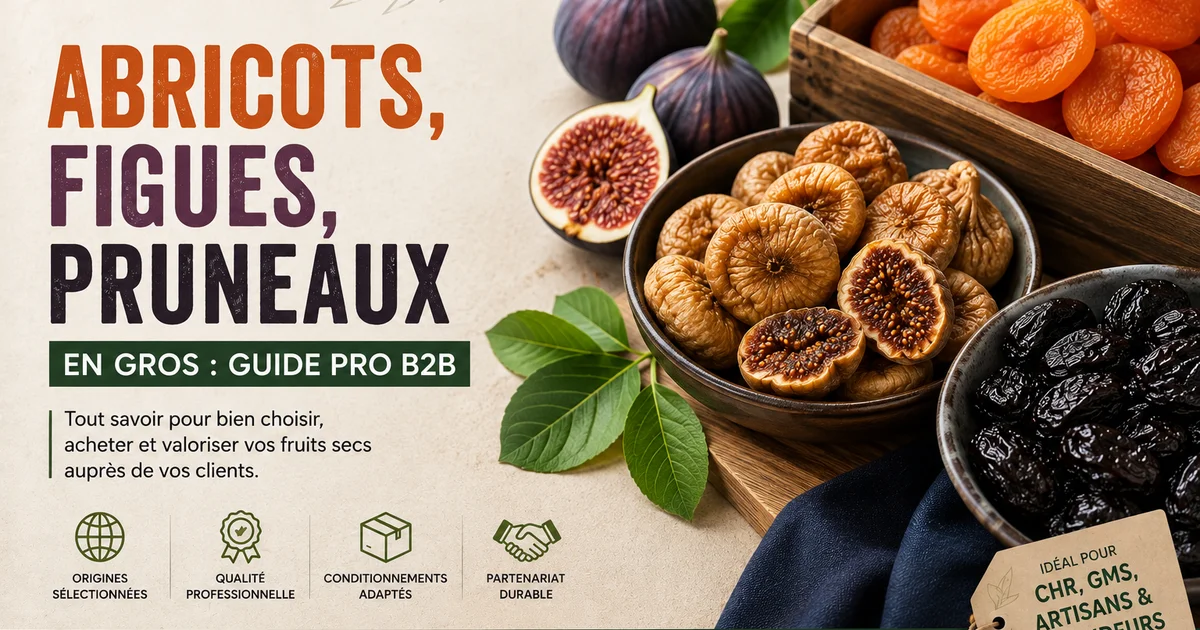
Dried apricots, figs and prunes in wholesale: the professional buyer's guide
Sizes, moisture levels, sulphuring and pack formats for soft dried fruits: the B2B guide for caterers, delicatessens and professional pastry chefs.
Buying dried fruits wholesale is not simply a matter of picking a supplier: it is a technical exercise that commits the quality of your preparations, the turnover of your stock and the satisfaction of your own customers. Size grade, moisture level, sulphuring, pack format — every parameter has a direct bearing on kitchen use, shelf life and the profitability of your sourcing. This professional guide reviews the essential buying criteria for dried apricots, figs and prunes, with concrete benchmarks taken from the Palimex catalogue.
Understanding dried fruit size grades before you buy
The size grade is the first piece of information to read on a product sheet. It indicates the size of the fruit and directly determines its use: a large-graded fruit lends itself to plating or premium snacking, while a smaller grade will be preferred for processing, chopping or incorporation in industrial pastry work.
At Palimex, dried apricots come in three numbered grades: N0 (Jumbo), N1 and N2. Prunes are offered in grades 28/33 and 33/44, a numbering that corresponds to the number of fruits per kilo — the lower the figure, the larger the fruit. Figs follow a similar logic, with grade N8 for the Lerida variety, for example.
- Large grade (low figure): big fruits, strong visual appeal, ideal for snacking, gift boxes and display in a window or bulk aisle.
- Intermediate grade: a good compromise for pastry work, house mueslis and catering preparations.
- Smaller grade: suited to dicing, incorporation into dough or stuffing, with a better material yield.
To go further into reading technical sheets, see our dedicated article: how to choose your dried fruits.
Moisture level: what soft, extra-moist and dry change in use
Moisture level matters as much as size grade, because it determines texture, shelf life and how the fruit behaves during cooking or processing. A soft prune will not have the same use as an extra-moist prune.
In the Palimex range, prunes exist in a soft version (moisture around 42%) and an extra-moist version (around 40%). This difference, small as it appears, influences the suppleness of the fruit, its ability to be pitted cleanly and how it holds up on the shelf.
| Moisture type | Resulting texture | Recommended professional use | Storage watch point |
|---|---|---|---|
| Soft (~42%) | Supple, melting | Snacking, pastry, direct tasting | Faster stock rotation recommended |
| Extra-moist (~40%) | Slightly firmer | Processing, cooking, compotes | Sensitivity to monitor depending on storage temperature |
| Natural, sulphur-free (apricots) | Brown colour, denser texture | Organic channels, health food aisle, customers sensitive to additives | Natural oxidation more visible over time |
A moisture level poorly matched to your use can generate kitchen losses or a shortened shelf life in the aisle. To go further on this subject, read our file on storing dried fruits in a professional environment.
Sulphured or naturally sulphur-free: choosing by commercial outlet
Sulphuring dried fruits is a long-standing practice intended to preserve colour and limit oxidation during drying and storage. For dried apricots, Palimex offers a naturally sulphur-free version alongside the classic sulphured range.
"Sulphiting dried fruits is a traditional practice that aims to preserve colour and limit oxidation; its use remains governed by regulatory thresholds that every professional must check on the label and technical sheet of the product." — Codex Alimentarius, FAO
The choice between sulphured and natural depends above all on your commercial outlet:
- Organic or health food channel: the naturally sulphur-free version answers a growing demand for transparency on additives.
- Pastry and industrial processing: sulphured fruit, with its more stable colour, is often preferred for visual consistency in preparations.
- Bulk aisle and fine grocery: offering both versions covers a wider end customer base without multiplying suppliers.
In every case, sulphuring must be clearly stated on the labelling passed on to your professional customers, in line with information obligations on allergens and additives.
Pack formats: matching wholesale buying to your stock rotation
Packaging is not a mere logistical detail: it governs your stock management, the cash tied up in inventory and your ability to limit stockouts. Palimex offers formats designed for professional needs, from the standard carton to large-volume bulk.
| Product | Available formats | Suited buyer profile |
|---|---|---|
| Dried apricots (N0/N1/N2) | 2.5 kg / 5 kg | Fine grocery, pastry, mid-rotation catering |
| Lerida fig N8 | 24x500 g display carton | Assisted retail, premium grocery |
| Diced fig 10x10 mm | 10 kg | Bakery and pastry, food industry |
| Spanish small fig | 5 kg | Bulk aisle, catering snacking |
| Prunes 28/33 and 33/44 | 5 kg / 10x1 kg / 12.5 kg | Wholesalers, buying groups, high-rotation hotels |
| Pitted prunes | 20x500 g | Collective catering, caterers, easier portioning |
One simple rule to remember: the faster your rotation and the larger your volumes, the more economically relevant the large bulk format (10 kg, 12.5 kg) becomes. Conversely, a business with slower rotation gains by splitting its orders into intermediate formats (2.5 kg, 5 kg, display cartons) to limit tied-up stock and preserve the freshness of an opened product.
Trade applications: pastry, snacking, bulk aisle and hotel breakfast
The choice of grade, moisture and packaging must always be guided by the end use. Here is how these criteria translate concretely by trade.
- Pastry: favour a regular grade and a stable moisture level to guarantee even baking — diced figs or pitted prunes make incorporation into dough easier.
- Snacking and takeaway: jumbo grades and soft fruits enhance the product in the mouth and to the eye, an asset for premium snacking in catering.
- Bulk aisle: fast rotation calls for practical restocking formats (5 kg, 5 kg small figs) and particular care over the best-before date displayed on the shelf.
- Hotel breakfast: N1/N2 apricots and soft prunes, portioned or in controlled bulk, fit easily into buffets, with a texture appreciated without further preparation.
For establishments rounding out their offer with other categories, our guide to wholesale olives for professionals details similar buying criteria applied to that category.
Storage, batch management and best-before dates in a professional setting
Storing dried fruits in bulk demands rigorous organisation, particularly for businesses handling several batches at once. The FIFO principle (first in, first out) remains the basis of reliable HACCP stock management, applied to every pallet received.
A few good practices to build into your internal procedures:
- Systematically check the best-before date on receipt and record it in your internal traceability.
- Store in a dry environment, away from direct light and significant temperature swings.
- Carefully reseal opened packaging (cartons, bags) to limit moisture pick-up.
- Separate batches by receipt date to avoid any mixing when restocking the aisle or the workshop.
- Match order frequency to the moisture level of the product: a moister fruit justifies a shorter rotation.
The MEYVA range, soft fruits of French origin, illustrates this traceability requirement well: apricots, figs and prunes are offered with an identified origin, an asset for professionals who must justify the sourcing of their raw materials to their own customers. For a complete overview of this range, see our page dedicated to the MEYVA range of French-origin dried fruits.
On general regulatory matters, international reference bodies stress the importance of documented management of preservation thresholds for dried fruits; professionals can consult the standards of the Codex Alimentarius (FAO/WHO) to situate the general principles applicable to these products.
Summary: the key points before placing a wholesale order
Before confirming a wholesale dried fruit order, a well-advised professional systematically cross-checks four criteria: the grade suited to the end use, the moisture level consistent with the desired shelf life, the sulphured or natural choice according to the commercial outlet, and the pack format aligned with real stock rotation. This methodical approach limits losses, secures HACCP traceability and guarantees consistent quality for your own customers, whether a bulk aisle, a pastry workshop or a hotel buffet. To refine your selection according to your volumes and specific uses, do also consult our guide to wholesale spices and their packaging for catering, a category that often complements the sourcing of food trade professionals.
A question?
Get in touch directly.
Our advice related to Dried-fruits
 dried-fruits
Seau, carton, sac de 25 kg : le conditionnement décide de la rotation
Bucket, carton, or 25 kg bag: which packaging to choose based on your actual turnover in professional kitchens. Palimex advice for foodservice, grocers, and pastry chefs.
 dried-fruits
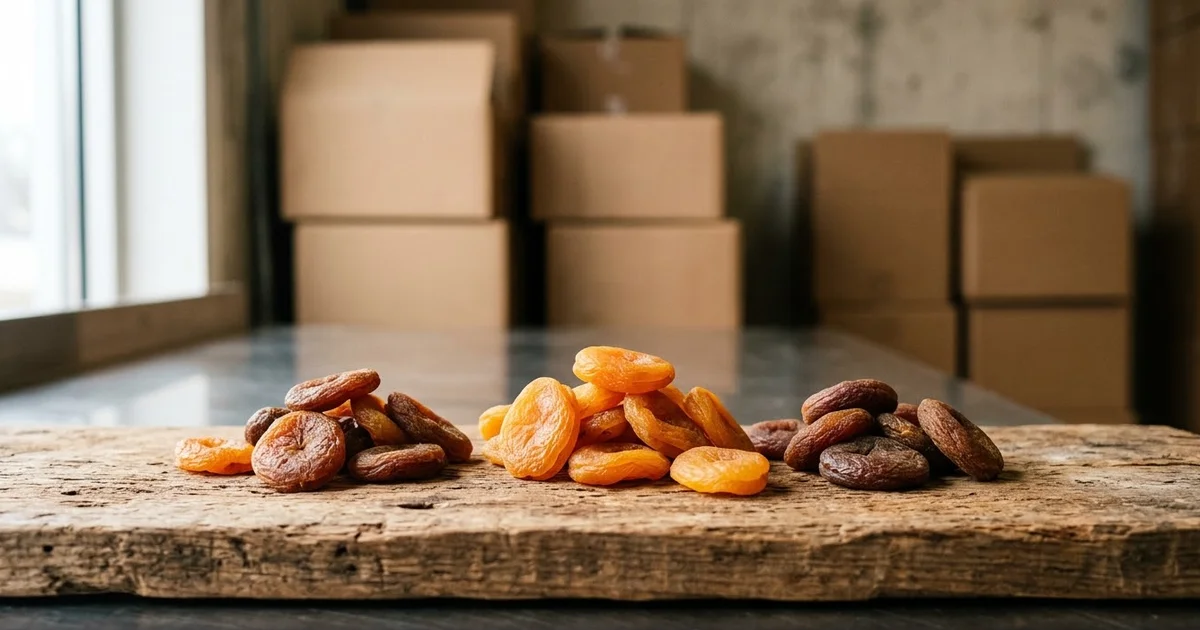
Abricot sec : lire un calibre n°1 à n°4, soufré ou non
How to read size grades No.1 to No.4 for dehydrated apricots, and choose between sulphured and unsulphured based on professional kitchen use. Buyer’s guide for foodservice, pastry chefs, and specialty grocery stores.
 dried-fruits
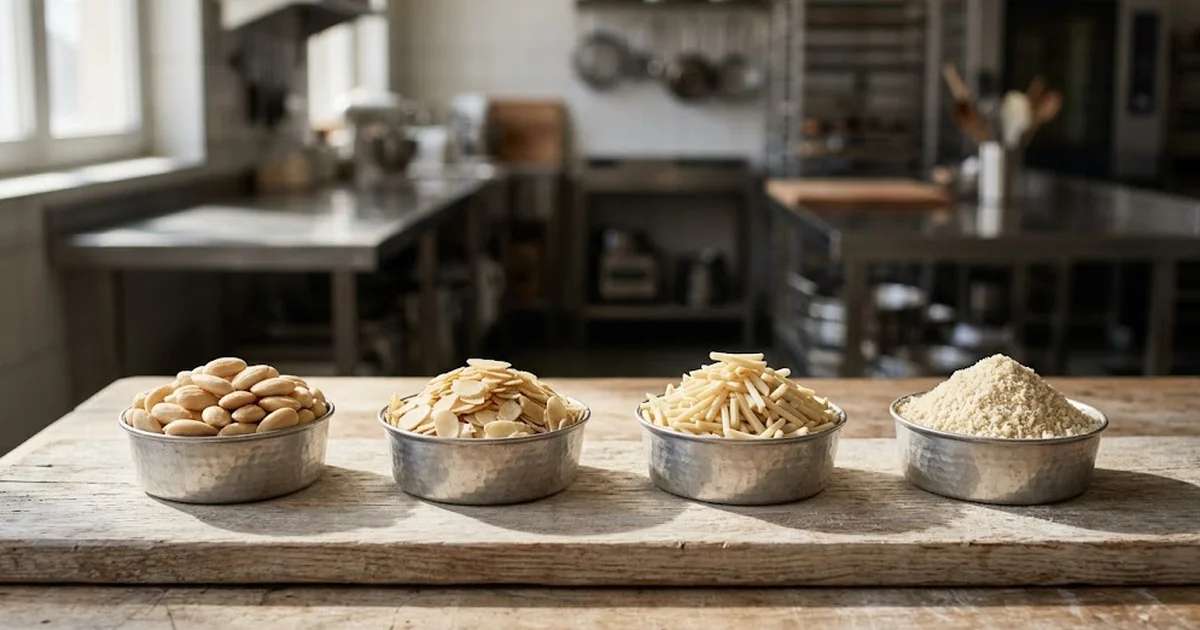
Amande émondée, effilée, bâtonnet, poudre : quel format pour quel usage
Professional guide: uses, cooking performance, and storage of blanched almonds, flaked, slivered, and powdered. Procurement and B2B logistics tips from Palimex.