

Available products
13 references









Looking for a wholesale dried fruit supplier?
I'm Jessica, your dedicated wholesale account manager.
Direct sourcing — Rungis and Bordeaux.
- ✓Direct sourcing from producers
- ✓Quality controlled (shelf-life, calibre, origin)
- ✓Next-day delivery in Île-de-France
- ✓Bulk, custom packaging, co-packing
- ✓B2B account with pricing tiers
B2B delivery & packaging
Rungis pickup
Pick up your order at our Rungis market depot. By appointment Monday through Friday.
Nationwide delivery
Delivery within mainland France and major European cities. Indicative lead time 24-48h.
Professional packaging
Bulk, 5 to 10kg buckets, 200g to 1kg bags
Frequently asked questions
Overview
An oil range built for professional kitchens
Oil is the one ingredient that runs through almost every station in a kitchen: the store room, the range, the dining room. It sears, it confits, it builds a dressing, it finishes a plate and sometimes it simply preserves. It is also the ingredient whose cost per litre bites into a menu fastest when the format does not match real service volume. Our wholesale oil selection is therefore organised by use, not by a flat list of references.
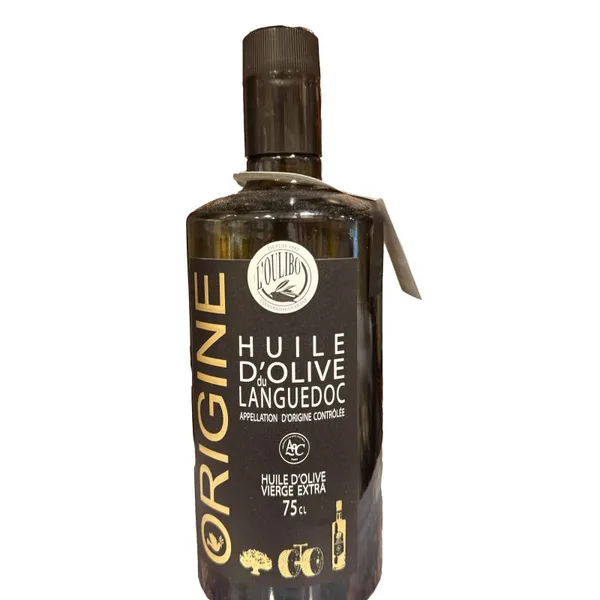
The range brings together olive oils from selected Mediterranean growers — Languedoc, Crete, Greece, Algeria — alongside flavoured oils and oils intended for cooking. Single-variety, PDO or flavoured: each reference answers a precise use in the kitchen or front of house. Palimex has been a B2B food wholesaler since 1984, and that history shows in one thing above all: knowing the growers we work with, and being able to advise a buyer who has to choose between two neighbouring cuvées.
Which oil for which use?
The first purchasing reflex is often to keep a single oil for everything. In practice a professional kitchen runs two or three: a cooking oil, a finishing oil, sometimes a flavoured oil reserved for plating or front of house. The table below sums up the listing logic we apply with our hospitality customers when they build their oil line.
| Use in the kitchen | Recommended oil type | Suitable format |
|---|---|---|
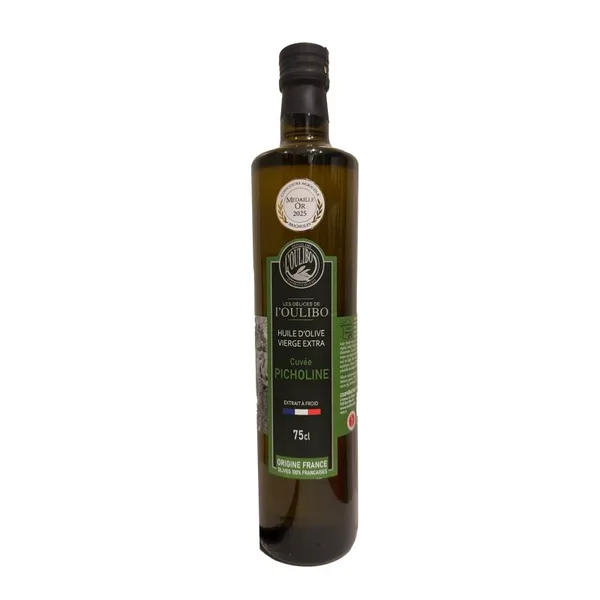
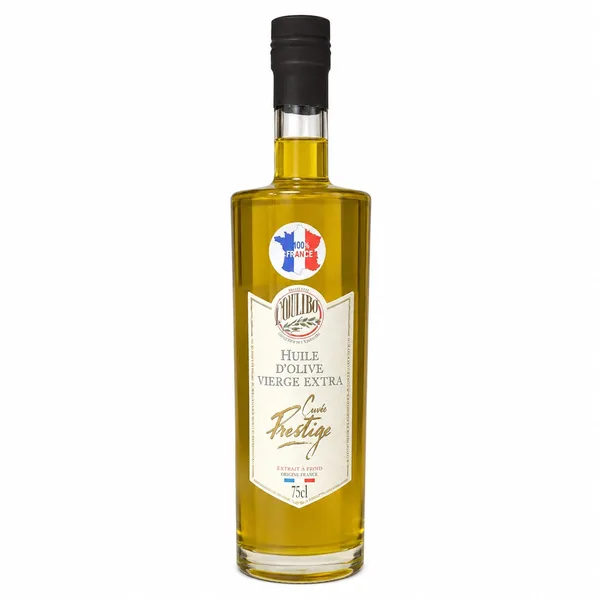
| Dressings, plate finishing, tasting | Single-variety extra virgin (Picholine, Kalamata PDO) | 75 cl bottle, case of 6 or 12 |
| Front-of-house condiment, plating, marinades | Flavoured oil (basil, pili-pili) | 250 ml flask |
| Pan cooking, sautéing, roasting | Standard olive oil | 3 L can |
| Deep frying, high-temperature cooking | High-oleic sunflower oil | 3 L can, volume format |
| House preserves, antipasti, oil-packing | Olive oil with a discreet profile | 3 L can |
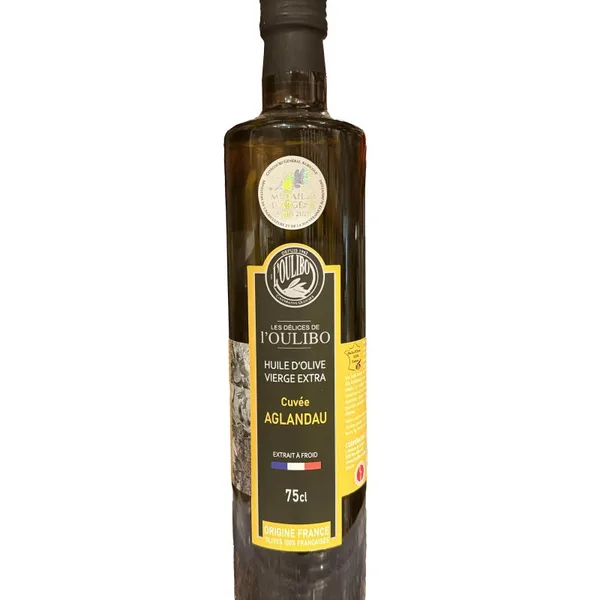
Our advice does not change from one season to the next: for raw use, choose a single-variety extra virgin oil with assertive fruitiness, the kind that is noticed on the plate. For high-temperature cooking, go for a standard olive oil or a high-oleic sunflower oil, more stable under heat. Do not commit an Aglandau or Sitia cuvée to the fryer: you would flatten its aromas with no gain in taste, and the cost per cover would show it immediately.
Formats, cases and professional packaging
Format is not a logistics detail: it drives rotation, and therefore the quality of what you serve at the end of the month. Here is how our oils in professional packaging break down:
- 75 cl bottle, in cases of 6 or 12 — the reference format for finishing oil, the one that limits oxidation between services.
- 250 ml flask — reserved for flavoured oils (basil, pili-pili), used in small touches over a longer period.
- 3 L can — the production format, for high-volume kitchens and cooking stations.
- Full case — wholesale rates apply from the first case, with tiered discounts for regular volumes.
The site is reserved for professionals holding a SIRET registration: hospitality operators, restaurants, fine grocers, caterers. Orders are placed in professional formats, shipped on pallet or carriage-paid depending on the volume committed.
The references our customers reorder
Among the most reserved cuvées in the range: the Aglandau cuvée, the Kamata PDO in 4×3 L, the Kalamata in 12×1 L and the Sitia from Crete in 12×75 cl. Those four cover most of a menu's needs: a characterful oil for raw use, a PDO in a volume format for kitchens unwilling to trade quality against throughput, a litre bottle that is easy to handle on the line, and a 75 cl format for retail sale in fine grocery. A buyer listing for the first time should taste before committing a case: fruitiness is judged by tasting, not from a product sheet.
Storage, stock rotation and HACCP
Oil does not degrade all at once: it loses its fruitiness slowly, under three well-identified factors — light, heat and air. In the store room that translates into simple rules: keep cans and cases away from daylight, away from the kitchen's heat sources, and close them systematically after service. An opened can left beside the range loses in a few weeks what the grower took a whole harvest to build.
Our view, after more than forty years in this trade: order finishing oil on short rotation rather than as one large stock. A case used up within a few weeks delivers the fruitiness you chose it for; a can opened months ago will not, whatever its purchase price.
On traceability, every delivery carries its identification details — batch number and best-before date — ready to be taken straight into your HACCP plan. We recommend writing the opening date on the container as soon as it goes into service: it is the most profitable habit for an oil station, and the easiest to keep alive in a kitchen.
PDO, labelling and the regulatory frame
The wording carried by an olive oil — extra virgin, virgin, protected designation of origin — is not marketing language but a set of regulated categories. To check what a PDO covers and which specifications it relies on, the public reference is INAO, the French national institute of origin and quality. We encourage our customers to consult it when writing a menu or a shelf argument: an accurate mention holds up better under inspection, and in front of a customer, than a vague promise.
Ordering your oils in bulk
An oil is rarely listed on catalogue alone. Come and taste the cuvées you are considering at our MIN de Rungis or Bordeaux Lac sites, with your own use in mind — a house dressing, a signature dish — then commit the case. Our team supports you on format choice, replenishment frequency and building a price that fits your volume, from the independent restaurant to the multi-site grocery.