

How to choose dried fruits? Palimex pro guide
Dried fruits now hold an essential place in food businesses, bulk sections, gourmet grocery stores, hotels, and bakeries.
Choosing a professional and reliable supplier
The first essential criterion is the choice of supplier. A good wholesaler must ensure:
According to FranceAgriMer — agricultural market observatory, the quality and traceability of professional dried fruits rely on a controlled logistics chain and storage standards consistent with the international standards of the Codex Alimentarius.
-
complete traceability (origin, variety, batch)
-
regular imports to guarantee freshness
-
prices suited to B2B
-
consistent quality
-
quickly available stock
At Palimex Meyva, we work directly with producers in Turkey, Spain, Iran, California, and the Mediterranean to ensure premium quality all year round.
Recognizing the quality of dried fruits
Almonds
Opt for well-calibrated almonds, unbroken, with a uniform color. A dry or too pale almond lacks freshness.
Pistachios
A quality pistachio should be naturally open, fragrant, with a beautiful green color inside.
Iranian pistachios are very aromatic, while Californian pistachios are more consistent.
Dried apricots
Dried apricots from Turkey remain the most popular. For bulk, a size 1 or 2 is recommended for a premium visual appearance.
Cashews
White, whole, and homogeneous. W320 cashews are the most versatile for grocery stores and catering.
Dates (Medjoul, Deglet Nour…)
Vary the origins and formats. The Medjoul date is ideal for gourmet shops; the Deglet Nour is perfect for bulk or processing.
Choosing the right packaging (bags, bulk, foodservice)
Depending on your activity, needs differ:
-
Greengrocers / Gourmet grocery stores: premium jars, artisanal bags, attractive formats for retail.
-
Bulk sections: 5 kg or 12.5 kg bags to refill silos.
-
Foodservice / Bakeries / Caterers: buckets, bags, or crates for processing (pastry, snacking, buffet).
-
Bars and hotels: individual portions, premium aperitif mixes.
Palimex Meyva offers packaging tailored to each profession, with premium options like the « Gourmet Edition » range.
Focusing on freshness and stock rotation
Good rotation allows:
-
avoiding oxidation
-
preserving aromas and crunch
-
ensuring a consistently premium product for your customers
Tip: prioritize regular deliveries rather than overly large stocks.
2025 trends: what your customers are looking for
Today, B2B and B2C consumers want:
-
natural dried fruits
-
products without additives
-
gourmet aperitif mixes (truffle, rosemary, smoked chili…)
-
premium dates
-
nuts from sustainable supply chains
These trends boost sales and allow for a more qualitative offering.
Meyva conclusion: Palimex, your dried fruit partner for professionals
Choosing the right dried fruits is essential to retain your customers and ensure impeccable quality.
With our expertise, controlled origins, professional packaging, and premium ranges, Palimex Meyva supports every professional: greengrocer, grocery store, bulk, catering, hotel, foodservice.
? Discover our full range at palimex-fruits-secs.com.
? Fast delivery and personalized advice.
Summary table of B2B standards
| Criterion | B2B Standard | Best Practice |
|---|---|---|
| Sourcing | Traced origins (Morocco, Tunisia, Iran, California) | Samples + batch-by-batch analyses |
| Quality | Moisture < 6%, aflatoxin below EU threshold | Hygrometer + ISO 712 |
| Storage | 12-18 °C, 50-60% ambient humidity | Vacuum or nitrogen for fatty products |
| Packaging | Multilayer bags, INCO labeling | Allergens + supplier traceability |
| Logistics | Strict FIFO, 15-day inventory for sensitive products | 3 readable dates per container |
Further reading
Additional resources on our blog:
- choosing a dried fruit wholesaler
- storage guide
- top 10 pastry dried fruits
- breakfast trends in hospitality
B2B context and sector best practices
In a B2B market where quality requirements are constantly rising — traceability, food safety, end-customer expectations — mastering these fundamentals provides a tangible and measurable competitive advantage. Players who secure their supply chain upstream protect their net margin downstream, and this often makes the difference between a wholesaler who maintains their order book over 5 years and one who sees their customers leave at the first cheaper competitor. The 2024-2026 period saw an 18% increase in DGCCRF inspections of the dried fruit sector in France, a sign that regulation is tightening alongside consumer expectations. Penalties for non-compliance can quickly represent several months of gross margin, not to mention the reputational impact.
For a wholesaler, greengrocer, or restaurateur, translating these standards into weekly operational routines makes the difference between a reliable supplier and a fragile player. The best practices described in this article apply regardless of your volume — from 50 kg per week to several pallets per day — with proportional adjustments in equipment and investment, but with the same methodological rigor. Quality does not decrease as volume increases; on the contrary, it becomes an even more strategic issue. This is precisely the philosophy that distinguishes the leading players in the professional dried fruit market in France.
On the commercial side, B2B customer satisfaction largely depends on consistency — a dried fruit must have the same taste, texture, and color from one batch to another. It is precisely this consistency that is compromised by common storage and management errors. Investing in staff training in receiving and storage areas generally yields more than new equipment, at a much lower cost. Bakers, pastry chefs, caterers, and restaurateurs who are your end customers do not buy a price — they buy a guarantee of consistency, and they are willing to pay 10 to 15% more for it.
The systemic approach remains the best: auditing your warehouse twice a year, measuring your losses as a percentage of stock, comparing these metrics to industry standards (3-4% for a well-managed wholesaler, 1-2% for the best players). These figures, when highlighted, immediately reveal the real levers for improvement and allow for prioritizing investments. Many operators focus on the purchase price, while the most significant savings are hidden in reducing storage and downstream logistics losses. A quick calculation: if you buy 200 tons per year at €8/kg and lose 5% in storage, that’s €80,000 thrown away each year — far more than what a €10,000 investment in well-chosen equipment costs over 5 years.
Upstream sourcing also plays a decisive role: a supplier transparent about their delivery moisture, drying times, and aflatoxin controls saves you several weeks of commercial shelf life. Prioritize supply chains that agree to share their batch-by-batch analyses rather than those that settle for a generic certificate. This difference in transparency directly translates into margin over 12 months of operation. Moroccan, Tunisian, Turkish, and Iranian supply chains are now among the most structured on these issues, provided you choose the right partner — a broker or a direct importer do not offer the same access to traceability information.
On the regulatory front, DGCCRF and DDPP inspections focus on traceability chains, allergen labeling (nuts must be declared under INCO Regulation 1169/2011), and packaging compliance with migration standards. Non-compliances in dried fruits are generally due to incomplete labeling rather than a product defect. An internal audit of your labeling process every six months eliminates 80% of regulatory risk at almost no cost. Fines can go up to €1,500 per non-compliant batch, and the media coverage of a product recall generally costs much more in lost trust than the fine itself.
To go further, regularly exchange with your industry peers through professional federations (FIAC, ANIA, FNDPA, FFCD depending on your business). Feedback from other operators is often more valuable than formal training and allows you to calibrate your practices against concrete and updated benchmarks. WhatsApp and LinkedIn groups dedicated to B2B dried fruits are also a goldmine of freely accessible information. Trade shows like SIRHA, ProSweets, and Marca Bologna remain essential events to stay market-aware and benchmark your practices against European leaders.
Finally, do not overlook the human dimension: a trained and autonomous team in the storage area detects anomalies within 24 hours, whereas an untrained team may let them slip for weeks. The cost of two days of training per year per operator is largely offset by the reduction in customer disputes and the quality of the outgoing product. This is probably the highest ROI in the sector, yet it is the most neglected by operational management. With naturally high staff turnover in food logistics, a structured onboarding program with a daily checklist becomes a real competitive asset in the medium term.
The recent evolution of the European market is pushing toward accelerated consolidation: medium-sized players (€5 to €30 million in turnover) are the most exposed to pressure between very large players (Frutarom, Tate & Lyle, Olam) and agile artisans who capture the premium segment. To stay in the race, you must either grow quickly through external growth or specialize in a defendable niche — premium origins, organic, halal, IFS QS, kosher depending on your customer base. The middle position without strong differentiation erodes year after year, mathematically.
Digitalization of B2B ordering is another underestimated growth driver: a well-designed customer portal with a catalog, technical sheets, high-resolution photos, and order history can increase the average basket size by 12 to 18% in six months, according to feedback from our equipped wholesaler clients. The B2B customer in 2026 orders 60-70% online, even when they also call their sales representative. Cutting off the digital channel means excluding yourself from the comparative evaluation that happens upstream — thus losing the order before you even have a chance to argue.
Further reading
Frequently asked questions
Everything you need to know about this topic.
A question?
Get in touch directly.

Marketing & Communications Manager — Palimex / Meyva
As Marketing & Communications Manager at Palimex / Meyva, Aude Moyne leads the company's communications and digital marketing strategy: editorial content, email campaigns and the promotion of its product ranges. Her experience at Palimex, a specialist in dried fruit, nuts, olives and spices for professionals, has given her in-depth knowledge of the products, their origins and uses, and the expectations of food-industry professionals. The blog articles are written or supervised by her, in collaboration with Palimex's sales and product teams whenever a topic calls for specific expertise.
Our advice related to Pro tips
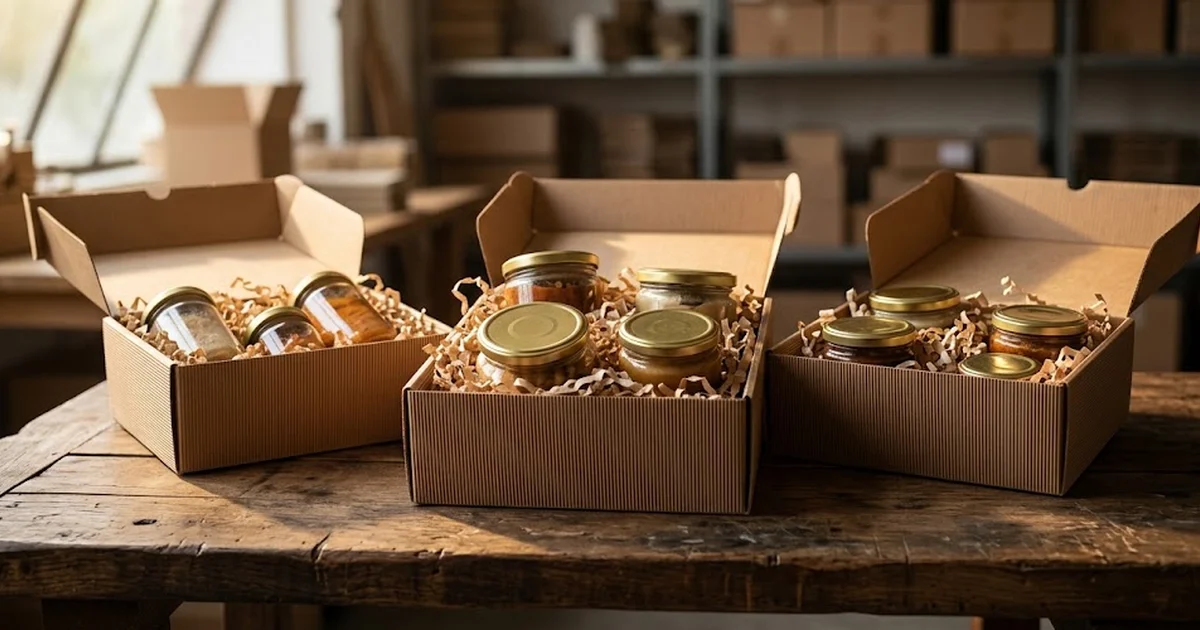 Pro tips
Paniers garnis de fin d'année pour les entreprises : les composer en épicerie fine
Composez des paniers garnis de fin d'année rentables pour entreprises et CSE : sélection de produits, formats stables, prix de revient et facturation B2B.
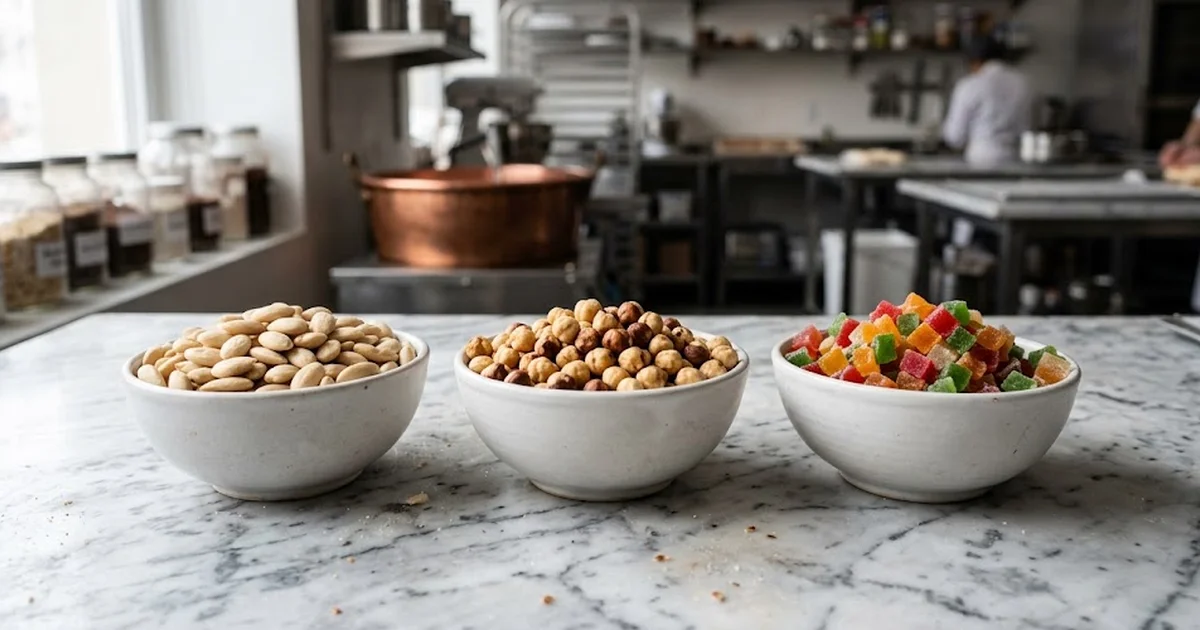 Pro tips
Commandes de fin d'année : le calendrier d'achat d'un pâtissier-chocolatier, d'octobre à décembre
Commandes de fin d'année : calendrier d'achat d'octobre à décembre pour pâtissier-chocolatier. Cadencez fruits secs, confits et marrons sans rupture.
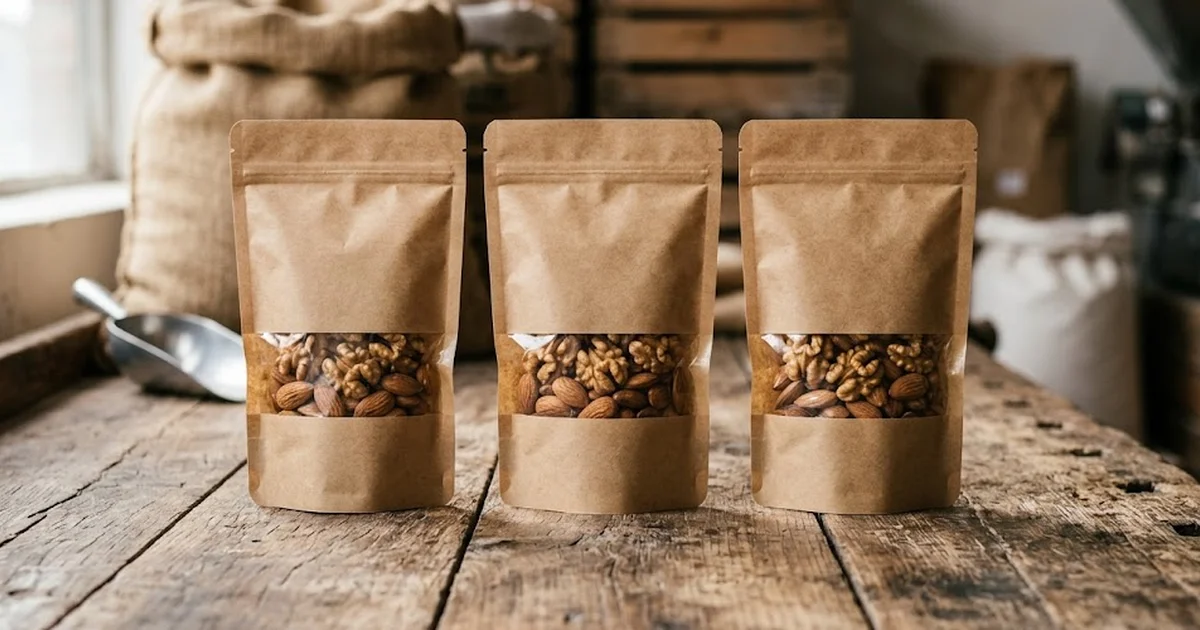 Pro tips
Triman, REP et éco-contribution : l'emballage d'un préemballé alimentaire
Reconditionnement de denrées et vente au consommateur : obligations REP, identifiant IDU, signalétique Triman et Info-tri. Le guide légal pour les professionnels.