

Seau, carton, sac de 25 kg : le conditionnement décide de la rotation
Bucket, carton, or 25 kg bag: which packaging to choose based on your actual turnover in professional kitchens. Palimex advice for foodservice, grocers, and pastry chefs.
The choice between a bucket, a carton, or a 25 kg bag is never trivial for a professional purchasing dried fruits, spices, or olives in bulk. This decision directly impacts the speed at which a product turns over in storage, the organoleptic quality it retains until the last handful, and the real cost per kilogram once breakage, shrinkage, and cash immobilization are factored in. For a restaurateur, a pastry chef, or a gourmet grocer, the purchase format is a management parameter as strategic as the per-kilogram price listed in the catalog.
Why packaging determines stock turnover in professional kitchens
Stock turnover refers to the speed at which a purchased product is consumed, processed, or resold before a new batch is ordered. For materials sensitive to oxidation and moisture, such as dried fruits, dehydrated fruits, or ground spices, slow turnover is never neutral: it exposes the product to a gradual loss of aroma, crunch, or color, well before the best-before date indicated on the batch.
A large packaging format—25 kg bag or bulky carton—mechanically lowers the unit price per kilogram by pooling packaging and logistics costs. However, this saving only makes sense if the establishment uses the product at a pace compatible with the purchased format. A bag left open for three weeks in storage loses in quality what it saved at purchase.
- A high daily sales volume justifies bulk packaging (25 kg bag, large-format carton).
- Irregular or seasonal consumption points toward resealable intermediate units (bucket, divided carton).
- A product highly sensitive to oxidation (shelled nuts, ground spices) requires rapid turnover regardless of the format.
Bucket, carton, 25 kg bag: characteristics and practical uses in kitchens
Each type of packaging serves a different handling, storage, and usage logic. The bucket, often made of food-grade plastic with a clip-on lid, is designed for frequent reuse during service: it seals tightly between uses and can be handled single-handedly on a work surface. The carton, lined with an inner bag, suits dry products less sensitive to ambient humidity and volumes that will be quickly repackaged into internal airtight containers. The 25 kg bag, finally, is the industrial format par excellence: it minimizes packaging costs per kilogram but requires strict management of resealing and storage once opened.
Typical use cases by profession
- Artisan pastry chef: bucket of dried fruits or candied fruits for daily fractionated use, with resealing between each preparation.
- High-volume restaurant: 25 kg bag of dried vegetables or sweet groceries, repackaged into airtight gastronorm containers upon receipt.
- Gourmet grocer: carton of dehydrated fruits intended for bulk pastry resale, with rapid turnover on display.
- Event caterer: carton or bucket depending on the frequency of events and the need to store leftovers between services.
To explore specific uses by product range, our article on professional uses of bulk dried fruits details the preparations that best tolerate large packaging.
Comparison table: bucket, carton, and 25 kg bag in relation to actual turnover
The table below summarizes the key trade-offs to consider before choosing a format, taking into account resealability, storage space, and daily handling.
| Criteria | Bucket | Carton | 25 kg Bag |
|---|---|---|---|
| Typical weight | 5 to 10 kg | 10 to 15 kg | 25 kg |
| Resealability | Excellent, airtight lid | Poor without repackaging | None without dedicated clip or tie |
| Storage space | Moderate, stackable | Bulky, limited stacking | Compact on floor, palletizable |
| Handling | Easy, one-handed carry possible | Moderate, two-handed carry | Heavy, pallet truck recommended |
| Price per kilogram | Intermediate | Intermediate | Most cost-effective |
| Recommended minimum turnover | Compatible with slow to medium turnover | Medium to rapid turnover | Rapid turnover essential |
Calculating the right format based on the establishment’s actual consumption rate
Before selecting packaging, it is useful to think in terms of days of consumption rather than kilograms. The method involves estimating the average weekly usage for a given product, then comparing this quantity to the weight of the packaging under consideration.
- Record the product’s average weekly consumption over the last three months of orders.
- Divide the weight of the packaging under consideration by this weekly consumption to obtain the number of weeks of turnover.
- Compare this timeframe to the duration during which the product retains its quality once the packaging is opened, taking into account the actual resealability of the format.
- If the turnover timeframe significantly exceeds the acceptable quality window, opt for a smaller format or split the purchase into multiple cartons rather than a single bag.
This method avoids the common pitfall of bulk purchasing driven solely by the per-kilogram price, without anticipating the actual consumption rate in the kitchen. It aligns with the traceability and batch management principles outlined in our guide on HACCP monitoring and batch management for dried fruits.
Storage, handling, and resealability: logistical constraints to anticipate
The packaging format is not chosen solely based on the product but also on the available storage space and the establishment’s handling capabilities. A 25 kg bag delivered on a pallet requires sufficient floor space, easy access for a pallet truck, and a quick repackaging point upon receipt. Conversely, a bucket fits more easily on a narrow storage shelf, at the cost of greater volumetric space per kilogram stored.
- Check the allowed stacking height in storage before ordering multiple 25 kg bags on the same pallet.
- Provide airtight repackaging containers for any opened carton or bag to limit exposure to ambient humidity.
- Systematically label the repackaging container with the original batch number and opening date to maintain traceability required in professional kitchens.
- Organize storage on a first-in, first-out basis, particularly for stacked cartons.
The handling question directly relates to delivery logistics on a free-delivery pallet, as described in our page on pallet delivery and free shipping for professionals.
At Palimex, we regularly observe the same pattern in the field: an establishment orders a 25 kg bag to save a few cents per kilogram, then leaves the opened bag for several weeks due to a lack of suitable repackaging. The result is never what was expected at purchase: the product loses its crunch or aroma long before it is fully consumed, and the initial savings are lost to shrinkage. Our constant advice to foodservice operators and gourmet grocers: calculate your actual consumption rate first, then choose the format. — The Palimex Team, Rungis MIN
Dried fruits, spices, olives: which format to prioritize by product range
Not all product families behave the same way with large packaging. Shelled nuts and ground spices are the most sensitive to oxidation once the packaging is opened, while dried vegetables and some candied fruits tolerate slower turnover better.
Recommendations by product family
- Whole in-shell dried fruits: tolerate 25 kg bags well if weekly turnover is high.
- Shelled nuts: prioritize buckets or divided cartons due to sensitivity to rancidity.
- Whole spices: carton packaging acceptable, as the whole structure limits oxidation.
- Ground spices: smaller format recommended, rapid turnover essential to preserve aromatic intensity.
- Olives and spreads: airtight bucket packaging suited to fractionated use during service.
- Dried vegetables: good tolerance to 25 kg bags due to low fat content.
For professionals looking to balance multiple ranges, our selection dedicated to formats tailored to foodservice selection details the correspondences between service volume and recommended packaging.
Common mistakes in choosing packaging for professional procurement
Certain mistakes recur in orders from establishments new to bulk purchasing. Identifying them helps avoid quality loss or unnecessary cash immobilization in storage.
- Ordering a 25 kg bag without verifying available airtight storage capacity after opening.
- Systematically choosing the largest packaging for the per-kilogram price, without considering the actual turnover of the product in question.
- Neglecting to label the repackaging container, complicating batch tracking during internal audits.
- Stacking cartons beyond reasonable stacking height, risking crushing the lower packaging.
- Ignoring demand seasonality, particularly for candied fruits or dried fruits during peak pastry activity.
A best practice is to cross-reference these trade-offs with the storage guidelines detailed in our article on professional storage of dried fruits and spices, which specifies recommended humidity and temperature conditions in storage.
Summary: making packaging a management tool, not just a per-kilogram price
The choice between a bucket, carton, or 25 kg bag is never just about comparing unit prices. It affects the perceived quality of the product until its last use, the handling workload in the kitchen, the space occupied in storage, and ultimately, the real profitability of the purchase. Bulk packaging is only a good calculation if the establishment’s turnover justifies it; otherwise, a resealable intermediate format—even if it costs a few cents more per kilogram—better protects the margin than the apparent savings of a bag too large for the actual consumption rate.
To refine this choice product by product, the Palimex teams in Rungis remain available to guide each professional order toward the packaging most consistent with the establishment’s activity volume, in compliance with the traceability requirements of the food sector. For general regulatory guidance on shelf-life dates, the reference page on best-before dates can usefully complement this internal reflection.
A question?
Get in touch directly.
Our advice related to Dried-fruits
 dried-fruits
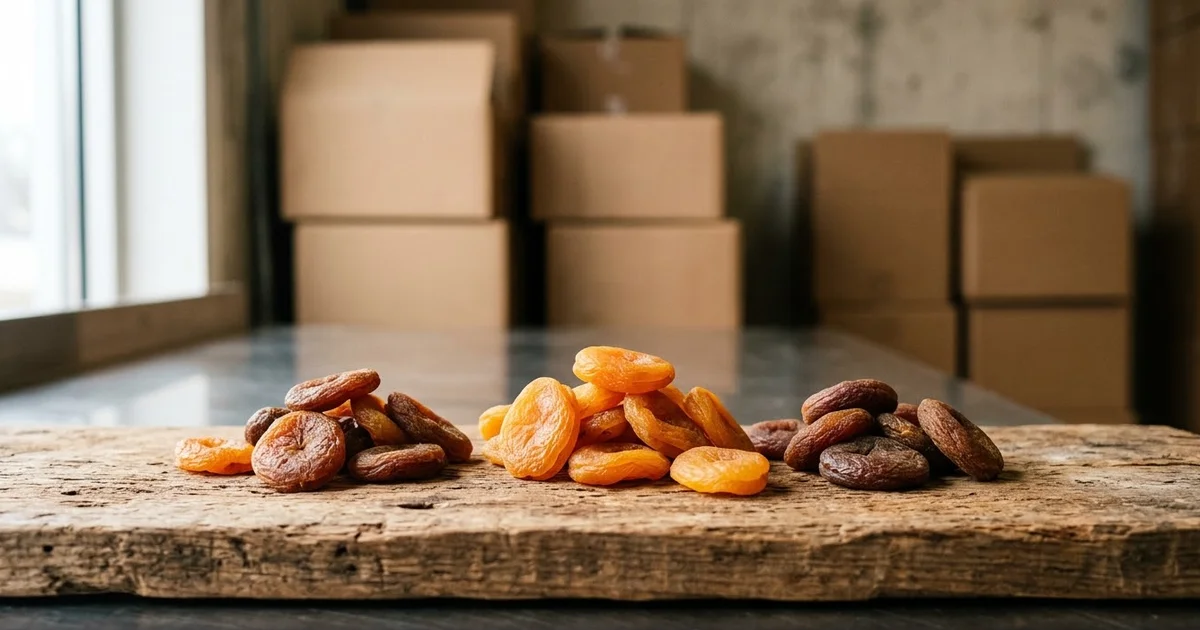
Abricot sec : lire un calibre n°1 à n°4, soufré ou non
How to read size grades No.1 to No.4 for dehydrated apricots, and choose between sulphured and unsulphured based on professional kitchen use. Buyer’s guide for foodservice, pastry chefs, and specialty grocery stores.
 dried-fruits
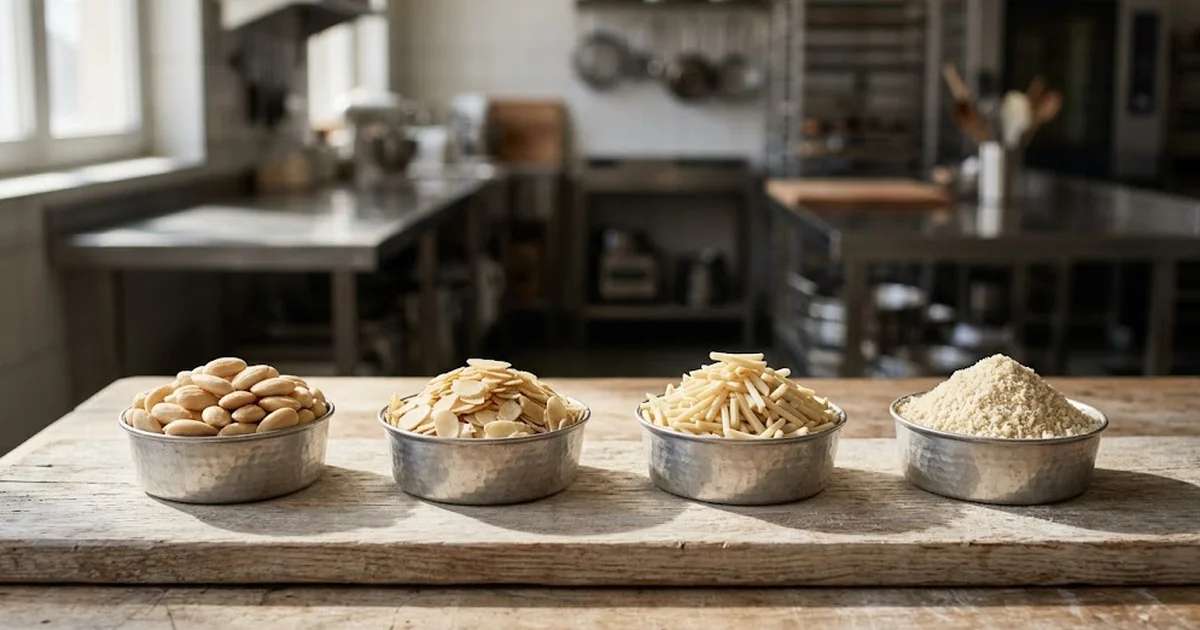
Amande émondée, effilée, bâtonnet, poudre : quel format pour quel usage
Professional guide: uses, cooking performance, and storage of blanched almonds, flaked, slivered, and powdered. Procurement and B2B logistics tips from Palimex.
 dried-fruits
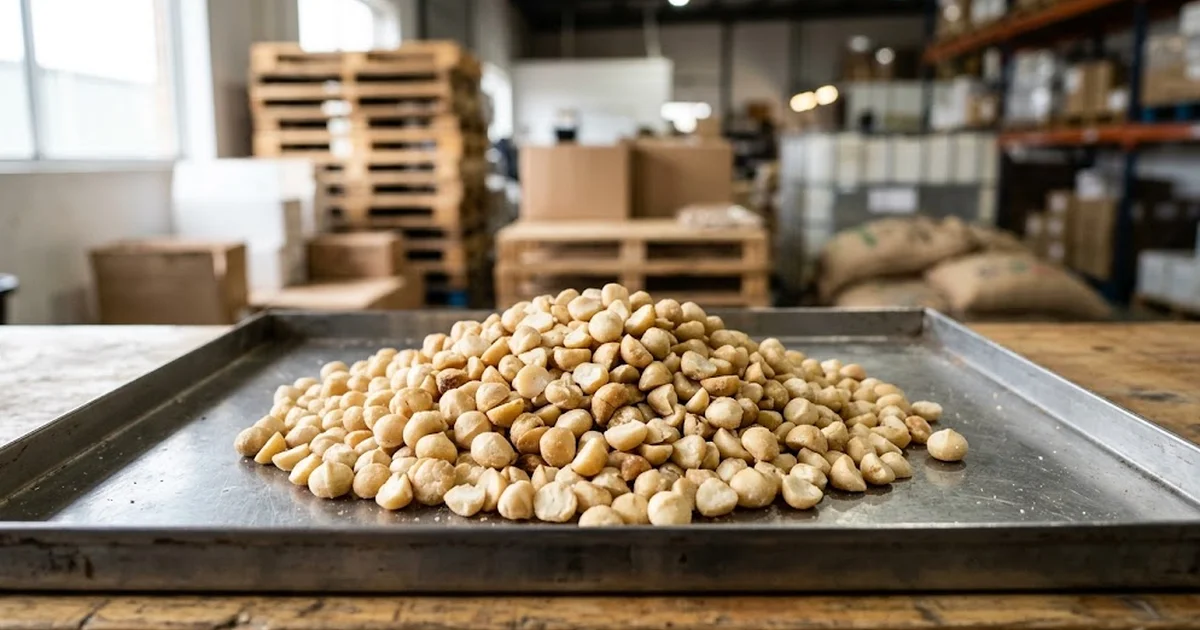
Macadamia en gros : calibres, origines et prix au kilo
B2B guide to macadamia nuts: origins, sizing, price per kilogram variations, and fat preservation. Order from 5 kg, pallet delivery for foodservice professionals.