
Amande émondée, effilée, bâtonnet, poudre : quel format pour quel usage
Professional guide: uses, cooking performance, and storage of blanched almonds, flaked, slivered, and powdered. Procurement and B2B logistics tips from Palimex.
Understanding processed almond formats: a usage matrix for professionals
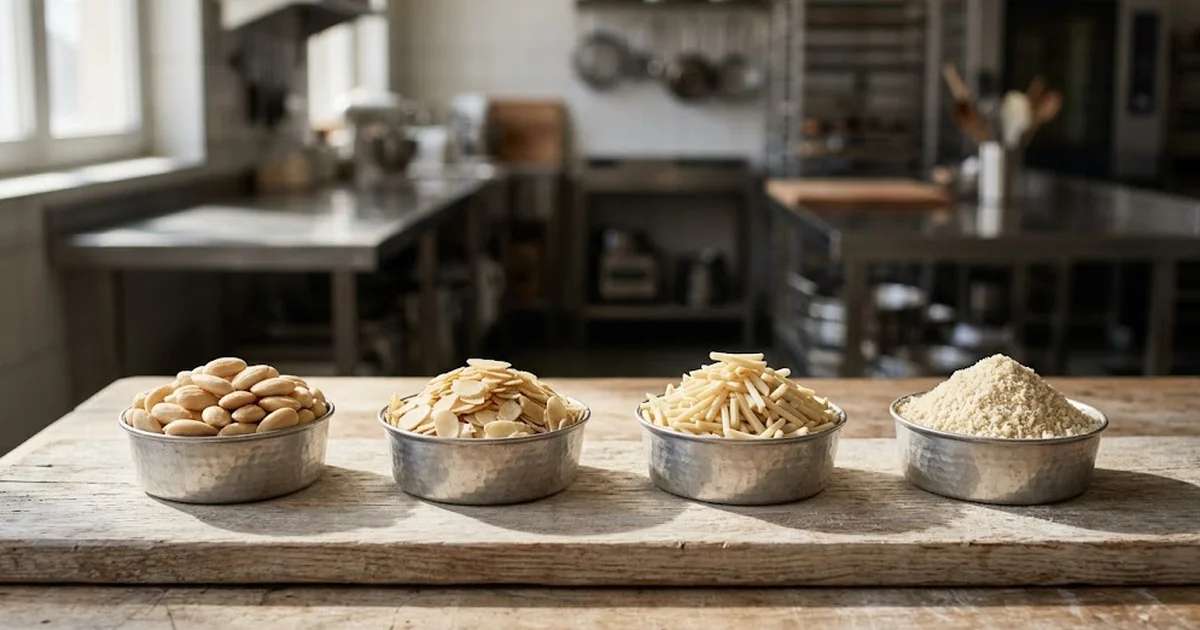
Blanched, flaked, slivered, or powdered: processed almonds come in four formats, each serving a specific purpose in professional cooking and pastry. Choosing the wrong format means wasting time in the kitchen, losing margin on a poorly calibrated product, or compromising the visual integrity of a dish. This matrix aims to clarify, format by format, what each one truly offers, where it generates losses, and how to manage its storage once the package is opened.
For a pastry workshop, restaurant, or gourmet grocery store buying in bulk, this choice is not cosmetic: it determines material yield, preparation time, and the product’s useful life once opened.
Whole blanched almond: the versatile staple, but labour-intensive if misused
The blanched almond (skin removed) is the reference format for roasting, praline, nougat, dragee coating, or whole incorporation into cake batter. Its versatility makes it a staple for any professional workshop.
- Practical uses: praline, nougatine, roasted aperitif almonds, whole inclusion in biscuits, finishing decoration on desserts.
- Calibre: yield depends heavily on the delivered calibre; irregular sizing requires sorting before roasting, which wastes time in prep.
- Common margin loss: uncontrolled roasting of whole blanched almonds burns faster on the edges than fragmented formats—oven monitoring is mandatory.
- Cooking performance: good structural stability, low risk of collapse, making it the most stable format for whole decoration.
For a caterer or restaurateur producing in volume, whole blanched almonds remain the most rational purchase when the recipe includes transformation time (roasting, homemade crushing, grinding).
Flaked almond: the decorative and crunchy format, demanding in handling
Flaked almonds are cut into thin slices. This is the preferred format for visual decoration—tarts, pastries, savoury gratins, composed salads for foodservice—and for adding surface crunch.
Their thinness is both their strength and their main weakness in a professional kitchen.
- Where it saves time: ready to use, no crushing or slicing required in the kitchen, direct application on raw or cooked dough.
- Where it loses margin: highly sensitive to overcooking—a slightly too-hot oven or poorly timed bake burns them in seconds, forcing the discard of an entire batch of decoration.
- Handling: fragile format, best stored in rigid cardboard rather than flexible bags to minimise breakage into unusable crumbs.
- Cooking performance: moderate—colours quickly, requires continuous monitoring during dry toasting.
In professional pastry, flaked almonds are often purchased in excess as a precaution, then stored too long: a format to order in quantities adjusted to the workshop’s actual turnover.
Slivered almond (matchstick): mechanical robustness and good yield in dragee coating
Slivered almonds, or matchsticks, are an intermediate format between whole and flaked. They are prized for dragee coating, chocolate enrobing, snack and aperitif mixes, as well as certain savoury preparations like global flavours.
| Format | Main use | Cooking performance | Risk of margin loss |
|---|---|---|---|
| Whole blanched | Praline, nougatine, inclusion, whole decoration | Good, stable structure | Calibre sorting if batch is heterogeneous |
| Flaked | Visual decoration, surface crunch | Moderate, colours quickly | Breakage and frequent overcooking |
| Slivered | Dragee coating, enrobing, snacking | Good, withstands mechanical mixing | Low if packaging is suitable |
| Powdered | Frangipane, macarons, fine biscuits | Sensitive to moisture and rancidity | Fat oxidation after opening |
This format withstands mechanical mixing in coating drums, unlike flaked almonds, which fragment quickly. This is a key selection criterion for any workshop producing dragee coating in volume.
Almond powder: the central issue of fat preservation after grinding
Almond powder is essential in fine pastry—frangipane, macarons, financiers, joconde biscuits. It is also the most exposed to quality risks once the container is opened, as grinding structurally weakens the product.
Grinding an almond exposes its fat to air and ambient humidity over a much larger surface than a whole nut. This exposure accelerates oxidative rancidity, with a direct impact in the kitchen: odour and taste degrade before the displayed best-before date if storage is not controlled.
- Recommended storage in the workshop: airtight container, away from light and heat, with rapid turnover of opened stock.
- Field warning sign: a slightly pungent or "cardboard" odour on opening signals early rancidity, even before any visual change.
- Impact on recipes: slightly rancid powder compromises the final taste of a macaron or frangipane, without the texture revealing the defect.
At Palimex, we regularly see workshops buying almond powder in excessive quantities to secure a lower price per kilo, then storing it for weeks in a storeroom with variable ambient temperature. Our field advice: calibrate your order based on your production’s actual turnover, not on volume discount thresholds. An opened box of powder should be used quickly, never left waiting for a hypothetical next batch.
To explore best practices for storing dried fruits in general, read our dedicated article on stock rotation in professional workshops.
Choosing the right format for each production station: operational summary
Beyond the recipe, format selection also depends on workshop organisation: decoration station, mechanical mixing station, frangipane dough station. Here’s a quick decision grid for procurement managers and production chefs.
- Finished visual decoration (tarts, pastries): prioritise flaked almonds, packaged in cardboard to limit breakage.
- Praline, nougatine, dough inclusion: prioritise whole blanched almonds, homogeneous calibre.
- Dragee coating, enrobing, aperitif snacking: prioritise slivered almonds, more resistant to mechanical mixing.
- Frangipane, macarons, fine biscuits: prioritise powdered almonds, in quantities adjusted to actual weekly turnover.
- High and regular production volume: order by the pallet to secure supply without batch disruption.
This sourcing logic by station rather than by price per kilo helps limit margin gaps due to poor format/usage alignment. It aligns with the principles outlined in our guide on bulk packaging and foodservice formats.
Logistics, minimum packaging, and batch management in B2B procurement
On a B2B site reserved for professionals, the purchasing logic differs fundamentally from retail: minimum packaging of 5 kg, delivery by pallet or free carrier, batch management with best-before dates traced at order. This organisation requires advance purchase planning, particularly for sensitive formats like powder.
- Packaging: bags or cartons from 5 kg depending on the format, designed for intensive professional use.
- Traceability: each batch is identified for HACCP compliance with professional workshop requirements.
- Delivery: full pallet or free delivery depending on volume, to be anticipated based on production rhythm.
- Storage on receipt: dry, temperature-controlled area, away from moisture sources, with systematic FIFO rotation of batches.
Good upstream logistics significantly limits the losses mentioned earlier for powder and flaked almonds, the two most sensitive formats to prolonged storage.
Summary: choosing the right almond format based on use, margin, and storage
The choice between blanched, flaked, slivered, and powdered almonds is not an aesthetic preference but a business logic: each format serves a specific production station, with its own constraints for cooking performance and fat preservation after processing. Whole blanched almonds remain the versatile staple, flaked almonds the decorative format requiring close monitoring, slivered almonds the best compromise for dragee coating, and powdered almonds the most fragile format, to be ordered in quantities adjusted to the workshop’s actual turnover.
To view all available calibres and packaging options, visit our almonds category and our complete guide on bulk ordering for professionals. For general food safety guidelines applicable to storing vegetable fats, the ANSES provides useful public resources for HACCP management in workshops.
A question?
Get in touch directly.
Our advice related to Dried-fruits
 dried-fruits
Seau, carton, sac de 25 kg : le conditionnement décide de la rotation
Bucket, carton, or 25 kg bag: which packaging to choose based on your actual turnover in professional kitchens. Palimex advice for foodservice, grocers, and pastry chefs.
 dried-fruits
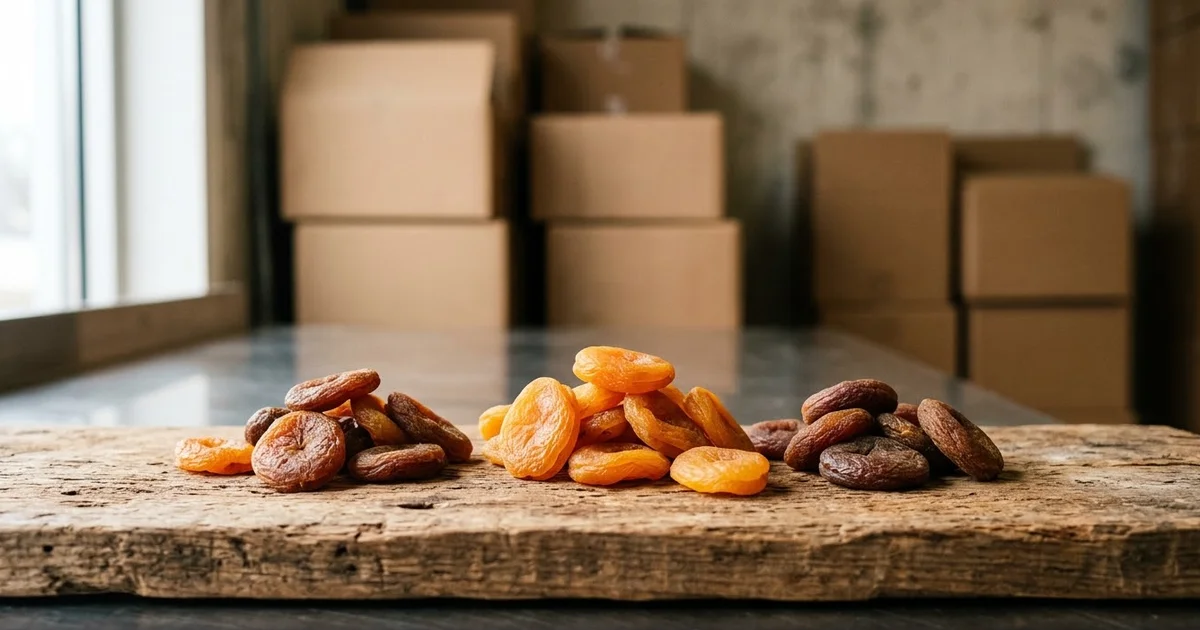
Abricot sec : lire un calibre n°1 à n°4, soufré ou non
How to read size grades No.1 to No.4 for dehydrated apricots, and choose between sulphured and unsulphured based on professional kitchen use. Buyer’s guide for foodservice, pastry chefs, and specialty grocery stores.
 dried-fruits
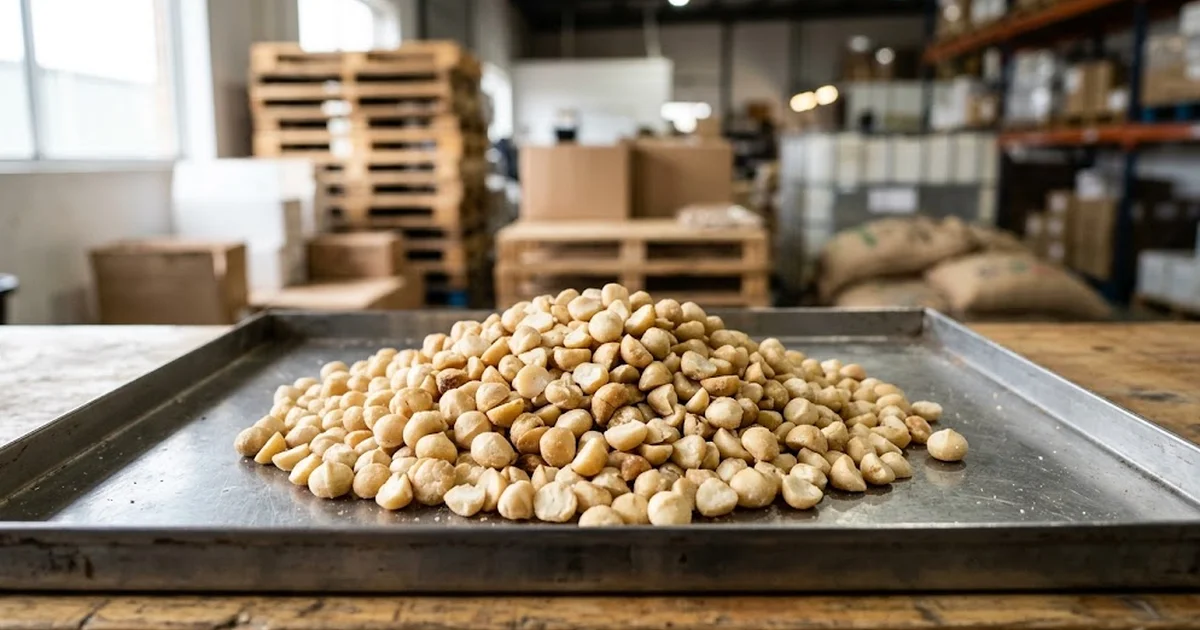
Macadamia en gros : calibres, origines et prix au kilo
B2B guide to macadamia nuts: origins, sizing, price per kilogram variations, and fat preservation. Order from 5 kg, pallet delivery for foodservice professionals.