
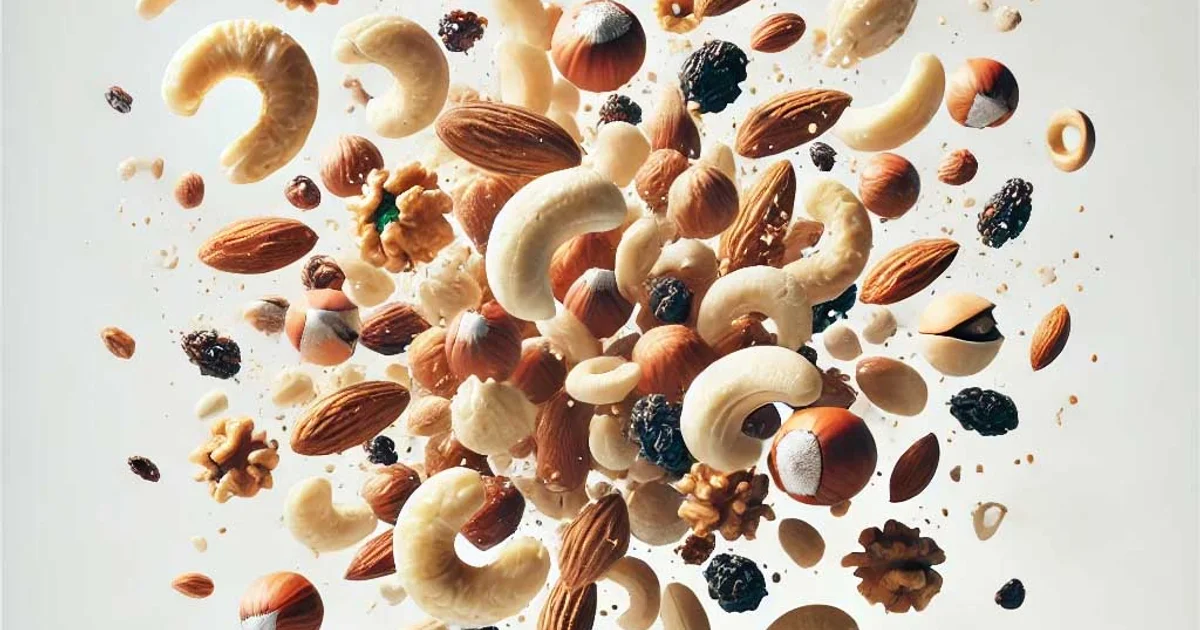
Wholesale almonds and cashew nuts: a buyer's guide for trade
A complete guide to buying wholesale almonds and cashews: calibres, packaging, HACCP storage and professional uses for foodservice, retail and grocery stores.
For a food wholesaler, a pastry chef, a fine food retailer or a caterer, buying almonds and cashew nuts in bulk is not simply a matter of comparing prices per kilo. Size, grade, moisture content, packaging and stock rotation all determine the quality of the finished product as much as the profitability of the order. This guide reviews the professional criteria to know when purchasing these two oleaginous dried fruits under good conditions, whether for confectionery, pastry, snacking or world cuisine.
Why buy dried fruit in bulk as a professional
Unlike small-pack purchases aimed at individual consumers, bulk ordering follows a business logic: anticipating the needs of a menu, securing a regular supply, and controlling raw material costs on large volumes. A wholesaler specialising in dried fruit generally offers packaging from 5 kg upwards, with delivery by case or pallet depending on quantities, and batch traceability essential for HACCP checks.
For HoReCa, fine food retailers and artisans (pastry chefs, confectioners, chocolatiers), the challenge is twofold: guaranteeing product consistency from one order to the next, and having sourcing capable of justifying origin and storage conditions in the event of a health inspection. Feel free to contact our sales team to assess your ordering needs.
In catering as in industrial confectionery, consistency of size and moisture content weighs as heavily on the purchasing decision as the price per kilo: a heterogeneous batch complicates recipe calibration and increases production losses.
Before selecting a supplier, several quality criteria deserve checking beyond the listed price: residual moisture content (which determines shelf life), the tolerated rate of broken pieces or foreign matter in the batch, size uniformity within a single case, and the frequency of quality checks carried out upstream. Clear specifications on these points avoid unpleasant surprises on receipt and make it easier to incorporate the product into a technical data sheet or a standardised recipe.
Almond sizes: understanding the professional classification
Almonds intended for professionals are classified by size, traditionally expressed as the number of almonds per ounce (28 g). The smaller the figure, the larger the almond. This classification, inherited from Californian standards widely adopted internationally, makes it possible to choose the size suited to each use without wasting material or incurring unnecessary extra cost.
| Size (almonds/ounce) | Category | Common professional uses |
|---|---|---|
| 20/22 to 23/25 | Extra large to large | Whole shelled almonds, sugared almonds, aperitif presentation |
| 25/27 to 27/30 | Medium | Nougat, roasting, dried fruit mixes |
| 30/32 and above | Small | Flaked almonds, chopped almonds, almond powder, pastry |
Beyond size, several forms of preparation coexist on the professional market:
- Whole shelled almonds (with or without skin)
- Blanched almonds (skin removed), for a lighter visual finish
- Flaked almonds or almond sticks, for pastry decoration
- Chopped or powdered almonds, for frangipane and batter mixes
- Roasted or toasted almonds, for snacking and savoury aperitifs
The choice of size and form depends directly on the end use: an industrial pastry business will favour powder and flaked almonds for their dosing consistency, while a fine food retailer will highlight whole sized almonds for bulk sale or dried fruit baskets.
Cashew nuts in bulk: grades and formats for catering and fine food retail
Cashew nuts follow a different classification logic, inherited from Indian and Vietnamese standards, expressed as the number of kernels per pound (453 g) for whole white kernels. The most common designations on the professional market are W180, W210, W240, W320 and W450: the higher the number, the smaller the kernel.
| Grade | Number of kernels/pound | Recommended use |
|---|---|---|
| W180 - W210 | 180 to 210 | Premium snacking, aperitif presentation, baskets |
| W320 | ~320 | Standard grade, versatile use in cooking and pastry |
| W450 and pieces (splits, pieces, LWP) | 450 and above / fragments | Asian cuisine, sauces, garnishes, controlled cost |
For a caterer or restaurateur, pieces and small kernels represent a relevant economical option whenever the product is intended to be cooked (wok, curry, satay sauce) rather than served whole. The most common professional uses include:
- Snacking and savoury or sweet-savoury aperitif mixes
- Asian and Southeast Asian cuisine (Thai, Vietnamese, Indian)
- Granolas, cereal bars and artisan pastry
- Dried fruit mixes for bulk sale in food retail
Packaging and logistics: from case to carriage-paid pallet
Bulk purchasing of almonds and cashew nuts is generally organised around several packaging formats, with a minimum order set at 5 kg. Beyond this threshold, the professional chooses between cases (5, 10 or 25 kg depending on the reference) and carriage-paid palletised delivery for larger volumes, which helps smooth out logistics costs on regular orders.
This packaging logic is designed to suit both the needs of an artisan who orders weekly and those of a distributor or purchasing group supplying several points of sale. The almond range and the cashew nut range thus offer references broken down by size and packaging, so that each professional can adjust their order to their actual rotation rate rather than overstocking. To find out more about our sourcing, visit our about Palimex page.
For a large retail distributor or a purchasing group restocking several shops, logistics planning becomes a central issue: anticipating production lead times, consolidating orders for several references onto a single pallet and negotiating regular delivery slots helps reduce both transport costs and shelf stockouts. This coordination is all the more important because oleaginous dried fruits, sensitive to harvest seasonality, sometimes experience occasional supply tensions that a good wholesale partner must know how to anticipate.
Storage, best-before date and stock rotation: HACCP best practices
Almonds and cashew nuts are oleaginous dried fruits, therefore naturally rich in fats: their main enemy is oxidation, accelerated by heat, light and moisture. Well-managed professional storage rests on three pillars: cool, dry storage (ideally between 10 and 18°C, away from light), FIFO stock rotation (first in, first out), and rigorous tracking of best-before dates by batch to guarantee the traceability required under HACCP.
Our dried fruit storage guide details the best storage practices to apply in a professional kitchen or food retail stockroom, particularly to limit rancidity and extend the commercial shelf life of opened batches.
From a regulatory standpoint, almonds and cashew nuts are among the allergens subject to mandatory declaration: their labelling and their handling in the kitchen (risk of cross-contamination) must comply with the consumer information obligations set out by the DGCCRF, the reference authority for food regulation.
Practical culinary uses in catering and professional pastry
Beyond the choice of size, it is the end use that should guide the order. Here are a few examples of common professional use:
- Nougat and confectionery: medium-size almonds (25/27 to 27/30), lightly roasted before incorporation
- Pastry and frangipane: almond powder or chopped almonds, for consistent dosing of mixtures
- Snacking and aperitifs: salted roasted almonds and W180-W210 grade cashews for a premium visual finish
- Asian cuisine: W450 cashews or pieces, more affordable and perfectly suited to cooking
- Granola and artisan bars: a mix of flaked almonds and cashew pieces for a good texture-to-cost ratio
- Fine food retail and bulk sale: whole sized almonds and whole W320 cashews, valued individually
In all cases, size consistency from one order to the next remains the criterion that determines the reproducibility of a professional recipe, whether for fine pastry or a snacking mix sold on shelf. This same consistency criterion is also what allows a head chef or pastry chef to set a reliable technical data sheet, without having to readjust their dosing with every new goods delivery. Other oleaginous ingredients follow the same professional sourcing logic, such as our guide to pistachio cream. For any questions about our B2B supply expertise, our team remains available via our contact page.
Frequently asked questions
- What is the minimum order quantity for bulk almonds or cashew nuts?
- The minimum packaging is generally set at 5 kg, with additional tiers in cases (10, 25 kg) and then pallets for larger volumes.
- What is the difference between almond sizes 20/22 and 30/32?
- The figure indicates the number of almonds per ounce (28 g): the smaller it is, the larger the almond. 20/22 corresponds to extra-large almonds, 30/32 to a smaller size suited to processing.
- What is the W320 grade for cashew nuts?
- W320 means it takes around 320 whole white kernels to make up a pound (453 g). It is the standard grade, the most versatile in professional kitchens.
- Are cashew pieces suitable for catering?
- Yes, pieces (splits, pieces) are perfectly suited whenever the product is cooked (sauces, woks, garnishes), for an optimised material cost compared with whole kernels.
- How should bulk-bought almonds or cashew nuts be stored?
- Cool, dry and away from light, ideally between 10 and 18°C, with FIFO rotation to limit the risk of oxidation and rancidity.
- What is the best-before date on a batch of dried fruit?
- The minimum durability date indicates until when the product retains its optimal qualities; tracking it by batch is essential for HACCP traceability in catering and food retail.
- Are almonds and cashew nuts delivered by pallet?
- Yes, beyond a certain volume, carriage-paid palletised delivery is offered to optimise the logistics cost of regular orders.
- Are organic almonds and cashew nuts available in bulk?
- Organic references generally exist alongside conventional ranges; availability by size should be checked with the wholesaler.
- What is the difference between blanched and unblanched almonds?
- Blanched almonds have their skin removed, for a lighter visual finish in pastry, while unblanched almonds retain their brown skin, often used for snacking or certain traditional recipes.
- Do whole cashew nuts and pieces have the same use?
- No: whole kernels are reserved for presentation (snacking, baskets), while pieces are better suited to cooking, with less visual impact but a reduced cost.
- How to choose the right almond size for nougat?
- A medium size (25/27 to 27/30), lightly roasted, is generally preferred to provide texture and cutting hold in nougat-type confectionery.
- Are almonds and cashew nuts covered by allergen regulations?
- Yes, they are among the allergens subject to mandatory declaration; their labelling and the prevention of cross-contamination in the kitchen must comply with the regulations set out by the DGCCRF.
- What is the ideal storage humidity level for these dried fruits?
- A dry environment, with low and stable humidity, limits the risk of mould and preserves the crunchy texture of almonds and cashews stored in bulk.
- Can several sizes be combined in a single professional order?
- Yes, it is common to order several sizes or grades simultaneously to cover different uses (snacking, pastry, cooking) within the same establishment.
- What is the origin of bulk-sold almonds and cashew nuts?
- Almonds most often come from Mediterranean or American growing regions depending on size, while cashew nuts mainly originate from India, Vietnam or West Africa.
- How can a caterer limit waste on these products?
- By matching size and packaging to the volume actually consumed, and by following strict FIFO rotation to avoid prolonged storage of opened batches.
- Does the price per kilo vary significantly depending on the chosen size?
- Yes, the largest sizes and premium whole cashew kernels are generally more expensive than smaller sizes or pieces, at equal quality.
A question?
Get in touch directly.
Our advice related to Dried-fruits
 dried-fruits
Seau, carton, sac de 25 kg : le conditionnement décide de la rotation
Bucket, carton, or 25 kg bag: which packaging to choose based on your actual turnover in professional kitchens. Palimex advice for foodservice, grocers, and pastry chefs.
 dried-fruits
Abricot sec : lire un calibre n°1 à n°4, soufré ou non
How to read size grades No.1 to No.4 for dehydrated apricots, and choose between sulphured and unsulphured based on professional kitchen use. Buyer’s guide for foodservice, pastry chefs, and specialty grocery stores.
 dried-fruits
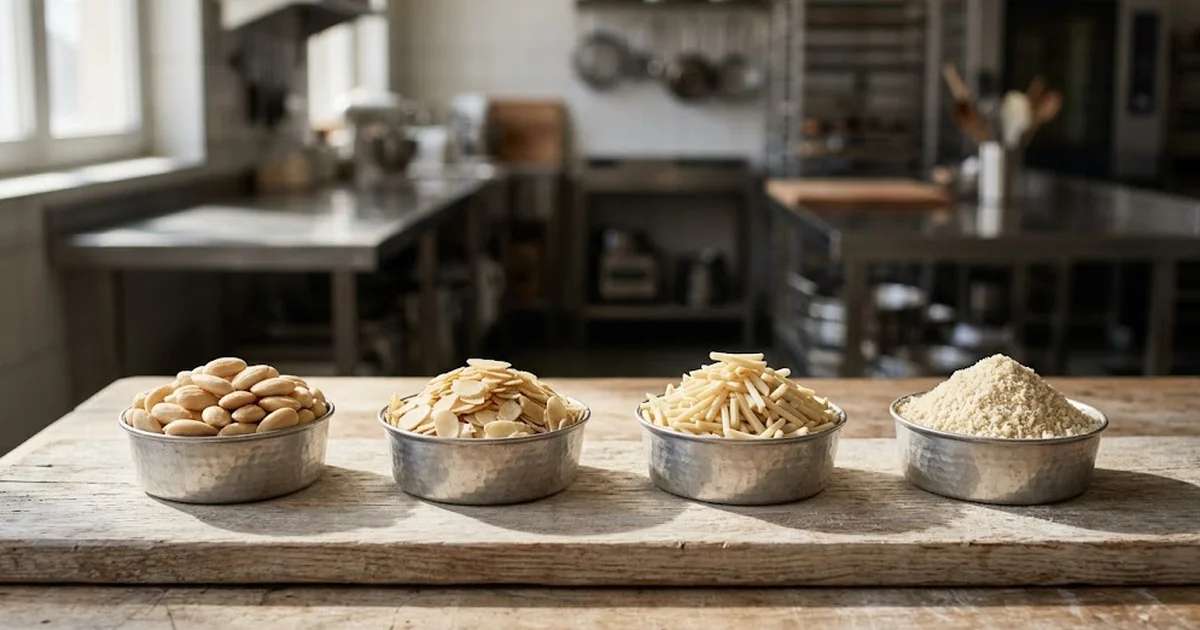
Amande émondée, effilée, bâtonnet, poudre : quel format pour quel usage
Professional guide: uses, cooking performance, and storage of blanched almonds, flaked, slivered, and powdered. Procurement and B2B logistics tips from Palimex.