
Pistachios for pastry chefs, bakers and ice-cream makers: guide
Professional guide for pastry chefs, bakers and ice-cream makers: pistachio formats, calibres, uses, storage and HACCP-compliant wholesale buying at Palimex.
Pistachios: a nut with strong commercial potential for the sweet artisan trade
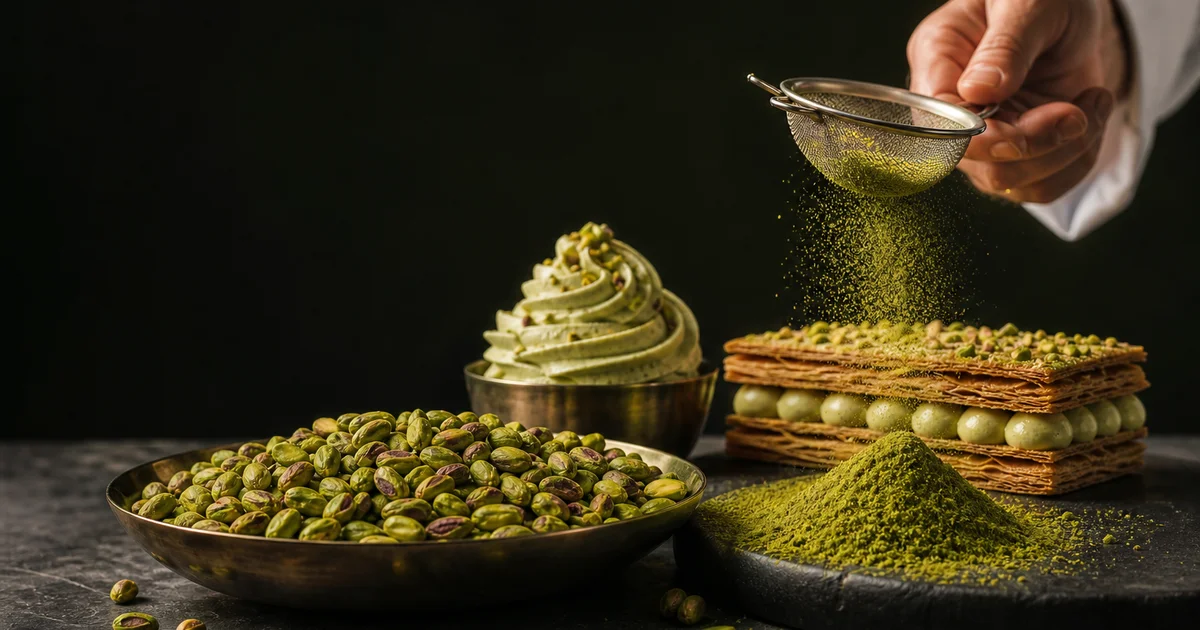
Pastry chefs, bakers and ice-cream makers have observed a growing demand for pistachio over several seasons: macarons, filled croissants, financiers, ice creams and exceptional pralines all rely on this same Mediterranean and Middle Eastern seed. For a professional buying wholesale, the challenge is not finding pistachio, but choosing the right format, the right grade and the right origin for the intended use, while managing the storage of a product rich in fat and therefore prone to rancidity.
This guide is intended for artisans and food trade professionals who buy in quantity (from 5 kg) and are looking for practical reference points: available formats, grades, quality criteria, uses by trade, workshop storage and wholesale purchasing terms.
Pistachio origins and varieties found in professional pastry-making
Pistachio grown for food use comes mainly from four major production areas: Iran, historically the world's largest producer; Sicily, with Bronte pistachio recognised for its intense aroma and pronounced green colour; California, which produces large volumes with a grade consistency valued by industry; and Turkey, notably the Antep region, known for its long pistachios used in confectionery.
For a pastry or ice-cream workshop, origin directly influences three criteria: natural colour (more or less green depending on variety and ripeness at harvest), aroma intensity and price. A pistachio intended for a premium pistachio paste will not have the same requirements as a crushed pistachio used for decoration or coating. These origin differences also explain the price gaps seen from one supplier to another: a Bronte pistachio, produced in low volume, logically trades at a higher price than a Californian pistachio produced at large scale.
« Since 1984, selecting dried fruit and nuts has been a precision trade: pistachio forgives neither approximation on moisture content nor slackness on batch freshness. » — The Palimex team, wholesaler of dried fruit and nuts, dehydrated fruit, spices and olives for professionals
Which pistachio format should you choose for your trade?
Pistachio comes in several formats for professional use, each meeting a specific need in the workshop. The table below summarises the most common formats and their typical applications in pastry-making, baking and ice-cream making.
| Format | Description | Typical uses | Point to watch when buying |
|---|---|---|---|
| Whole blanched pistachio | Shelled, skin-off, uniform grade | Macaron decoration, tarts, visible finishes | Consistent grade, uniform colour |
| Unblanched pistachio | Shelled but with its thin brown skin | Crushing, powder, in-house roasting | Generally lower price, moisture content |
| Crushed pistachio | Graded pieces, skin-off | Coating, crunch on pastries, ice creams | Particle size suited to the intended use |
| Pistachio powder | Finely ground, sometimes defatted | Biscuits, financiers, creams, choux pastry | Freshness, absence of rancidity |
| Pistachio paste | Ground pistachio, with or without added sugar | Creams, ganaches, ice creams, filled fillings | Actual pistachio content, any additives and colourings |
One point that artisans consistently flag is the difference between a pure pistachio paste and a preparation based on almond or apricot kernel coloured green. Price, the ingredient list and aroma intensity on the palate generally make it possible to tell them apart. A professional changing supplier is well advised to order a small test batch before switching a flagship recipe to a new reference, in order to validate the result in baking and tasting.
Grade, moisture and colour: the three quality criteria for a wholesale purchase
For a professional buying by 5 kg bag or by carton, three criteria determine production consistency:
- Grade, generally expressed as the number of pistachios per kilo or as a size range, must remain constant from one batch to the next to guarantee an identical visual result across production runs.
- Moisture content, which must be controlled from receipt onward to limit the risk of mould and extend the product's shelf life in stock.
- Colour, naturally variable depending on origin and harvest, not to be confused with artificial colouring added to lower-grade pastes or powders.
A batch of pistachios showing a rancid smell, sticky kernels or a dulled colour must be rejected before production, regardless of its purchase price. A systematic visual and olfactory check on receipt, recorded in a quality tracking log, helps secure the workshop's internal traceability and makes any supplier return easier.
Practical uses of pistachio in pastry-making, baking and ice-cream making
Each food trade uses pistachio differently depending on the texture and intensity sought:
- In pastry-making: pistachio macarons, financiers, joconde sponge, mousseline creams, whipped ganaches and entremets use pistachio powder or paste for colour and aroma.
- In baking: pastries filled with pistachio cream, dried-fruit breads, filled brioches and crunchy decorations make use of crushed or whole blanched pistachio.
- In ice-cream making: pistachio ice creams and sorbets, pralines, cone and sundae decorations rely on pistachio paste for smoothness and crushed pistachio for crunch.
The trend for indulgent desserts combining pistachio and chocolate (filled croissants, "pistachio chocolate"-style bars) has strengthened professional demand over recent seasons, particularly in bakery-pastry and artisan ice-cream making. This diversification of uses is also leading some workshops to work simultaneously with several pistachio formats (blanched, crushed and paste) for the same product range, which increases the value of a supplier able to cover the full range of these references wholesale.
Storage and stock management of pistachio in a professional workshop
Pistachio is a nut rich in fat, and therefore naturally prone to oxidation and rancidity if poorly stored. A few simple principles help preserve the quality of a batch bought wholesale:
- Store in a dry, cool place away from direct light, ideally between 10 and 18°C.
- Reseal opened bags tightly to limit contact with air and ambient humidity.
- Apply strict FIFO rotation (first in, first out) to use the oldest batches first.
- Check the best-before date on receipt and factor it into the production schedule rather than discovering it at the end of the product's shelf life.
See our dedicated guide to dried fruit and nut storage for detailed best practices for workshop storage.
Buying pistachio wholesale: packaging, logistics and compliance
Palimex is a B2B food wholesaler specialising in dried fruit and nuts, dehydrated fruit, spices and olives, active since 1984, exclusively reserved for professionals with a valid SIRET (foodservice/HoReCa, pastry chefs, bakers, ice-cream makers, delicatessens, caterers). Buying pistachio wholesale is organised around several logistics benchmarks specific to B2B:
- Minimum packaging of 5 kg per reference, suited to professional production volumes.
- Delivery by pallet or free of charge depending on the volumes ordered, to optimise logistics costs.
- Batch traceability and HACCP procedures, essential for a nut ingredient subject to mandatory allergen declaration.
From a regulatory standpoint, pistachio is among the nuts listed as allergens requiring mandatory declaration on food labelling. The labelling and traceability rules applicable to professionals are set out by the DGCCRF, the reference authority for food regulation in France.
To find out more about selecting dried fruit and nuts based on your business, our B2B guide to choosing dried fruit and nuts details the criteria to apply according to your trade, and our Dried fruit and nuts section presents the full range available wholesale. A dedicated professional account manager can also help scope a first order, particularly for a workshop discovering pistachio in volume and wishing to secure its sourcing ahead of a peak season (end-of-year holidays, Easter, summer season for ice-cream making).
Market trends around pistachio for professionals
Pistachio is now part of a "signature product" dynamic that many artisans are capitalising on: pastries filled with pistachio cream, Dubai-style pistachio and kunafa chocolate bars, pistachio-raspberry or pistachio-chocolate entremets. This trend, widely amplified on social media, has created supply pressure on certain premium formats, particularly pure pistachio paste and blanched pistachio of consistent grade.
For a professional, planning orders ahead rather than buying at the last minute helps secure a regular supply, at a stable price, on fast-moving references. Our Market trends section tracks these shifts in demand to help artisans adjust their purchasing. You can also consult our ingredient sheets to compare pistachio with other dried fruit and nuts used in pastry-making and confectionery. Planning volumes several weeks ahead, rather than ordering on a case-by-case basis, remains the best lever for absorbing these demand peaks without shortages or extra cost.
Frequently asked questions about buying and using pistachio as a professional
Here are the frequently asked questions we receive from pastry chefs, bakers and ice-cream makers before ordering pistachio wholesale.
A question?
Get in touch directly.
Our advice related to Dried-fruits
 dried-fruits
Seau, carton, sac de 25 kg : le conditionnement décide de la rotation
Bucket, carton, or 25 kg bag: which packaging to choose based on your actual turnover in professional kitchens. Palimex advice for foodservice, grocers, and pastry chefs.
 dried-fruits
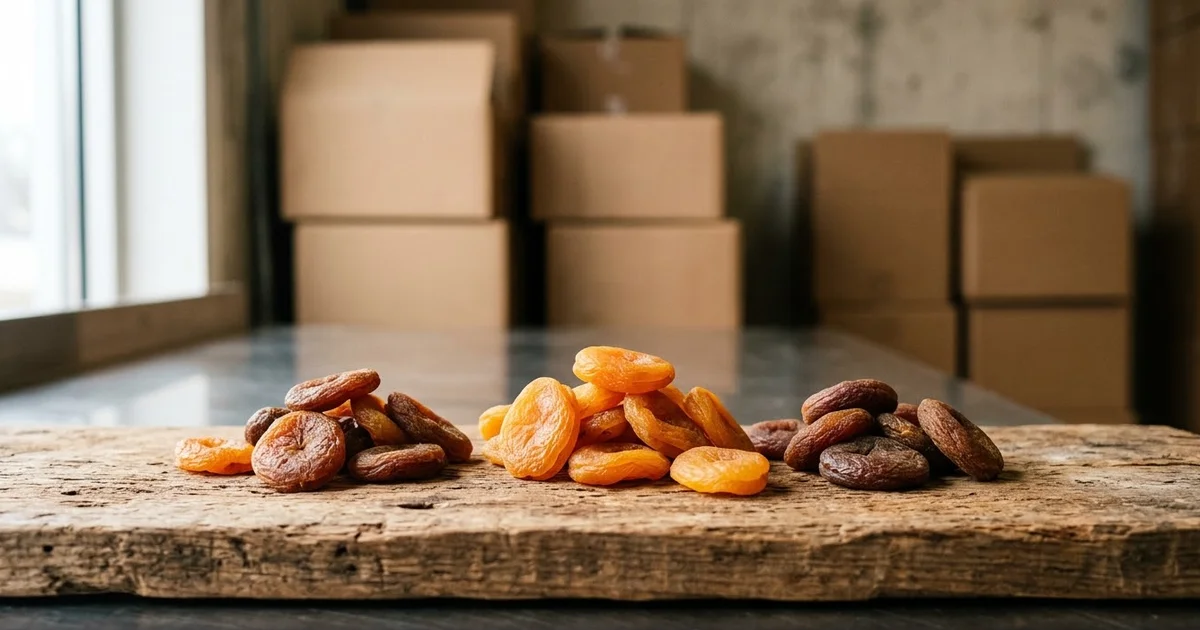
Abricot sec : lire un calibre n°1 à n°4, soufré ou non
How to read size grades No.1 to No.4 for dehydrated apricots, and choose between sulphured and unsulphured based on professional kitchen use. Buyer’s guide for foodservice, pastry chefs, and specialty grocery stores.
 dried-fruits
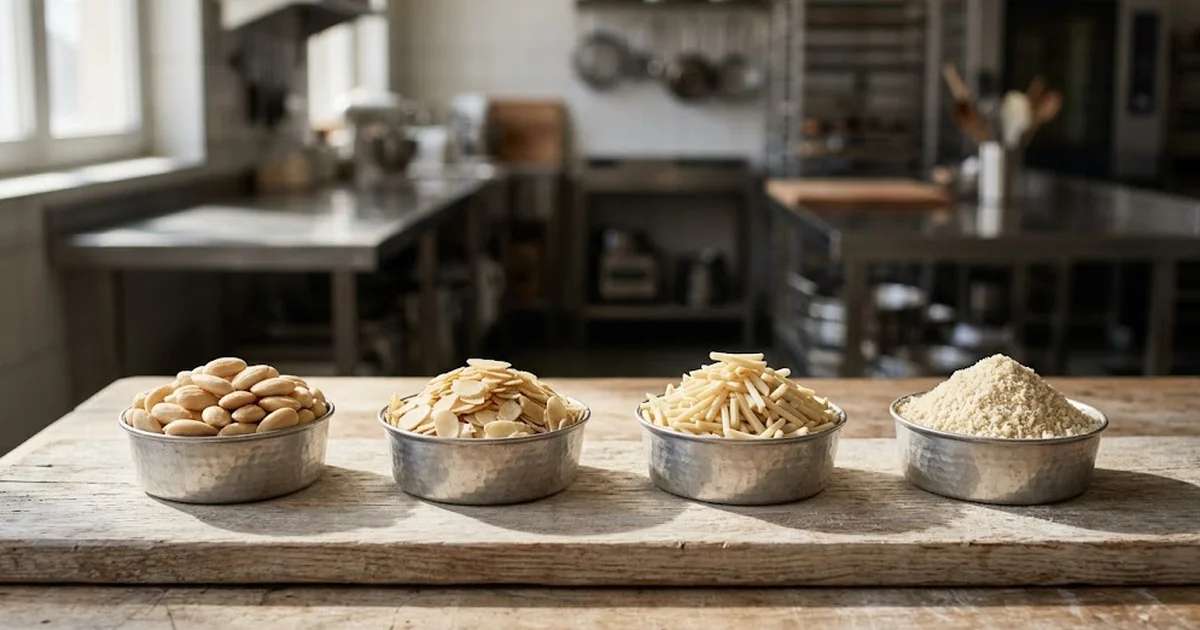
Amande émondée, effilée, bâtonnet, poudre : quel format pour quel usage
Professional guide: uses, cooking performance, and storage of blanched almonds, flaked, slivered, and powdered. Procurement and B2B logistics tips from Palimex.