
Bulk pine nuts: origins, pricing, and storage
Bulk pine nuts: origins from China, Europe, and the Middle East, sizes, and storage. Professional formats for caterers and restaurateurs.
The pine nut holds a unique place in the professional dried fruits catalogue: structurally, it is the most expensive product per kilo that Palimex distributes. For pastry chefs, caterers, and restaurateurs who incorporate it into their signature recipes—pesto, savoury tarts, Basque cakes, stuffed vegetable garnishes—understanding why this dried fruit weighs so heavily on raw material purchases is essential for balancing quality, origin, and budget. This article reviews the origins of bulk pine nuts, the mechanisms behind their pricing, the differences between Chinese pine nuts and Mediterranean stone pine nuts, as well as the essential storage practices required for a dried fruit particularly prone to rancidity.
Bulk pine nuts: a global market under pressure
Unlike almonds, hazelnuts, or cashew nuts, pine nuts are not grown in orchards. They come from the harvesting of pine cones, a long, largely manual process that depends directly on natural fruiting cycles. This characteristic places pine nuts in a category of their own among bulk dried fruits: their supply is structurally irregular, which explains the sometimes sharp fluctuations in the global market price from one season to the next.
Three major regions currently supply the professional market:
- China and Korea, the world's leading suppliers by volume, with pine nuts from the Siberian pine (Pinus sibirica) or the Korean pine (Pinus koraiensis).
- The Mediterranean basin (Spain, Portugal, southern France, Italy, North Africa), which produces the stone pine nut (Pinus pinea), rarer and more expensive.
- The Middle East and Central Asia (Afghanistan, Pakistan), complementary sources subject to significant logistical and sanitary constraints for export.
Cone harvesting cannot be industrialised to the same extent as conventional nut farming: it depends on existing forest stands, annual weather conditions, and, in the Mediterranean, the health of pine forests against pests. This reliance on semi-wild resources justifies price volatility unseen in intensively farmed dried fruits like almonds or cashew nuts, available in our dedicated space for pastry chefs and artisans.
Chinese pine nuts vs. Mediterranean stone pine nuts: key differences for professionals
In practice, confusion between the two origins is common, despite significant differences in flavour, cooking performance, and price. This is the first decision to make when purchasing in bulk.
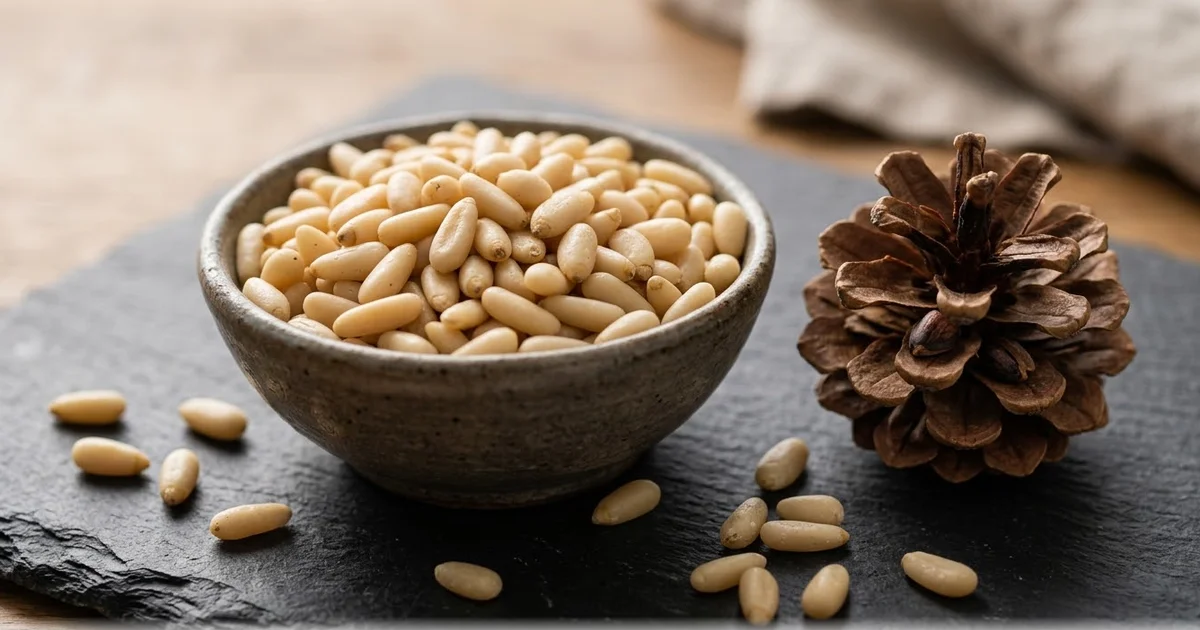
Chinese pine nuts, from the Siberian pine, are more elongated and fine. Their taste is more neutral, slightly resinous, and loses aromatic intensity when cooked. They remain a relevant option for preparations where pine nuts primarily add crunch and visual appeal (salad garnishes, savoury tart toppings, pastry decoration) without being the central ingredient.
Mediterranean stone pine nuts, shorter, rounder, and fleshier, develop a buttery, sweet, and slightly resinous flavour that fully emerges upon roasting. This is the historical reference for Genoese pesto, pine nut tuiles, and specialities from the South-West and the Mediterranean basin. Their relative scarcity—commercially exploited stone pine areas are limited—explains a clear price gap with Asian pine nuts.
| Criterion | Chinese pine nut (Pinus sibirica / koraiensis) | Mediterranean stone pine nut (Pinus pinea) |
|---|---|---|
| Shape | Elongated, fine | Short, rounded, fleshy |
| Aromatic profile | Neutral, slightly resinous | Buttery, sweet, rich, more pronounced when roasted |
| Cooking performance | Fair, aroma underdeveloped | Excellent, aroma develops and intensifies |
| Availability | Large volumes, more affordable price | Limited volumes, high price |
| Typical professional uses | Garnish, decoration, crunch | Traditional pesto, signature pastries, Mediterranean recipes |
Understanding pine nut pricing: origin, size, and shelling yield
Without quoting specific prices, it is useful to detail the factors that determine the final cost of bulk pine nuts, as they help professional buyers understand why this product remains—and will continue to be—the most expensive dried fruit in the catalogue.
- Geographical origin: Mediterranean stone pine nuts are structurally more expensive than Chinese pine nuts due to much lower production volumes and higher harvesting labour costs.
- Size: The larger and more uniform the pine nuts, the higher their commercial value. Smaller-sized batches, often from secondary sorting, are offered at more accessible price levels but with less visual consistency.
- Shelling yield: Pine nuts are extracted manually or mechanically from the cone’s shell, with a yield often lower than other nuts. Each kilo of shelled pine nuts represents a significant quantity of harvested and processed cones, directly impacting production costs.
- Global market price: Like spices or certain dried fruits sensitive to climatic variations, pine nut prices fluctuate based on harvest seasons, international demand (particularly in Asia), and available stocks.
- Logistics and sourcing: Transport from sometimes remote areas, import sanitary controls, and batch traceability add structural costs, particularly monitored for HACCP-compliant sourcing in the foodservice industry.
These factors explain why pine nut pricing cannot be compared to that of orchard-grown dried fruits. It is a unique product, to be managed as such in your margin and menu planning.
Flavour, cooking performance, and professional kitchen dosing
Pine nuts are primarily valued for their unique aromatic profile, but their behaviour during cooking requires special attention to avoid wasting a costly ingredient.
Raw, pine nuts have a subtle, slightly resinous, and oily taste. Dry roasting at low heat, with constant monitoring of colour, enhances buttery and sweet notes that add significant value to pastries and savoury dishes. The margin for error is narrow: pine nuts burn very quickly due to their high fat content, and an entire batch can be ruined in seconds if left unattended on a hot tray.
Key guidelines for controlled professional dosing:
- In traditional pesto, use a base of 30 to 40 g of pine nuts per 100 g of basil, adjusting for desired intensity.
- In pastries (tuiles, financiers, tarts), stone pine nuts are typically used as a visible topping, at 8 to 12% of the preparation’s weight for balanced results.
- In savoury garnishes (stuffed vegetables, tabbouleh, oriental dishes), Chinese pine nuts, being less expensive, allow for more generous dosing without unbalancing food costs.
- For extended hot preparations, add pine nuts at the end of cooking to preserve crunch and prevent accelerated rancidity from prolonged heat.
For further insights into roasting techniques and flavour pairings, also consult our article on bulk dried fruits for professionals, which details cross-uses with almonds, hazelnuts, and cashew nuts.
Rapid rancidity: why pine nuts require strict cold storage
Pine nuts are among the most fragile dried fruits in the catalogue when it comes to storage. Their high content of unsaturated fatty acids makes them particularly prone to oxidation, with rancidity occurring much faster than in almonds or hazelnuts, especially when exposed to heat, light, or air.
"In over forty years of sourcing, pine nuts remain the dried fruit requiring the most vigilance in stock. A batch stored improperly, even for a few days at room temperature during hot weather, can develop a bitter, rancid taste that makes it unusable in cooking. We systematically recommend to our foodservice and pastry clients to treat pine nuts as a fast-turnover fresh product, not as a long-term dried fruit stock." — The Palimex team
Best storage practices to integrate into your receiving and stock management process:
- Store pine nuts at positive cold temperatures (between 2 and 8 °C) upon receipt, including in resealable professional buckets or packaging.
- Avoid prolonged storage at room temperature, particularly in kitchens near cooking areas or heat sources.
- Prioritise short stock rotation: order volumes aligned with your actual consumption rather than dormant stocks, even in bulk packaging.
- Systematically check the best-before date upon receipt and organise batch tracking, in line with HACCP traceability requirements for commercial foodservice.
- Smell and taste a sample before final preparation use: rancid pine nuts emit a characteristic oil or paint-like odour, easily identifiable by an experienced professional.
To efficiently organise your storage of sensitive dried fruits, our guide on dried fruit storage in foodservice environments details recommended temperatures and durations for each product.
Professional formats, bulk ordering, and logistics for foodservice and artisans
Given their high unit value and fragility, Palimex offers pine nuts in packaging designed for controlled professional use, with a minimum order threshold of 5 kg and logistics tailored to rapid turnover requirements.
The MEYVA bucket format was specifically developed to meet this storage need: it allows airtight sealing after each use, minimises exposure to air and moisture, and facilitates cold storage without intermediate repackaging, unlike an opened bulk carton.
| Format | Main advantage | Recommended use |
|---|---|---|
| Resealable MEYVA bucket | Seal tightness and protection against oxidation between uses | Establishments with regular turnover (restaurants, bakeries) |
| Professional carton | Logistical optimisation for large volumes | Caterers and workshops with continuous high consumption |
| Pallet delivery / franco | Reduced unit logistics cost | Purchasing groups, multi-site foodservice |
To secure your supplies of a product with high price volatility, a few bulk purchasing best practices are recommended:
- Plan your pine nut orders ahead of high-demand periods (end-of-year holidays, summer pesto and salad season).
- Choose a supplier able to provide origin and batch details for each delivery, essential for your internal HACCP traceability.
- Always compare size and origin before comparing price per kilo, as two similarly priced batches may differ significantly in quality.
All available formats and sizes can be viewed in the MEYVA range, alongside other dried fruits and dehydrated fruits in the Palimex professional catalogue.
Summary: buying and storing bulk pine nuts effectively
Pine nuts remain, structurally, the most expensive dried fruit in the catalogue due to a production chain dependent on cone harvesting, low shelling yield, and volatile global prices. Clearly distinguishing between Chinese pine nuts, more affordable and suited for garnish uses, and Mediterranean stone pine nuts, reserved for signature recipes where their buttery flavour makes a difference, allows for optimising both food costs and perceived quality on the plate. Their high sensitivity to rancidity also requires strict cold storage and rapid stock rotation, an essential condition for preserving the value of such a costly ingredient. For further guidance on selecting formats and sizes, the Palimex team is available to refine your sourcing based on your activity and order volumes.
A question?
Get in touch directly.
Our advice related to Dried-fruits
 dried-fruits
Seau, carton, sac de 25 kg : le conditionnement décide de la rotation
Bucket, carton, or 25 kg bag: which packaging to choose based on your actual turnover in professional kitchens. Palimex advice for foodservice, grocers, and pastry chefs.
 dried-fruits
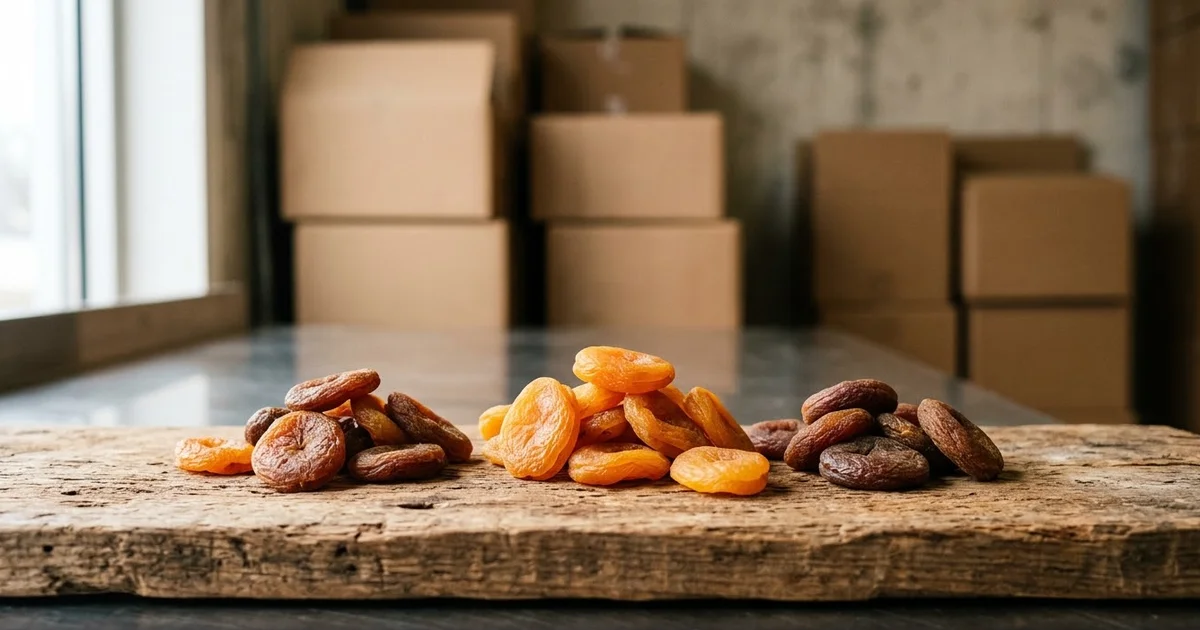
Abricot sec : lire un calibre n°1 à n°4, soufré ou non
How to read size grades No.1 to No.4 for dehydrated apricots, and choose between sulphured and unsulphured based on professional kitchen use. Buyer’s guide for foodservice, pastry chefs, and specialty grocery stores.
 dried-fruits
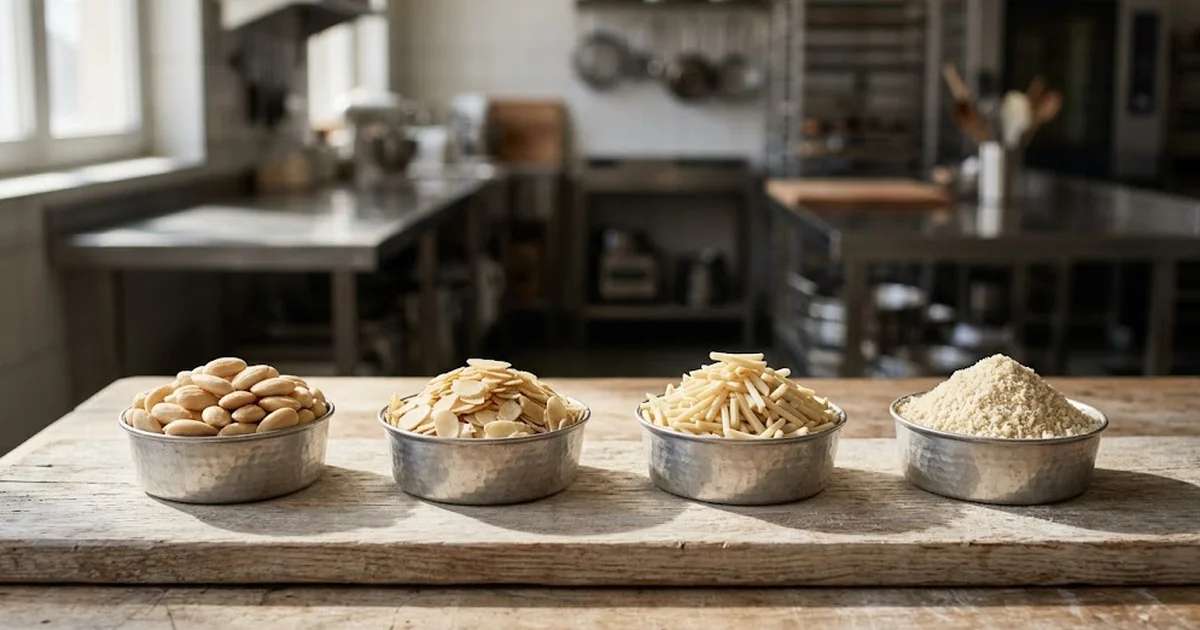
Amande émondée, effilée, bâtonnet, poudre : quel format pour quel usage
Professional guide: uses, cooking performance, and storage of blanched almonds, flaked, slivered, and powdered. Procurement and B2B logistics tips from Palimex.