
Buying nuts in bulk: walnut kernels, calibers, storage
Bulk walnut kernels for professionals: qualities, calibers and storage. Pastry formats, rancidity and stock rotation.
Buying nuts in bulk represents a balancing act for professionals in catering, pastry and fine grocery: finding the right caliber, the right origin and the right storage logistics, while controlling the raw material purchasing budget. Unlike other more stable dried fruits, the walnut requires particular vigilance due to its composition. This technical guide reviews kernel classifications, available origins, rancidity risks and formats suited to a professional activity with a SIRET.
Buying nuts in bulk: understanding walnut kernel classifications
Before placing any bulk order, it is essential to know the professional nomenclature of walnut kernels. This classification determines not only the visual appearance of the finished product, but also its price per kilo and its recommended use in cooking or pastry.
On the B2B market, four main categories structure the offer:
- Kernels extra: whole half-kernels, homogeneous caliber, uniform light color. Reserved for preparations where visual appearance matters (pastry finishes, display in shop windows, cheese trays).
- Light kernels: high-end intermediate quality, mostly whole kernels with slightly less homogeneous coloring than extra, at a more affordable price.
- Medium-light kernels: mix of whole kernels and larger pieces, variable coloring. Suitable for integration into recipes where visual appearance is secondary (industrial biscuits, walnut bread, savory cakes).
- Pieces: kernel pieces from calibrating, with no requirement for wholeness. Economical solution for incorporation into pastry, roasting in aperitif mixes or oil production.
This hierarchy is not just aesthetic: it directly conditions the purchase price per kilo, with differences that can reach 30 to 40% between an extra and a piece from the same origin batch. For visible garnish use in fine pastry, extra remains essential; for incorporation into dough, pieces allow significant budget optimization without compromising taste results.
| Category | Appearance | Recommended use | Price positioning |
|---|---|---|---|
| Extra | Whole half-kernels, homogeneous light color | Visible finishes, trays, shop windows | High |
| Light | Whole kernels, slightly variable coloring | High-end pastry, decoration | Medium-high |
| Medium-light | Mix of whole/chunks, variable coloring | Biscuits, cakes, walnut bread | Medium |
| Pieces | Calibrated chunks | Incorporation into dough, mixes, oil production | Economical |
For a detailed description of the references available for ordering, the page Pastry Chefs & Artisans > Walnut kernels presents the entire range and its professional packaging.
Walnut origins: France, Chile, California, what differences for bulk purchasing
Geographical origin influences both the availability calendar, the aromatic profile and the price positioning of batches. For a professional buyer, sourcing the right origin according to the season and intended use helps optimize both perceived quality and material cost.
- France: walnuts mainly harvested in Isère and Périgord, appreciated for their short traceability and their typical aromatic profile. Marked seasonal availability, with volumes often limited compared to international origins.
- Chile: production in the southern hemisphere offering an interesting counter-cycle to smooth supply throughout the year. Regular calibrating quality, large volumes suitable for pallet orders.
- California: world's leading production basin, industrial standardization of calibrating and regular supply throughout the year. Reference for buyers seeking batch consistency for large volumes.
The choice of origin depends primarily on the establishment's specifications: a restaurant promoting local sourcing will favor French walnuts with explicit mention on its menu, while a high-turnover production workshop opting for controlled cost will choose Chile or California, ensuring batch traceability via the number provided on the delivery note.
At Palimex, we systematically recommend that our professional clients verify the origin and harvest date indicated on each batch before order validation, particularly during the transition period between two harvests. A poorly dated batch, even apparently compliant, may have started invisible oxidation. This is a point we systematically check upon receipt, even before stocking.
Why walnuts go rancid faster than other nuts
The walnut is recognized in the sector as the most fragile dried fruit for storage. This fragility is explained by its biochemical composition: the walnut kernel contains a particularly high lipid content, mainly composed of polyunsaturated fatty acids. However, these fatty acids are naturally unstable when in contact with oxygen, light and heat.
This phenomenon, called lipid oxidation, results in:
- Development of odors and bitter or "paint-like" tastes characteristic of rancidity
- Gradual degradation of texture, the kernel becoming softer or more brittle
- Loss of commercial value of the product, impossible to showcase or use in fine preparations
- Increased risk in case of cold chain break or prolonged storage at room temperature
Unlike almonds or hazelnuts, whose lipid content is also high but whose structure better protects the heart of the fruit, the walnut has a large surface area in contact with air once shelled, which accelerates the process. This is why stock rotation management is a central issue for any professional buying in bulk: a large volume not quickly sold exposes the business to a significant material loss risk.
To learn more about fat oxidation mechanisms, the resources of the ANSES provide useful scientific insight into the stability of food fats.
Cold storage: best practices to preserve your walnut batches
Faced with this intrinsic fragility, cold storage is the most effective lever to preserve the organoleptic quality of kernels throughout the batch's shelf life. A controlled cold chain considerably slows down oxidation kinetics and extends the exploitation period before the best-before date.
Some operational recommendations for professional storage:
- Store cartons or bags in a positive cold room (between 2 and 8°C) upon receipt, particularly for volumes intended for slow rotation
- Avoid any direct exposure to light, including in a glass-fronted cold room
- Reseal opened packaging hermetically to limit contact with ambient oxygen
- Organize stock according to the FIFO (First In, First Out) method using batch numbers and best-before dates indicated
- Physically separate walnut batches from strong-smelling products, as walnuts are sensitive to aromatic transfers
For establishments without a dedicated cold room for dried fruits, storage in a cool, dry and dark place remains an acceptable alternative, provided storage duration is limited and order frequency is increased with smaller volumes. This purchasing frequency issue directly relates to the stock rotation problem mentioned earlier: it is better to place more frequent orders than to have dormant volumes in reserve for too long.
The positive cold storage stock management principles detailed on our page dried fruit stock rotation apply with particular acuity to walnuts, the most demanding product in the range.
Formats and packaging for bulk walnut purchases
As access to the Palimex site is reserved for professionals with a SIRET, our entire offer is organized around packaging suited to commercial activity: no format intended for domestic use is offered. The minimum packaging size is 5 kg, with higher levels up to pallet format for the largest production or resale needs.
The available formats are mainly as follows:
- 5 to 10 kg carton: entry-level format for artisan pastry chefs and small CHR structures with regular rotation
- 10 to 25 kg carton: standard format for production workshops and fine grocery stores with significant volume
- Big bag or bulk bags: for industrial volumes and recurring just-in-time orders
- Free pallet delivery: for grouped orders or seasonal stock building needs
The choice of format directly depends on the establishment's cold storage capacity: it is not relevant to order a pallet format if the cold room cannot process the volume before quality degradation. We advise our clients to size their order according to their actual consumption rate rather than solely based on a volume discount logic, as the rancidity risk can cancel out any price benefit obtained on a poorly managed large volume.
How to choose caliber and origin based on professional use
The final choice between quality, origin and format should be based on the concrete use planned in the kitchen or pastry laboratory. Here is a decision-making guide to help with the purchase:
- Shop window pastry, visible decoration: extra or light kernels, French origin that can be highlighted on the menu, 5 to 10 kg packaging to limit dormant stock
- Biscuits, cake, specialty bread: medium-light kernels, Chilean or Californian origin for optimized quality-price ratio, 10 to 25 kg format
- Industrial production, mixes, oil production: pieces, origin based on availability and market price, big bag or pallet format
- Fine grocery with terroir argument: light or extra kernels of French origin, highlighted through origin labeling in the aisle
This use-based approach helps avoid two common pitfalls for professional buyers: overpaying for extra when only pieces would suffice, or conversely degrading the perceived quality of a finished product by using pieces where whole kernels were expected by customers. Find details of our available references on the page Walnut kernels for pastry chefs and artisans, as well as our additional sourcing advice on buying dried fruits in bulk for professionals.
Summary: securing your bulk walnut purchase
Buying walnuts in bulk requires combining three requirements: choosing the kernel classification suited to the final use, selecting an origin consistent with the establishment's positioning, and securing storage to avoid any rancidity risk linked to the high lipid content of this particularly fragile dried fruit. Mastering the packaging format, combined with rigorous stock rotation management and cold chain compliance, allows full benefit from the price advantages of bulk purchasing without suffering quality risks. For any questions about choosing a batch, caliber or format suited to your activity volume, our team remains available to assist with your order.
A question?
Get in touch directly.
Our advice related to Dried-fruits
 dried-fruits
Seau, carton, sac de 25 kg : le conditionnement décide de la rotation
Bucket, carton, or 25 kg bag: which packaging to choose based on your actual turnover in professional kitchens. Palimex advice for foodservice, grocers, and pastry chefs.
 dried-fruits
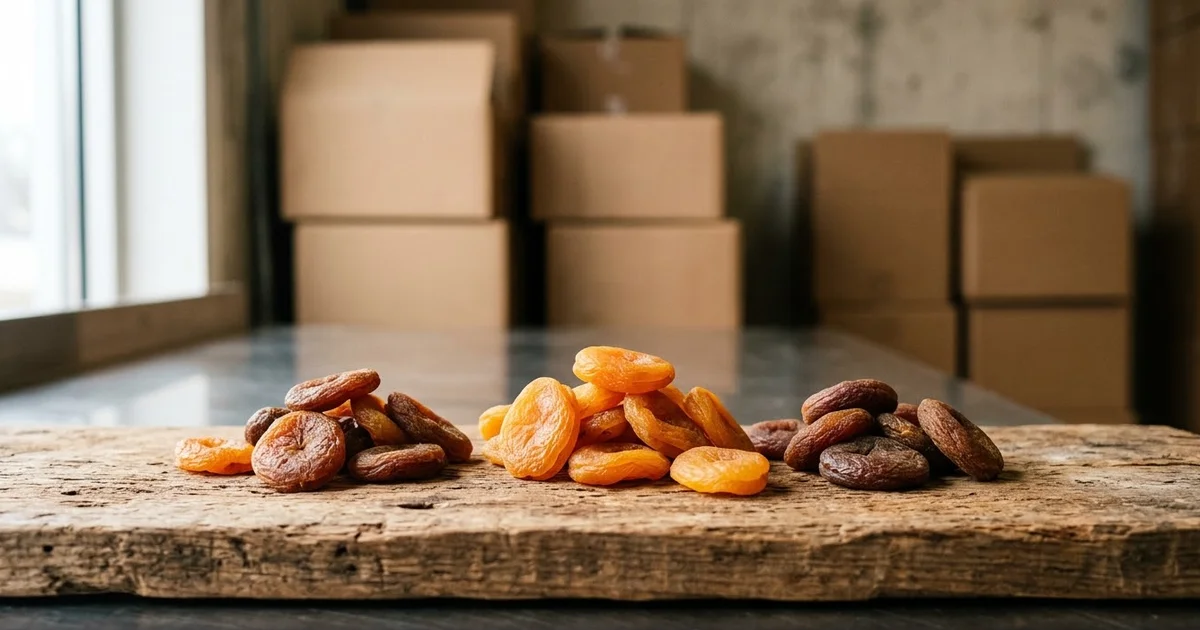
Abricot sec : lire un calibre n°1 à n°4, soufré ou non
How to read size grades No.1 to No.4 for dehydrated apricots, and choose between sulphured and unsulphured based on professional kitchen use. Buyer’s guide for foodservice, pastry chefs, and specialty grocery stores.
 dried-fruits
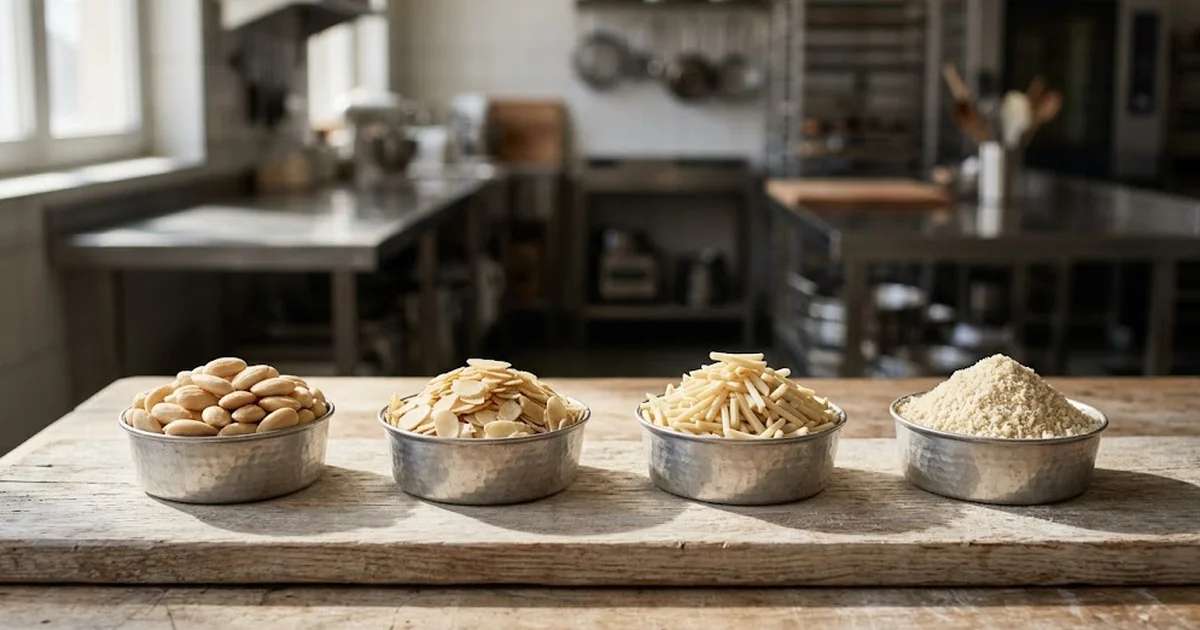
Amande émondée, effilée, bâtonnet, poudre : quel format pour quel usage
Professional guide: uses, cooking performance, and storage of blanched almonds, flaked, slivered, and powdered. Procurement and B2B logistics tips from Palimex.