
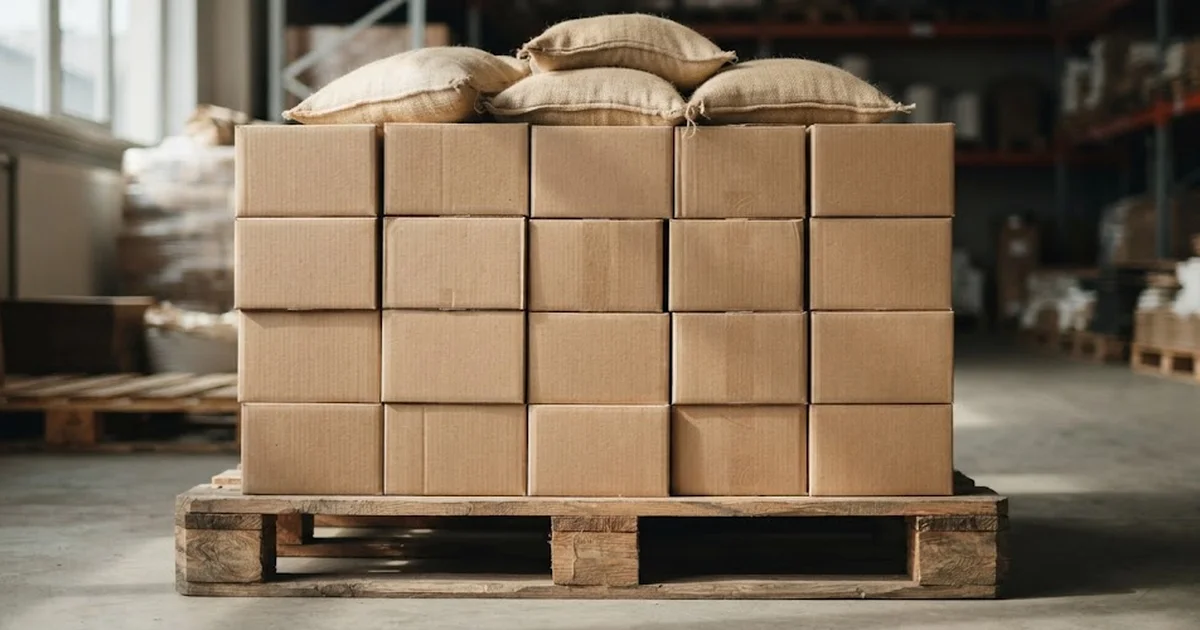
Combien de kilos sur une palette : gerbage, hauteur et limites de poids
Weight, height, stackability, and securing: the Palimex method for building a full, stable professional pallet without crushing bags or cartons.
What Truly Determines the Loading of a Professional Pallet
Reframing the question "how many kilos on a pallet" almost always means asking "how far can I go without damaging my goods or compromising transport stability." There is no single figure that applies to all orders: a carton of dehydrated dried fruits does not behave like a 25 kg bag of almonds, and a bucket of olives does not stack like a case of dates. What truly limits a pallet are several constraints that combine.
- The permissible loading height, which depends on the delivery vehicle and warehouse stacking.
- The total pallet weight, distributed between the support and the goods themselves.
- The stackability of cartons, i.e., their ability to support the weight of what is stacked above.
- The crushing of 25 kg flexible bags when placed at the bottom of a stack.
- Lateral securing, which prevents slippage during road transport.
These five points must be addressed together: optimising one without considering the others often results in an unstable pallet or crushed cartons upon arrival. This is why a well-planned bulk order starts with load composition, even before considering the free delivery threshold.
Pallet Height: How High to Go Without Weakening the Load
The height of a professional pallet primarily depends on the mode of transport and the type of packaging stacked. In practice, a load of dried fruits and dry groceries remains reasonable when it maintains a safety margin below the internal height of the vehicle and storage racks, including the pallet itself. The following table provides behavioural benchmarks by packaging type, to be adjusted based on your carrier and warehouse setup.
| Type of Packaging | Stacking Behaviour | Composition Recommendation |
|---|---|---|
| 25 kg flexible bags (almonds, nuts, bulk dried fruits) | Crush easily if loaded at the bottom under weight | Position at the bottom of the pallet, do not stack anything heavy on top |
| Rigid cartons (dates, dried figs, graded apricots) | Good stackability if corners are aligned | Stack in even layers, never in a crooked cross pattern |
| Plastic buckets (olives, tapenades) | Durable but heavy and unstable if poorly secured | Distribute across the entire surface, avoid isolated stacks |
| Sachets and etuis (spices, candied fruits, snacking) | Little resistance to compression | Reserve for the top of the pallet, never place weight above |
This classification shows why an order mixing several product ranges from the catalogue, such as dried fruits and spices, benefits from being planned in descending weight order as you move up the stack.
Carton Stackability and Bag Crushing: Composing the Stacking Order
Stackability is the ability of packaging to support the weight of what rests above without deforming. A well-filled and properly sealed carton can handle a moderate load; a flexible bag, however, has no inherent rigidity and directly transmits pressure to its contents. This explains why a 25 kg bag placed at the bottom of a pallet, under several layers of cartons, often ends up compressed or even torn upon unloading.
At Palimex, we see pallets assembled at the Rungis warehouse every week, and the same lesson keeps recurring: it is always the flexible bags placed too low, under poorly distributed weight, that arrive damaged at the customer’s site. Our field recommendation is simple: rigid packaging goes down first as support, flexible bags and sachets go on top, never the other way around.
The almonds sold in 25 kg bags illustrate this rule well: their flexible packaging makes them perfectly suited for placement in the upper part of the pallet, where they bear no downward pressure. Conversely, a well-sealed carton of dates, such as the cluster dates packed in 12 x 1 kg cartons, can easily support a second layer placed on top.
Securing, Load Distribution, and Transport Stability
A pallet can meet all stacking rules and still be unstable if securing is not carefully done. Securing includes all measures that prevent the load from shifting during transit: stretch-wrapping, cardboard corners, balanced weight distribution across the pallet surface, and alternating carton orientation to create interlocking.
- Distribute the heaviest weight at the centre of the pallet, never at the edges.
- Alternate the direction of cartons from one layer to the next, like a brick wall, to prevent any slippage.
- Stretch-wrap progressively from bottom to top, without over-tightening flexible packaging.
- Add reinforcing corners to tall pallets to protect carton edges.
- Ensure the stretch film does not obscure weakened areas, particularly cartons that are already slightly dented.
This securing work is particularly important when an order combines products with very different densities, such as graded dried apricots in 5 kg cartons and heavier, more compact buckets of olives: without thoughtful distribution, the pallet tilts to one side at the first braking.
Building an Order That Fills a Pallet Without Damaging It
Filling a pallet efficiently is not about stacking to the theoretical limit but reasoning by product families and logical placement order. Here is the method we recommend to professionals assembling their bulk order from the Palimex catalogue.
- Start with the most rigid and heaviest packaging: cartons of dried fruits, cartons of dehydrated fruits, cartons of sweet groceries.
- Next, add buckets and jars, distributing them across the entire surface rather than in isolated stacks.
- Finish with flexible bags and sachets, which should not support anything above them.
- Check the consistency of batch dates and best-before dates (BBD) between the different products loaded to facilitate stock rotation upon receipt.
- Consult the technical sheet for each SKU before ordering, particularly to know the net weight per carton and anticipate distribution.
For further guidance on interpreting product information that influences these choices, our guide on dried fruit grades and sizes details how to read a technical sheet before finalising your order.
Optimised Pallet, Free Delivery: Maximising Each Shipment
Once the pallet is well composed, the question remains of the threshold at which delivery becomes free. This topic, distinct from load composition, is covered in detail in our dedicated guide: Free Delivery and Pallet Shipping: Bulk Order Guide. The key takeaway here is that building a full, stable, and well-secured pallet is not just about transport safety: it also allows you to maximise a bulk order by avoiding half-empty pallets, which are more expensive per kilo shipped and more fragile due to insufficient securing.
For professionals who prefer to collect their order directly, the Drive & Collect option eliminates transport concerns while maintaining the same principles of composition and stacking when loading into a utility vehicle.
In summary, there is no magic number that applies to every order: the right pallet is one whose height, weight, and stacking order have been planned based on the actual packaging loaded. By applying these principles of stackability, securing, and distribution, you minimise damage, reduce transport disputes, and ensure the safe receipt of your order, whether for fine groceries, a restaurant, or a pastry workshop.
Frequently asked questions
Everything you need to know about this topic.
A question?
Get in touch directly.

Marketing & Communications Manager — Palimex / Meyva
As Marketing & Communications Manager at Palimex / Meyva, Aude Moyne leads the company's communications and digital marketing strategy: editorial content, email campaigns and the promotion of its product ranges. Her experience at Palimex, a specialist in dried fruit, nuts, olives and spices for professionals, has given her in-depth knowledge of the products, their origins and uses, and the expectations of food-industry professionals. The blog articles are written or supervised by her, in collaboration with Palimex's sales and product teams whenever a topic calls for specific expertise.
Our advice related to Pro tips
 Pro tips
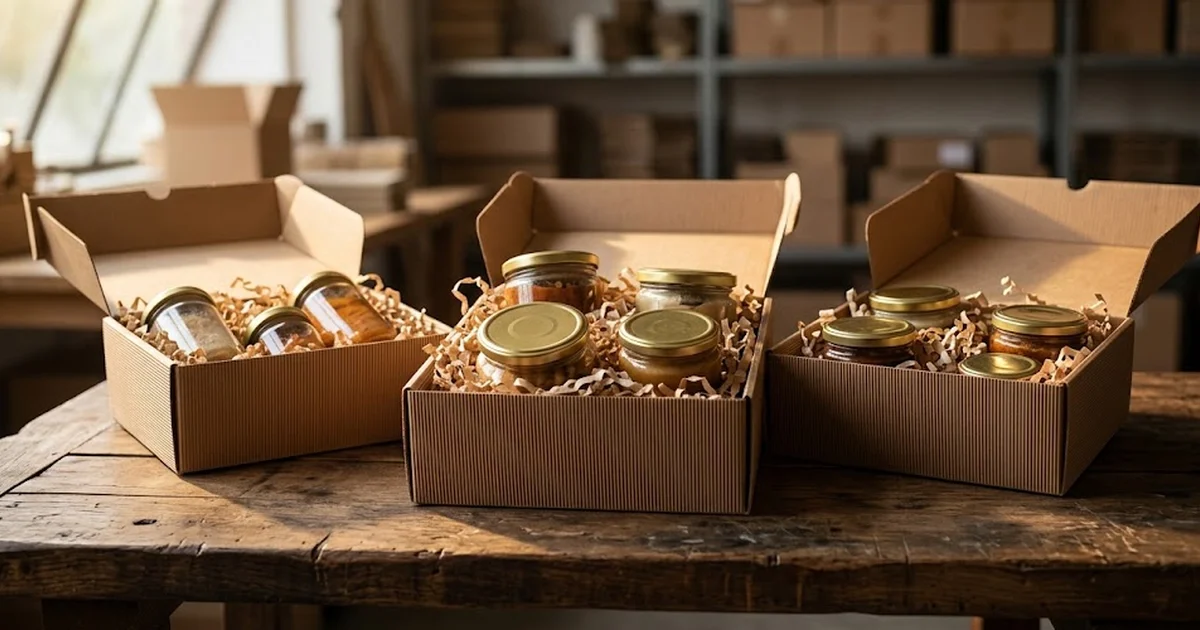
Paniers garnis de fin d'année pour les entreprises : les composer en épicerie fine
Composez des paniers garnis de fin d'année rentables pour entreprises et CSE : sélection de produits, formats stables, prix de revient et facturation B2B.
 Pro tips
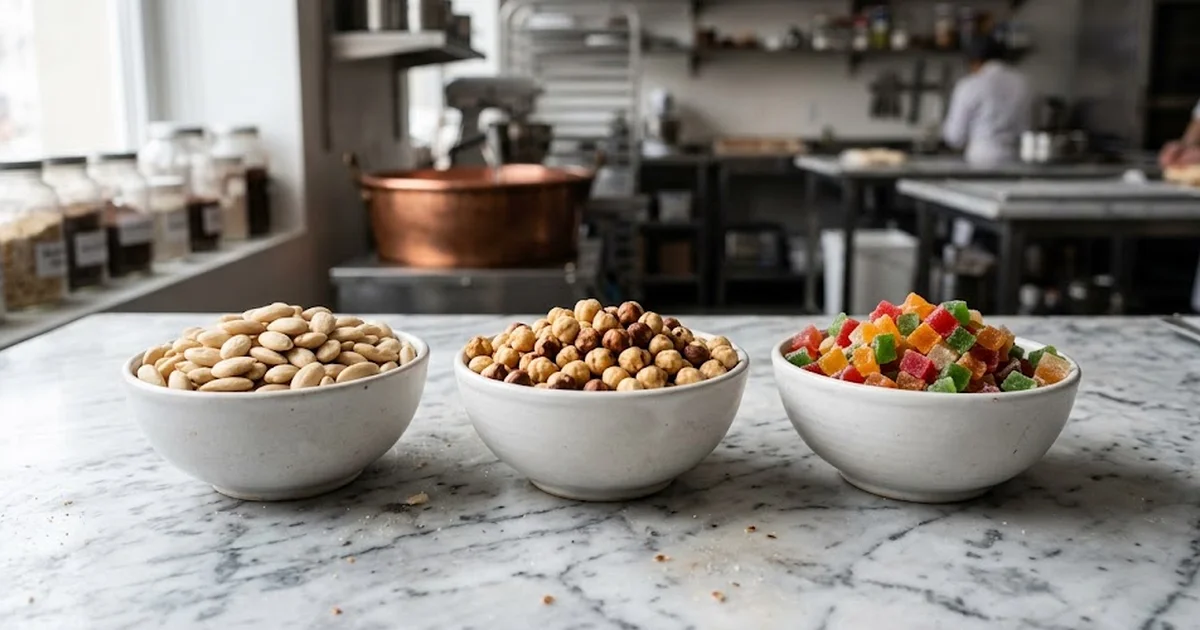
Commandes de fin d'année : le calendrier d'achat d'un pâtissier-chocolatier, d'octobre à décembre
Commandes de fin d'année : calendrier d'achat d'octobre à décembre pour pâtissier-chocolatier. Cadencez fruits secs, confits et marrons sans rupture.
 Pro tips
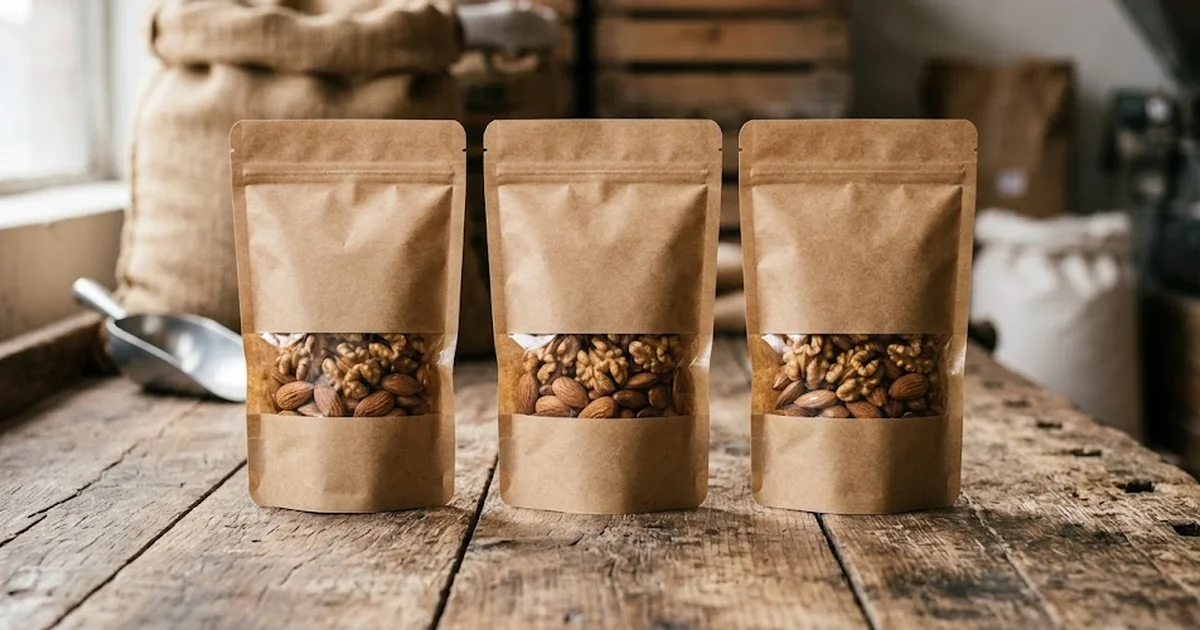
Triman, REP et éco-contribution : l'emballage d'un préemballé alimentaire
Reconditionnement de denrées et vente au consommateur : obligations REP, identifiant IDU, signalétique Triman et Info-tri. Le guide légal pour les professionnels.