
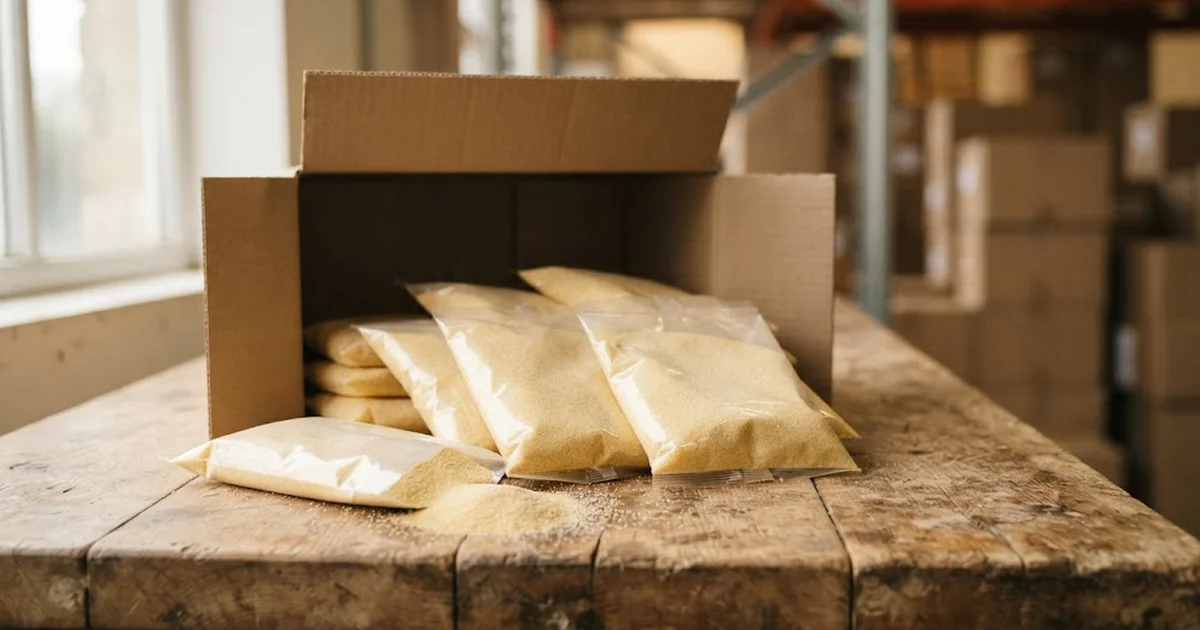
Bulk durum semolina: extra fine, medium, coarse
Bulk durum semolina for foodservice and grocery: extra fine, medium, coarse. Uses for couscous, oriental pastry, bread. 10 x 1 kg formats and storage.
Durum semolina remains a cornerstone of procurement for any oriental kitchen, event caterer, and fine grocery store working with couscous, layered pastries, or traditional bread. However, not all semolinas are equal: granulometry determines the use, final texture, and even cooking performance. For a professional placing bulk orders, selecting the right grade is not a detail—it prevents waste, kitchen returns, and service disruptions.
Bulk durum semolina: understanding granulometry before ordering
Before placing a pallet order, it is essential to distinguish the three main families of durum semolina available in professional packaging. Each serves a specific purpose, and confusing grades results in disappointing kitchen outcomes: mushy couscous, tearing brick pastry, or overly dense bread.
- Extra fine semolina: very small grain, ideal for oriental pastries, bricks, and preparations requiring a smooth texture.
- Medium semolina: the reference grade for hand-rolled or couscoussier-cooked couscous, with good steam resistance.
- Coarse semolina: thick grain used for seffa, certain traditional breads, and preparations requiring a firm bite.
This grade hierarchy directly influences supplier selection and order format. For a professional kitchen alternating between multiple recipes, it is common to stock all three granulometries simultaneously, each in its own labeled carton by batch.
Extra fine semolina: oriental pastry, bricks, and fine desserts
Extra fine semolina is sought after by pastry chefs and caterers for its ability to absorb butter or oil without forming lumps. It gives semolina cakes, basbousas, and samosas a fine, even crumb. Its fineness is also valuable for homemade brick pastry sheets, where overly coarse semolina would crack the dough during rolling.
In professional kitchens, this semolina is also used as a binder in certain sweet-savory preparations or as a light coating before frying. Its low granulometry makes it more sensitive to ambient humidity: it must be stored in a dry area, away from steam or dishwashing zones.
Common foodservice uses for extra fine semolina
- Oriental pastries (semolina cakes, modernized gazelle horns)
- Homemade brick pastry sheets and samosas
- Light coating before frying
- Milk-based desserts or melt-in-the-mouth entremets
Medium semolina: couscous rolling and foodservice uses
Medium semolina is the historical grade for couscous. It enables traditional rolling: lightly moistened, worked by hand in circular motions to form small, even grains, then steamed in multiple passes. This technique, passed down in family kitchens and professional brigades alike, requires semolina that is neither too fine (which would stick) nor too coarse (which would remain hard at the center).
For foodservice kitchens serving large-volume couscous, grade consistency from one batch to another is as critical a selection criterion as flavor. A granulometry discrepancy between orders forces adjustments to soaking and cooking times, complicating service standardization.
| Granulometry | Main use | Associated technique or gesture | Recommended bulk format |
|---|---|---|---|
| Extra fine | Oriental pastry, bricks | Coating, fine crumb | 10 x 1 kg carton |
| Medium | Couscous | Hand-rolling, steam cooking | 10 x 1 kg carton or bulk bag |
| Coarse | Seffa, traditional bread | Long cooking, firm texture | Bulk bag or professional carton |
To explore volume preparation techniques further, our article on professional couscous cooking and rolling details soaking and fluffing steps adapted for foodservice operations.
Coarse semolina: seffa, bread, and traditional preparations
Coarse semolina stands out for its chew and ability to maintain structure during long cooking. It is the grade of choice for seffa, a sweet-savory preparation often served with poultry, as well as for certain North African traditional breads where a denser, rustic crumb is desired.
This grade is also suitable for oven preparations where semolina must retain body after cooking without disintegrating. Artisan bakers and caterers offering specialty breads often incorporate it alongside soft wheat flour.
- Sweet or savory seffa as an accompaniment
- Traditional breads with dense crumb
- Oven preparations requiring good structure
- Regional recipes calling for visible grain in the mouth
10 x 1 kg Le Renard format: packaging, sourcing, and foodservice batches
To meet the needs of professional kitchens, Le Renard extra fine semolina is available in 10 x 1 kg cartons, a format designed for kitchen rotation: each bag can be opened independently, limiting air exposure for the remaining stock and simplifying batch management during peak seasonal activity.
This packaging aligns with controlled sourcing practices: each batch is identifiable, enabling full traceability from receipt to kitchen use. For fine grocers and foodservice operations documenting their procurement as part of their internal HACCP process, this batch traceability facilitates inspections and potential recalls.
"For extra fine semolina, we systematically recommend the 10 x 1 kg format to kitchens operating continuously: each sealed bag protects the rest of the carton, and the team can visually check the grain's condition with each opening without exposing the entire stock. It's a simple practice that prevents many unpleasant surprises during busy periods." — The Palimex team
This format effectively complements a broader oriental grocery range. We invite you to explore our Flavors of the World selection to find other references that pair with semolina in an oriental or Mediterranean menu: spices, dried fruits, and olives.
Warehouse and kitchen storage: humidity, weevils, and stock rotation
Durum semolina is a dry product but remains sensitive to two main factors: ambient humidity and insect presence, particularly weevils. Semolina stored in overly humid conditions may develop lumps, a musty odor, or even mold. A weevil infestation, meanwhile, is detected by small holes in the grain or fine dust at the bottom of the bag.
To mitigate these risks, a few simple practices help secure stock, whether in restaurant storage, grocery backrooms, or catering warehouses:
- Visually inspect each carton upon receipt: packaging integrity, absence of moisture, neutral grain odor.
- Store semolina in a dry, ventilated area, away from heat sources and steam zones.
- Apply the first-in, first-out rule to rotate batches and limit storage time.
- Carefully reseal each opened bag or carton after use.
- Promptly report any anomalies—lumps, odor, insect presence—to isolate the affected batch.
- Regularly check the date on the packaging to organize kitchen rotation.
These best practices align with those applicable to all bulk dry goods. Our dedicated article on dry goods storage in professional warehouses details storage organization for foodservice volumes, with practical benchmarks for stockroom layout.
For broader context, the general entry on durum semolina outlines the manufacturing processes that explain the product's sensitivity to humidity.
Choosing semolina based on your operation: couscous, pastry, bakery
Selecting the right grade depends primarily on the establishment's core activity. A kitchen specializing in couscous will prioritize medium semolina in large formats, while an oriental pastry chef will focus on extra fine in 10 x 1 kg cartons for precise opening management. A baker or caterer offering traditional breads will benefit from securing a regular stock of coarse semolina.
- Traditional restaurant with daily couscous on the menu: medium semolina in bulk, supplemented by a reserve of extra fine for desserts.
- Oriental pastry shop or event caterer: extra fine semolina in 10 x 1 kg cartons, a practical format for regular production.
- Artisan bakery or restaurant offering specialty breads: coarse semolina alongside standard flour.
- Multi-reference fine grocery: all three grades in reduced stock, with monitored rotation.
For establishments looking to expand their offerings around oriental recipes, our guide on bulk oriental spices for professionals helps complete the menu with aromatic pairings consistent with semolina-based dishes.
Summary: ordering bulk durum semolina effectively
The success of a semolina-based dish depends as much on the chef's technique as on selecting the right grade upstream. Extra fine for oriental pastry and bricks, medium for rolled couscous, coarse for seffa and bread: this simple distinction prevents many professional kitchen setbacks. The 10 x 1 kg format, with its batch traceability, additionally provides valuable management flexibility for high-turnover kitchens. Finally, applying daily storage practices that protect the grain from humidity and insects—a simple habit—preserves quality until the last plate served.
Further reading
Frequently asked questions
Everything you need to know about this topic.
A question?
Get in touch directly.

Marketing & Communications Manager — Palimex / Meyva
As Marketing & Communications Manager at Palimex / Meyva, Aude Moyne leads the company's communications and digital marketing strategy: editorial content, email campaigns and the promotion of its product ranges. Her experience at Palimex, a specialist in dried fruit, nuts, olives and spices for professionals, has given her in-depth knowledge of the products, their origins and uses, and the expectations of food-industry professionals. The blog articles are written or supervised by her, in collaboration with Palimex's sales and product teams whenever a topic calls for specific expertise.
Our advice related to Grocery & Recipes
 Grocery & Recipes
Épices de l'hiver : pain d'épices, vin chaud et pâtisserie de Noël, dosage et achat
Guide B2B des épices d'hiver pour boulangers, pâtissiers et CHR : dosages au kilo et au litre, mélanges vin chaud et pain d'épices, approvisionnement en gros.
 Grocery & Recipes
Nougat en meule : découpe à la coupe, conservation et vente au poids
Guide B2B pour épiceries et confiseries : réussir la découpe à la coupe du nougat en meule, limiter les pertes, maîtriser le stockage et l'affichage au poids.
 Grocery & Recipes
Seau d'olives entamé : durée de vie, saumure et gestion du reste
Comment conserver un seau d'olives entamé ? Rôle de la saumure, température, règles d'hygiène et gestion des tapenades : le guide professionnel Palimex.