
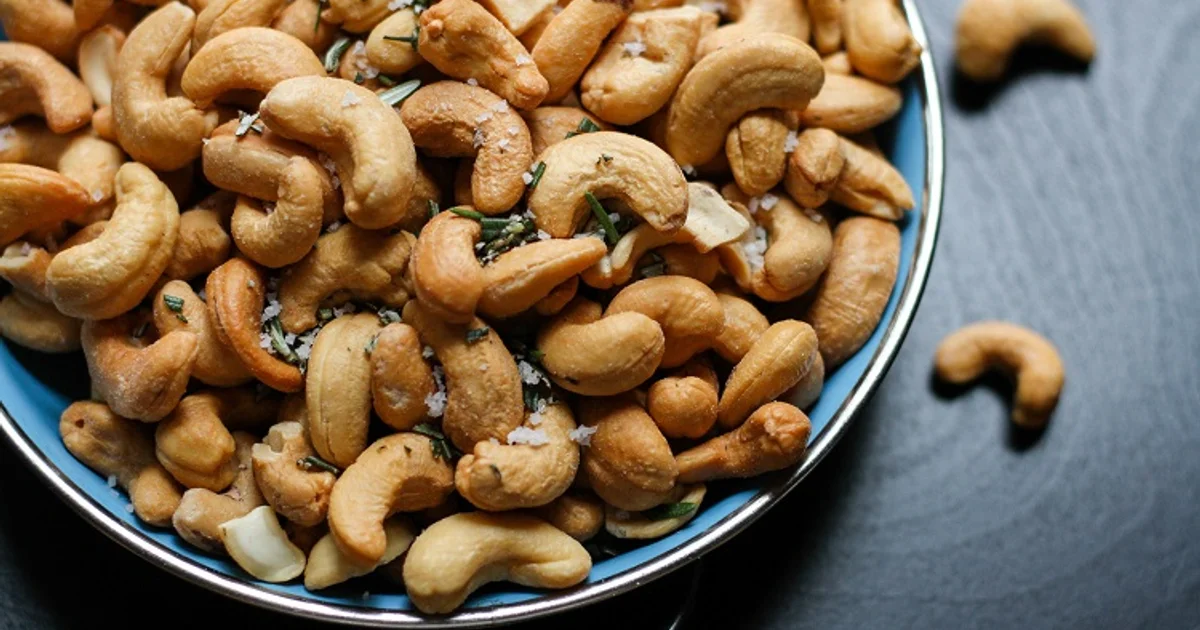
W320 vs W240 cashew nuts: which grade for your business?
W320 or W240 cashews? Grading, margin, turnover, shelf display: the complete professional guide for greengrocers and delis. Palimex, Rungis wholesaler.
W320 vs W240 cashew nuts: understanding the professional grades
In the trade, a cashew nut's grade isn't a marketing label: it's a standardised international classification that determines size, purchase price, margin and shelf turnover speed. For a greengrocer or a delicatessen, choosing between a W320 grade and a W240 grade has a direct impact on the profitability of the dried fruit aisle.
According to FAO — global cashew nut production, the quality and traceability of professional dried fruit rely on a well-controlled supply chain and storage standards consistent with the international standards of the Codex Alimentarius.
At Palimex, a wholesale importer based in Rungis, we work with both grades through direct imports. This technical guide gives you everything you need to make the right choice based on your customer base and market positioning.
The cashew nut grading system: a technical refresher
The global classification of cashew nuts is based on a simple principle: the number of whole kernels (wholes) contained in one imperial pound (453.6 g). The "W" stands for whole, meaning an unbroken, whole kernel.
- W320: between 300 and 320 kernels per pound. It is the most widely traded grade in the world, considered the professional standard.
- W240: between 220 and 240 kernels per pound. Each nut is therefore significantly larger. It is a premium grade.
The lower the number, the larger the nut and the higher the price per kilo. Other grades exist (W180, known as "King size", and the smaller W450), but W320 and W240 account for the bulk of professional volume in France.
W320: the versatile grade for greengrocers
W320 is the workhorse of food retail. Here's why it dominates greengrocers' shelves:
- Competitive purchase price: in a professional 10 kg carton, W320 offers the best value-for-money ratio on the market. The gap with W240 ranges from 15% to 25% depending on market prices.
- Fast turnover: the standard size matches what regular consumers expect. No surprises, no hesitation to buy. Restocking flows smoothly.
- Versatile use: snacking, aperitifs, cooking, pastry-making — W320 covers every use case without needing segmentation.
- Bulk display: in a bin or a pouch, W320 offers a uniform look and feels natural to handle.
For a greengrocer with a neighbourhood customer base and a moderate average basket, W320 is the rational choice. Margins are healthy, turnover is fast, and the risk of loss is minimal thanks to a long best-before date in airtight packaging.
W240: the premium grade for delicatessens
W240 appeals to a customer base that values size, presentation and the tasting experience. In a delicatessen, it makes all the difference:
- Superior visual impact: each kernel is 30 to 40% larger than a W320. In a jar, a kraft pouch or a gift box, the premium effect is immediate.
- Perceived value: delicatessen shoppers instinctively associate a generous size with superior quality. W240 justifies a higher selling price without friction.
- Texture and crunch: a larger kernel delivers a more pronounced crunch and a more generous roasted surface. The tasting experience is different.
- High unit margin: despite a higher purchase price, the absolute margin per kilo sold is often more attractive than with W320, provided the right customer base is targeted.
Palimex's MEYVA pouches of W240 cashews are packed ready-to-sell (RTS) in a 200g format, with carefully designed packaging built for the premium shelf.
W320 vs W240 technical comparison
| Criterion | W320 | W240 |
|---|---|---|
| Kernels per pound (453g) | 300 to 320 | 220 to 240 |
| Average kernel size | Standard | +30 to 40% |
| Positioning | Core market | Premium / delicatessen |
| Average price gap | Reference | +15 to 25% |
| Shelf turnover | Fast | Moderate |
| Typical margin % | 35-45% | 45-55% |
| Pro packaging | 10 kg carton, bulk, pouches | 10 kg carton, MEYVA 200g pouches |
| Main use | Snacking, bulk, cooking | Premium shelf, gift boxes, upscale aperitifs |
Origins and traceability: what your supplier must guarantee
Vietnam and India account for more than 60% of global cashew production. West Africa (Côte d'Ivoire, Benin, Tanzania) is gaining ground in local processing.
At Palimex, every batch of cashews — W320 or W240 — comes with full traceability: origin, processing date, phytosanitary certificate and quality control on receipt at Rungis. This transparency is essential for a retailer who has to answer their customers' questions.
Professional storage and preservation
Cashew nuts are sensitive to oxidation and humidity. The grade makes no difference to storage rules:
- Temperature: between 15°C and 20°C, away from direct light.
- Humidity: below 65%. Storage in a damp back room speeds up rancidity.
- Packaging: once the professional carton is opened, transfer to an airtight container. In a sealed MEYVA pouch, the best-before date is at least 12 months.
- FIFO is mandatory: first in, first out. Rotation is your best guarantee of freshness.
Range strategy: what if you offered both?
The best-performing dried fruit retailers don't choose between W320 and W240: they offer both, with clear positioning.
- W320 in bulk or standard pouches: accessible price, volume, everyday purchase.
- W240 in MEYVA pouches or jars: premium shelf, gift boxes, gourmet hampers, upscale aperitifs.
This dual offering increases the average basket size and covers two customer segments without cannibalisation. A customer who discovers W240 after buying W320 immediately perceives the step up in quality.
Ordering from Palimex: packaging and logistics
W320 and W240 cashews are available as direct imports from Palimex, with free delivery from €300 excl. VAT anywhere in France. Drive & Collect is available directly at the Rungis wholesale market for professionals in the Paris region.
Available packaging: 10 kg cartons (professional bulk), MEYVA 200g pouches (ready-to-sell shelf), and tubs for HoReCa service. Contact our sales team for current pricing and availability by grade.
A question?
Get in touch directly.
Our advice related to Dried-fruits
 dried-fruits
Seau, carton, sac de 25 kg : le conditionnement décide de la rotation
Bucket, carton, or 25 kg bag: which packaging to choose based on your actual turnover in professional kitchens. Palimex advice for foodservice, grocers, and pastry chefs.
 dried-fruits
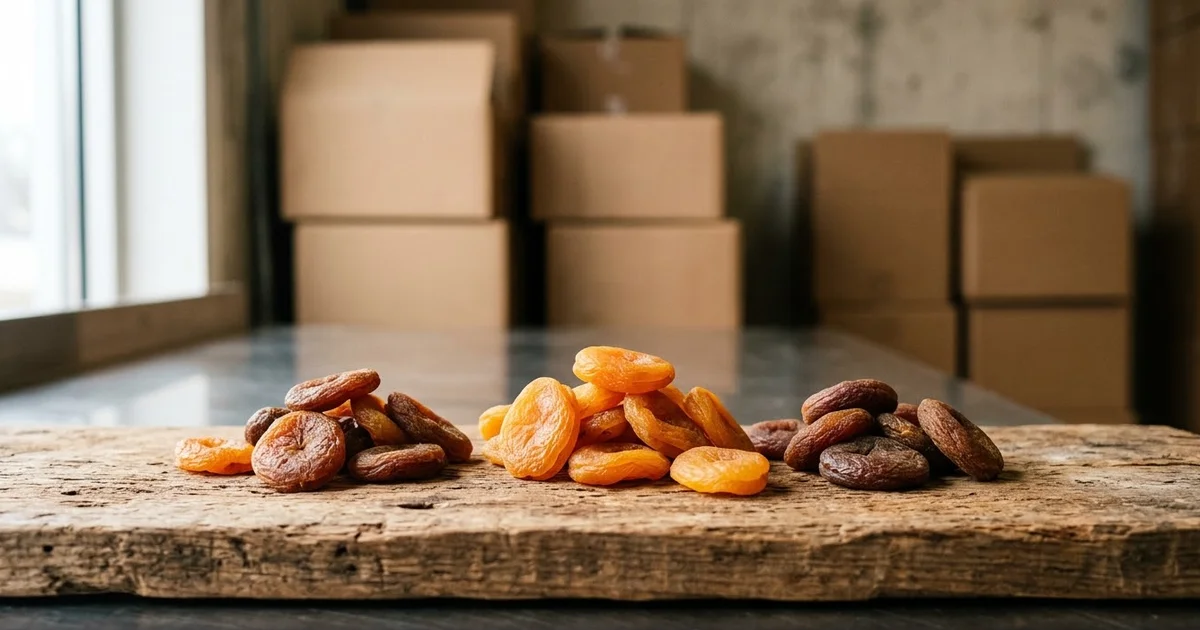
Abricot sec : lire un calibre n°1 à n°4, soufré ou non
How to read size grades No.1 to No.4 for dehydrated apricots, and choose between sulphured and unsulphured based on professional kitchen use. Buyer’s guide for foodservice, pastry chefs, and specialty grocery stores.
 dried-fruits
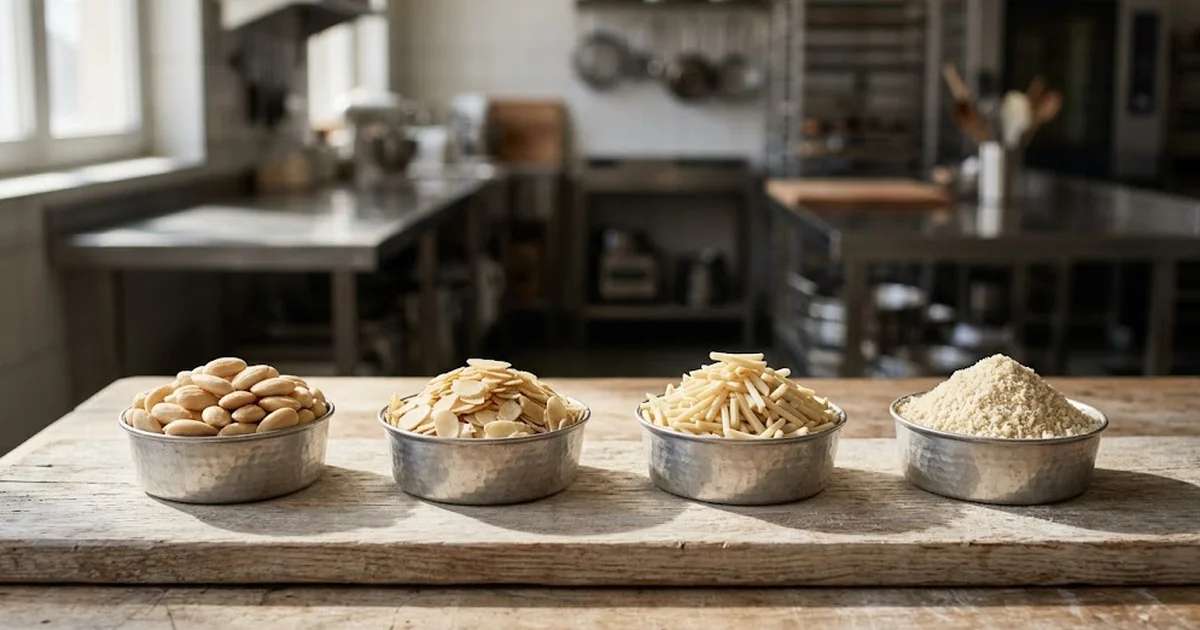
Amande émondée, effilée, bâtonnet, poudre : quel format pour quel usage
Professional guide: uses, cooking performance, and storage of blanched almonds, flaked, slivered, and powdered. Procurement and B2B logistics tips from Palimex.