
Hazelnuts in Bulk for Pastry Chefs | Palimex B2B
Bulk hazelnuts for pastry chefs: whole, roasted, crushed, powder. Origins, calibres, storage and professional B2B formats.
The hazelnut holds a strategic place in artisanal pastry, chocolate and confectionery laboratories. Praliné, gianduja, dacquoise, croquant, yule log filling: each preparation requires a specific origin, calibre and form. For professionals purchasing in bulk, mastering these parameters directly conditions the consistency of recipes and the profitability of batches. This article details the sourcing, storage and packaging criteria to know before any pallet or carton order.
Origins of professional hazelnuts: Turkey, Italy (Piedmont) and Spain
The origin of the hazelnut directly influences its oil content, aroma and roasting behaviour. The three production basins supplying the European B2B market present distinct profiles, to be known before setting a supplier specification sheet.
- Turkey: world's leading producer, particularly the Black Sea region. Regular varieties, good quality-price ratio, suited to industrial volumes and standard uses (powder, crushed, standard roasting).
- Italy – Piedmont: the famous Tonda Gentile, reference for high-end pralinés and traditional gianduja. More intense aroma, high oil content, higher price, reserved for signature productions.
- Spain: intermediate origin, often used to complement sourcing or secure supplies in case of tension on Turkish volumes.
| Origin | Dominant variety | Typical calibre | Aromatic profile | Recommended pastry use |
|---|---|---|---|---|
| Turkey | Levant, Giresun | 11-13 mm | Neutral to slightly roasted | Powder, crushed, standard praliné |
| Italy (Piedmont) | Tonda Gentile Trilobata | 13-15 mm | Intense, buttery notes | Gianduja, signature praliné, high-end dacquoise |
| Spain | Negreta, Ennis | 12-14 mm | Mild, balanced | Roasting, filling, intermediate praliné |
To secure a flagship recipe, it is recommended to maintain the same origin across several successive batches to avoid variations in roasting yield. The technical data sheets of our Hazelnuts range dedicated to pastry chefs and artisans specify the exact origin of each reference available in bulk.
Calibres and classification of bulk hazelnuts
The calibre, expressed in millimetres of diameter, determines the kernel yield, roasting speed and visual homogeneity of whole pieces used for decoration. An uncontrolled calibre variation within the same batch generates uneven cooking during oven roasting.
- Calibre 9-11 mm: suited to powder and fine crushed, optimised yield for mixes like dacquoise or biscuit.
- Calibre 11-13 mm: versatile, used in praliné, coating and medium crushed.
- Calibre 13-15 mm: reserved for whole hazelnuts for decoration, premium pralinés and pieces visible in display cases.
A well-written specification sheet for a bulk order must always mention the expected calibre range, expressed as a span (e.g. 11/13), and not a single figure, to account for the natural variability of the raw product.
Forms of hazelnuts for pastry: in-shell, blanched, roasted, crushed, powder, paste
Each form corresponds to a different processing stage and a specific use in the laboratory. The choice of form directly conditions preparation time in the kitchen and the product's shelf life once opened.
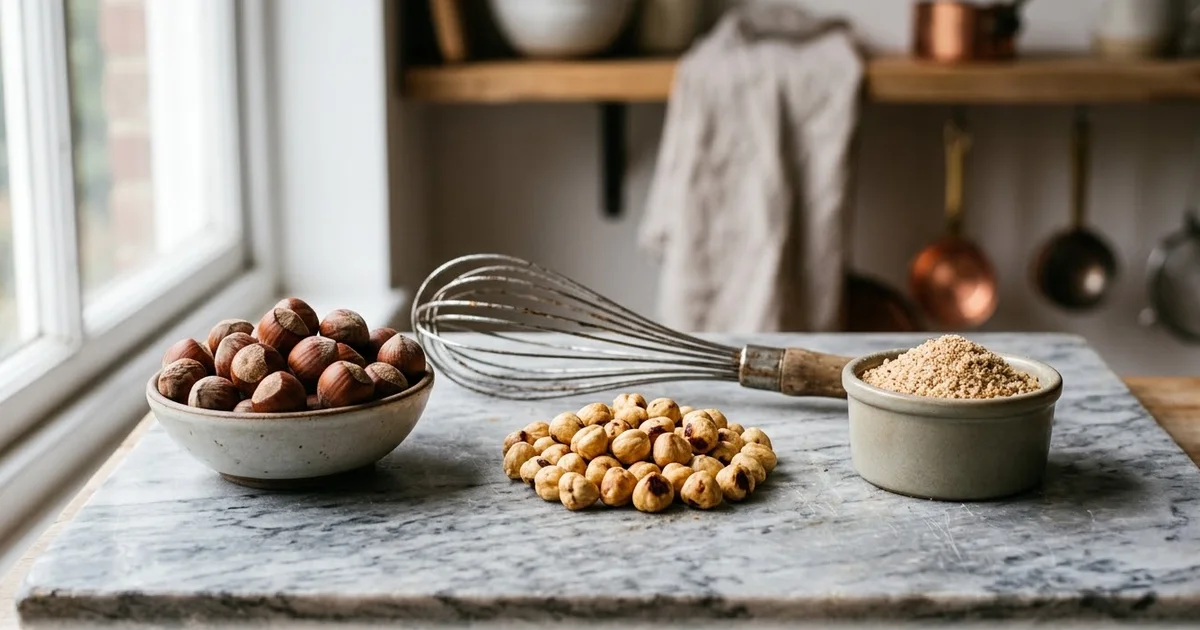
- In-shell hazelnut: shell removed but skin not removed, intended for homemade roasting or internal blanching.
- Blanched hazelnut: skin removed by blanching or roasting, ready to use for praliné and uniform white decoration.
- Roasted hazelnut: dry roasting performed beforehand, develops praliné-type aromas; to be monitored for colour homogeneity across the entire batch.
- Crushed hazelnut: calibrated in particle size (fine, medium, coarse), used in croquant, coating or viennoiserie filling.
- Hazelnut powder: fine or semi-fine grind, base for dacquoise, joconde biscuit and many sponge cakes.
- Hazelnut paste (praliné/pure paste): ground until a smooth or grainy texture is obtained, foundation for gianduja and whipped ganaches.
Laboratories working on several recipes in parallel benefit from diversifying their stock across these forms rather than processing everything in-house: this reduces preparation time and limits exposure to air, the main factor in rancidity.
Pastry uses: praliné, gianduja, dacquoise and derived preparations
The hazelnut is used in many classic French and Italian pastry preparations. The choice of form and calibre must always align with the final use to ensure texture and mouthfeel.
- Praliné: roasted and caramelised hazelnuts, ground until a fluid or grainy paste is obtained depending on the recipe.
- Gianduja: blend of hazelnut paste (often Piedmont) and chocolate, requiring a very fine paste and high oil content for fluidity.
- Dacquoise: meringue-based biscuit with hazelnut powder, requiring a regular grind for a homogeneous airy texture.
- Croquant and nougatine: medium to coarse crushed hazelnuts, providing crunch without excessive fineness.
- Decoration and finishing: whole blanched or roasted hazelnuts, larger calibre, visually selected for homogeneity.
Find all references classified by pastry use in the Hazelnuts category of the Pastry Chefs & Artisans section, with technical data sheets per batch and oil content indication.
Rancidity and storage of bulk hazelnuts for professionals
The hazelnut is a nut rich in unsaturated fatty acids, making it particularly sensitive to oxidation. Poor bulk stock management quickly leads to a rancid taste, especially noticeable in powder and paste, the forms most exposed to air.
- Store in a cool, dry place away from direct light, ideally between 12 and 18°C.
- Seal cartons and opened bags tightly after each use.
- Prioritise strict FIFO rotation (first in, first out) to respect the best-before date indicated on each batch.
- Avoid storage near sources of moisture or strong odours (spices, fermented products), as hazelnuts easily absorb surrounding odours.
- Favour orders calibrated to the laboratory's actual consumption rather than dormant stocks of several months.
At Palimex, we regularly observe that rancidity in laboratories does not stem from a batch defect at purchase, but from stock rotation that is too slow once the carton is opened. Our advice: order hazelnut powder and paste in quantities aligned with a short production cycle, and reserve larger formats for in-shell or whole hazelnuts, which are naturally more stable over time.
To further explore best storage practices applicable to all nuts and dehydrated fruits, consult our dedicated article on storage and rancidity prevention in B2B environments.
Formats and packaging for bulk orders (B2B)
The professional formats offered by Palimex are designed for regular production needs, with a minimum packaging of 5 kg and logistics adapted to pallet deliveries or free delivery depending on the volumes ordered.
| Format | Packaging | Target audience | Recommended ordering frequency |
|---|---|---|---|
| Carton 5-10 kg | Bulk under film or kraft bag | Artisan pastry chefs, small CHR establishments | Monthly |
| Carton 10-25 kg | Bag or reinforced carton | Medium-sized production laboratories | Bi-monthly to monthly |
| Pallet (multiple cartons) | Free delivery based on threshold | Industrial producers, chocolatiers, secondary wholesalers | Quarterly |
Each delivered batch is accompanied by the information necessary for HACCP traceability: batch number, origin, best-before date and recommended storage conditions. These elements must be kept in the establishment's internal traceability file, in accordance with the requirements applicable to food industry professionals.
For establishments also working with almonds alongside hazelnuts, our article on almonds in bulk for pastry details the same calibre and form criteria applied to this complementary nut.
Choosing your hazelnut based on the recipe: practical summary
The final choice of a hazelnut reference is based on the intersection of three criteria: the target recipe, stock rotation frequency and the material budget allocated to the relevant production line.
- For a regular homemade praliné: roasted Turkish hazelnut, calibre 11-13, in 10-25 kg cartons.
- For a signature gianduja: Piedmont hazelnut paste, 5 kg format, quick rotation to preserve aromatic freshness.
- For continuous dacquoise production: fine calibrated hazelnut powder, order aligned with a 2 to 4-week cycle.
- For finishing decoration: whole blanched hazelnut calibre 13-15, purchase in small quantities to avoid visual ageing.
For setting up a structured supply plan including several nut families, our guide on professional B2B packaging offers a method for calculating order thresholds adapted to pastry laboratories.
As a sector reference, production and quality data for Piedmont hazelnuts are documented by the Consortium for the Protection of Nocciola Piemonte IGP, a useful source for objectifying price differences between origins.
Summary and recommendations for your supply
Professional hazelnuts are chosen first by use: praliné, gianduja, dacquoise or decoration do not require the same calibre, form or origin. Turkey covers volume and consistency needs, Piedmont meets signature high-value-added productions, and Spain secures intermediate supplies. Rigorous stock rotation management, combined with packaging adapted to the actual production pace, remains the best defence against rancidity. The formats offered by Palimex, from 5 kg cartons to full pallets, allow precise adjustment of orders to the laboratory's needs, without immobilising unnecessary working capital in dormant stock.
A question?
Get in touch directly.
Our advice related to Dried-fruits
 dried-fruits
Seau, carton, sac de 25 kg : le conditionnement décide de la rotation
Bucket, carton, or 25 kg bag: which packaging to choose based on your actual turnover in professional kitchens. Palimex advice for foodservice, grocers, and pastry chefs.
 dried-fruits
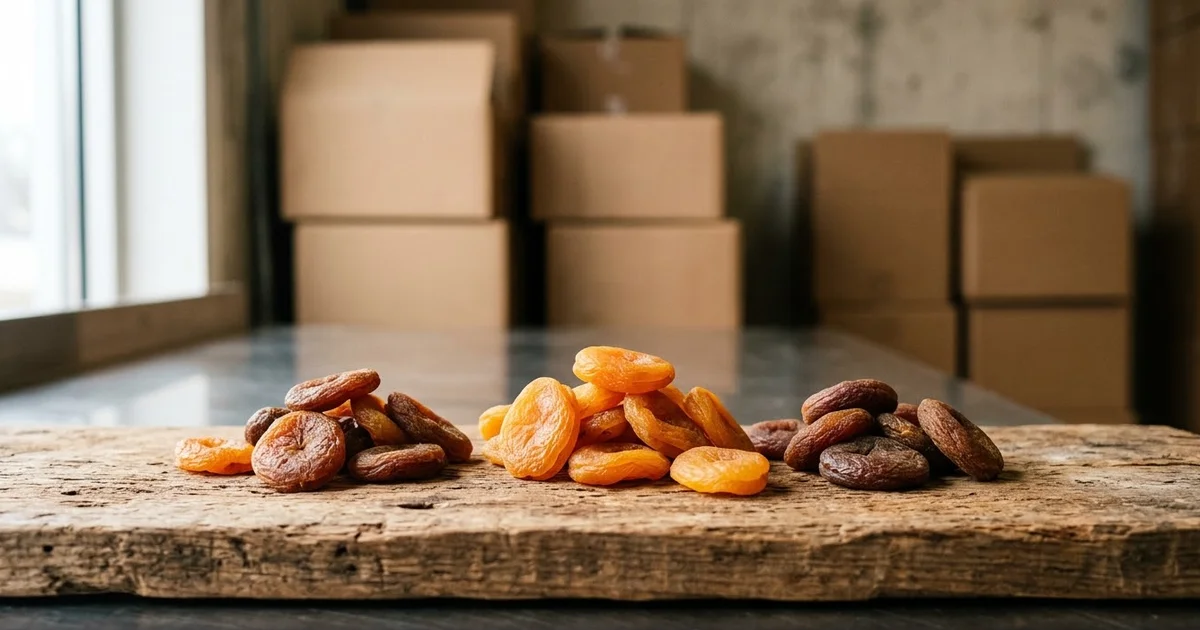
Abricot sec : lire un calibre n°1 à n°4, soufré ou non
How to read size grades No.1 to No.4 for dehydrated apricots, and choose between sulphured and unsulphured based on professional kitchen use. Buyer’s guide for foodservice, pastry chefs, and specialty grocery stores.
 dried-fruits
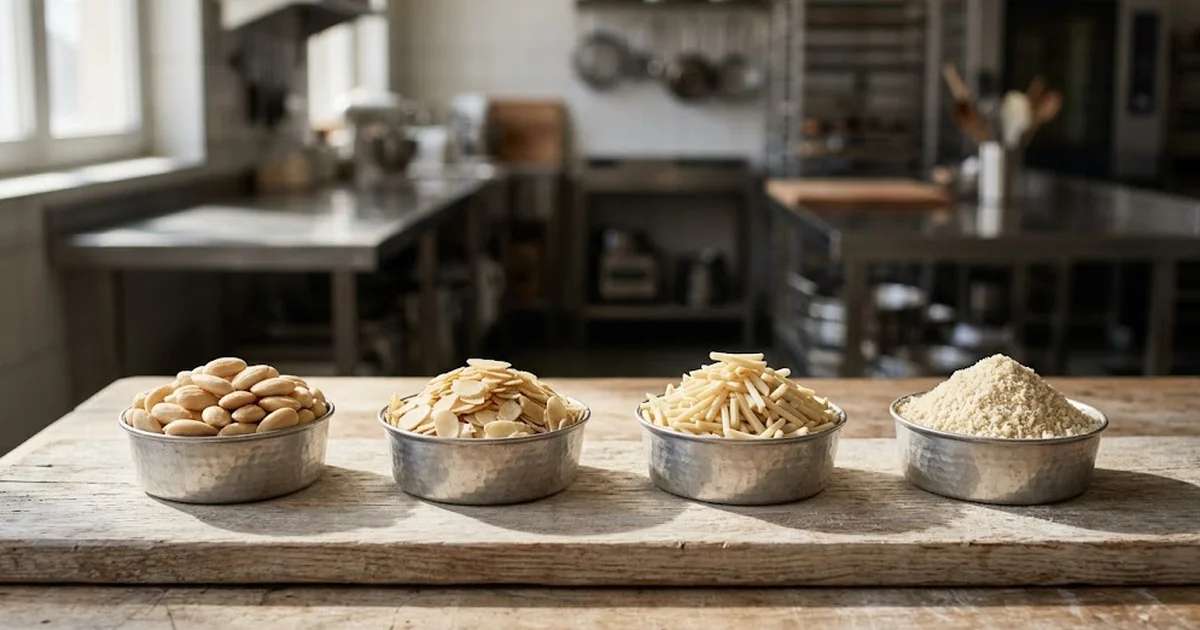
Amande émondée, effilée, bâtonnet, poudre : quel format pour quel usage
Professional guide: uses, cooking performance, and storage of blanched almonds, flaked, slivered, and powdered. Procurement and B2B logistics tips from Palimex.