
Almonds in bulk: varieties, calibres, professional formats | Palimex
Bulk almond for professionals: Nonpareil, Largueta, Marcona varieties, calibres, processed forms, storage and 5 kg, carton, pallet formats.
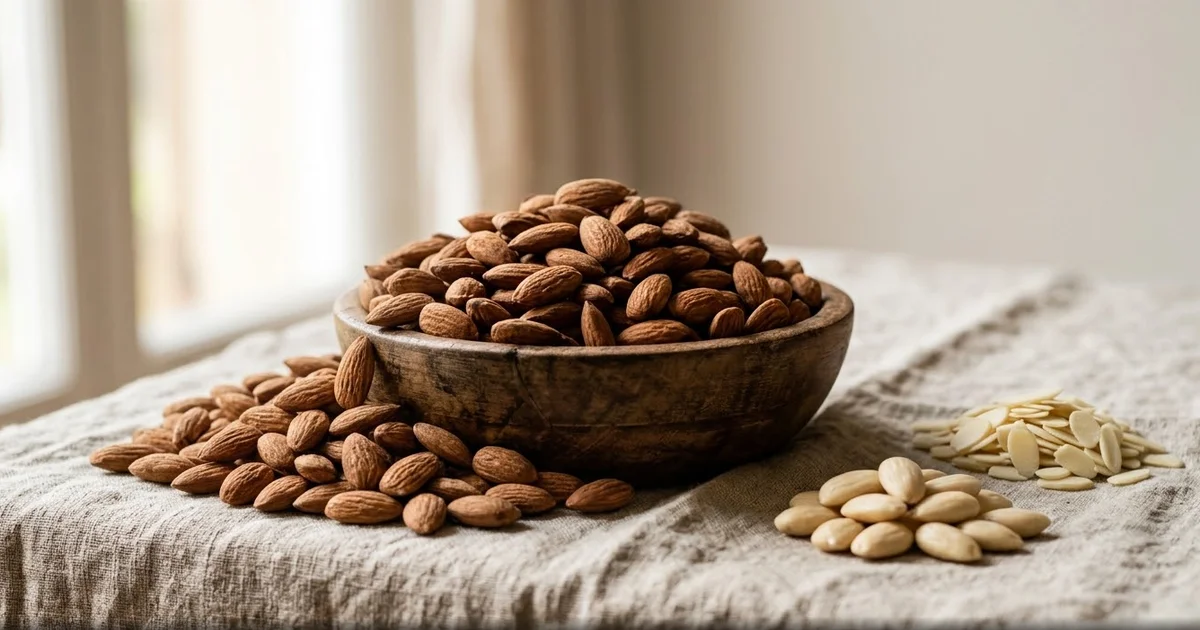
The almond is one of the most sought-after nuts by food professionals: pastry chefs, artisanal confectioners, restaurateurs, fine grocery stores, or industrial processors. Choosing the right supplier, the right variety, and the right packaging format determines both the profitability of the purchase and the consistency of your preparations. This article covers the entire professional purchasing process: varieties, calibres, processed forms, storage, and packaging suited to a B2B activity with bulk delivery.
Understanding the bulk almond market: challenges for professionals
Buying almonds in bulk is not just about comparing a price per kilogram. For a professional, the purchasing decision impacts the regularity of supply, the qualitative consistency from one batch to another, and the wholesaler's ability to provide complete traceability, a mandatory condition in an HACCP environment.
- Regular volumes required for a CHR activity or serial pastry production
- Consistency of calibre and moisture content from one order to another
- Year-round availability, regardless of harvest fluctuations
- Traceability documentation (batch, origin, BBD) required at all times
This is why choosing a specialised almond wholesaler, capable of justifying their sourcing and stock management, takes precedence over a simple price comparison.
Bulk almond varieties: California Nonpareil, Spanish Largueta and Marcona
The almond variety determines the shape of the fruit, its taste, its cooking stability, and thus its culinary use. Three origins dominate the professional bulk offer.
California Nonpareil almond
The Nonpareil is the benchmark variety on the global market. Its fine shell, elongated and regular shape, and limited breakage rate make it a particularly suitable almond for flaking and mechanical shelling. It is preferred for uses where presentation matters: pastry decorations, roasted flaked almonds, shortbread.
Spanish Largueta almond
The Largueta stands out with its elongated and flat shape, firm texture, and a slightly more pronounced taste than the Nonpareil. It is widely used in confectionery and industrial biscuit-making, particularly for processes requiring good mechanical stability.
Spanish Marcona almond
The Marcona is known for its round shape, tender texture, and rich aroma. It is traditionally consumed whole, roasted, and lightly salted, and is a highlight product for fine grocery stores and high-end CHR channels.
| Variety | Origin | Shape of the fruit | Typical professional use |
|---|---|---|---|
| Nonpareil | California | Elongated, fine shell | Flaking, sticks, pastry decoration |
| Largueta | Spain | Elongated, flat | Biscuit-making, industrial confectionery |
| Marcona | Spain | Round, tender | Whole roasted almond, fine grocery |
To further compare nut families and refine your assortment choice, you can consult our article Almonds and cashews in bulk, which puts these two dried fruit references into perspective.
Calibres and classification: choosing the right calibre for the intended use
The almond calibre, expressed as the number of fruits per kilogram or in inches, is a key technical criterion for yield in preparation and for the visual homogeneity of the finished product.
- Large calibre: suited for whole presentation, fine grocery, in-line or basket display
- Medium calibre: versatile, used in standard pastry and CHR cuisine
- Fine calibre: preferred for processing (powder, flaking, chopping) where the homogeneity of the initial calibre facilitates regular mechanical treatment
An irregular calibre within the same batch complicates the calibration of processing machines and generates losses. Requesting a technical sheet specifying the guaranteed calibre is part of good bulk purchasing practices, just as it is for other nuts — see our guide on calibres and categories of nuts.
Processed forms: whole, flaked, sticks, powder — which format for which use
Beyond variety and calibre, the form of almond processing directly determines its use in cooking or industrial processes.
- Whole almond (with or without skin): optimal storage, maximum versatility, ideal for custom roasting or on-site processing
- Flaked almond: pastry decoration, viennoiserie, visual garnish, quick roasting in the kitchen
- Almond sticks: confectionery, chocolate-making, inclusions in sweet preparations
- Almond powder: base for frangipane, macarons, financiers; highly sensitive to oxidation due to its large contact surface
The choice of form should align with your equipment and production volumes: a whole almond offers more flexibility and a longer shelf life, while a pre-processed form saves preparation time but requires faster stock rotation.
At Palimex, we regularly observe that professionals underestimate the sensitivity of almond powder and sticks to oxidation. Powder stored for several weeks in a poorly ventilated or overly warm environment quickly loses its aromatic freshness, even before the BBD. Our field recommendation: order powder and finely processed forms in quantities tailored to a short rotation, and reserve whole almonds for longer-term storage.
Moisture content, rancidity, and storage: maintaining quality over time
The commercial shelf life of an almond depends directly on its moisture content upon receipt and the storage conditions applied thereafter. Poorly controlled moisture content promotes mould growth and accelerates lipid rancidity, which is particularly prevalent in almonds.
- Check the moisture content indicated on the batch's technical sheet
- Store away from light, heat, and ambient humidity
- Prioritise FIFO (first in, first out) rotation for processed almond stocks
- Isolate opened formats (powder, flaked) from strong odours, as almonds easily absorb surrounding aromas
- Respect the BBD and avoid overstocking beyond actual rotation needs
Rancidity is detected by a pungent odour and a characteristic bitter taste; sensory inspection upon receipt, in addition to reviewing traceability documents, remains a recommended practice before storage. For a comprehensive methodology applicable to your entire range, consult our dedicated article on storing nuts in a professional warehouse.
Professional packaging formats: 5 kg, carton, pallet
Packaging should be chosen based on your establishment's consumption rate and storage capacity, while keeping in mind that a format too large for your actual rotation can compromise product freshness.
| Format | Indicative volume | Buyer profile |
|---|---|---|
| 5 kg bag | Basic unit | Fine grocery, artisan, small CHR establishment |
| Carton (several 5 kg bags) | 10 to 25 kg depending on reference | Caterer, pastry shop, medium-volume restaurant |
| Pallet | Several hundred kg | Industrial, secondary wholesaler, multi-site network |
Delivery in free-on-board pallets is the most economical format per kilogram but requires suitable storage capacity and sufficient rotation to prevent product ageing. For mid-sized structures, the carton format allows for securing regular supply without tying up significant storage space.
Smart purchasing: sourcing criteria and pre-order checklist
A well-executed bulk purchase relies on the systematic verification of several criteria, beyond the displayed price.
- Origin and variety clearly identified on the product sheet
- Guaranteed calibre and batch homogeneity
- Moisture content provided and consistent with the processed form
- Batch number and BBD legible on the packaging
- Supplier's ability to ensure complete traceability in case of HACCP inspection
- Logistical conditions: delivery time, free delivery, pallet format available
This vigilance is all the more important as almonds, like other oilseeds, remain sensitive to quality variations linked to harvest and transport. A wholesaler transparent about their sourcing limits this risk for your preparations and for your compliance with HACCP traceability.
For general benchmarks on the nutritional composition and uses of almonds, the Almond Board of California is an internationally recognised source of information.
Summary: structuring your bulk almond purchase
Purchasing almonds in bulk for a professional activity relies on a combination of technical criteria: variety suited to the use (Nonpareil for flaking, Largueta for industrial, Marcona for premium whole), homogeneous calibre, processed form consistent with your rotation, and controlled storage conditions to prevent rancidity. The packaging format — 5 kg, carton, or pallet — should be chosen based on your actual consumption rate, not just the price per kilogram. Explore our entire range in the Dried Fruits > Almonds category to directly compare available varieties, calibres, and formats for ordering.
A question?
Get in touch directly.
Our advice related to Dried-fruits
 dried-fruits
Seau, carton, sac de 25 kg : le conditionnement décide de la rotation
Bucket, carton, or 25 kg bag: which packaging to choose based on your actual turnover in professional kitchens. Palimex advice for foodservice, grocers, and pastry chefs.
 dried-fruits
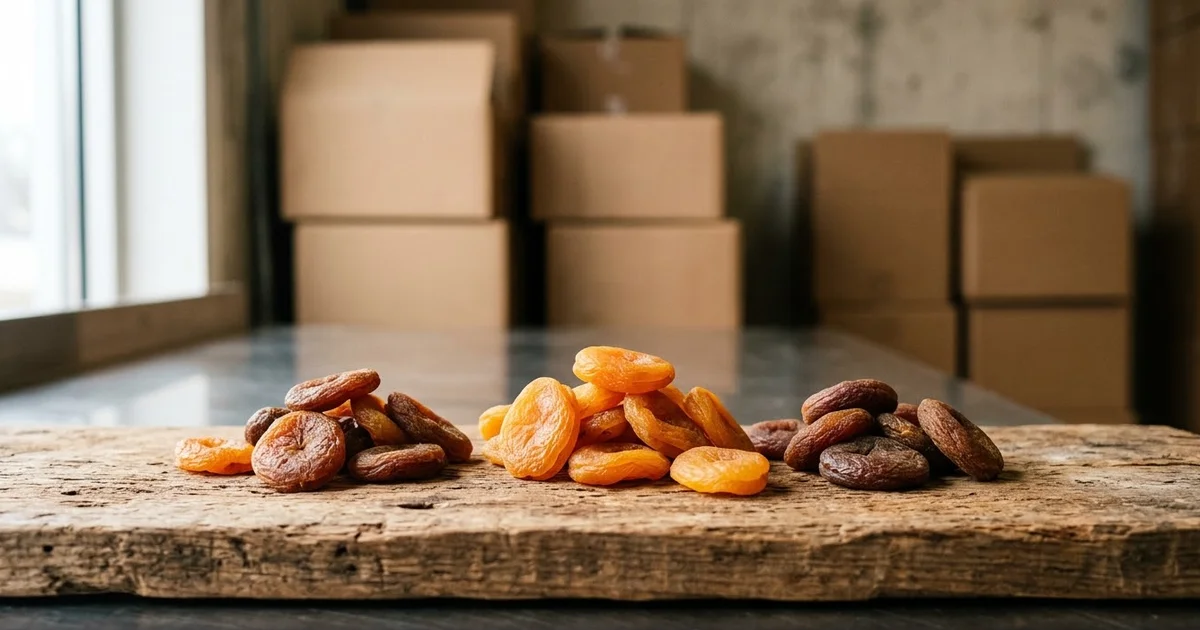
Abricot sec : lire un calibre n°1 à n°4, soufré ou non
How to read size grades No.1 to No.4 for dehydrated apricots, and choose between sulphured and unsulphured based on professional kitchen use. Buyer’s guide for foodservice, pastry chefs, and specialty grocery stores.
 dried-fruits
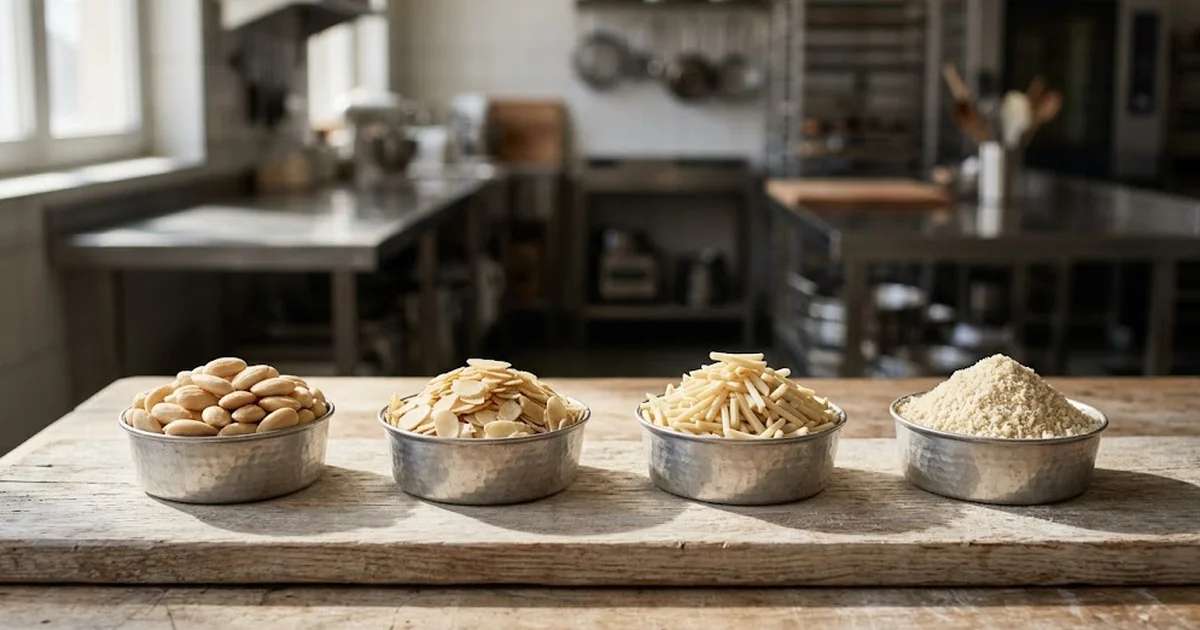
Amande émondée, effilée, bâtonnet, poudre : quel format pour quel usage
Professional guide: uses, cooking performance, and storage of blanched almonds, flaked, slivered, and powdered. Procurement and B2B logistics tips from Palimex.