
Available products
9 references




Looking for a wholesale dried fruit supplier?
I'm Jessica, your dedicated wholesale account manager.
Direct sourcing — Rungis and Bordeaux.
- ✓Direct sourcing from producers
- ✓Quality controlled (shelf-life, calibre, origin)
- ✓Next-day delivery in Île-de-France
- ✓Bulk, custom packaging, co-packing
- ✓B2B account with pricing tiers
B2B delivery & packaging
Rungis International Market
Warehouse E4: 2 av. de Flandre — 94150 Rungis MIN
Platform D9: 40 rue de Provence — 94150 Rungis MIN
Bordeaux – MEYVA Cash & Carry
2 rue Roger Touton – Bordeaux Lac
On-site pickup Monday to Friday, no appointment needed.
Professional packaging
Bulk, 5 to 10kg buckets, 200g to 1kg bags
Frequently asked questions
Overview
Wholesale ras el hanout: one aisle, one question
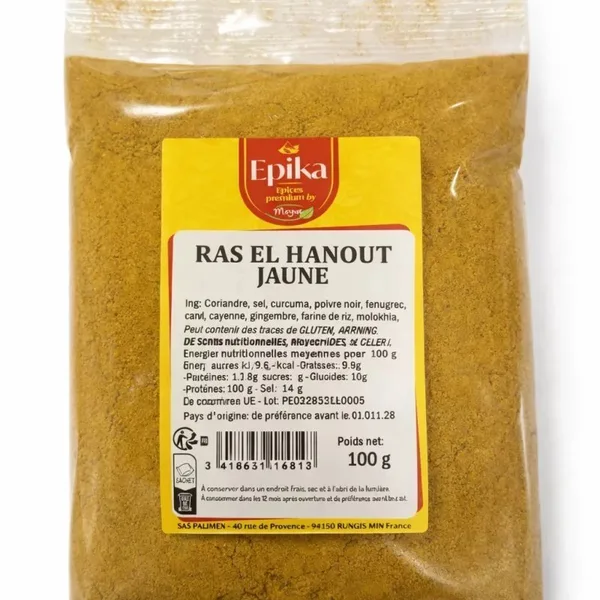
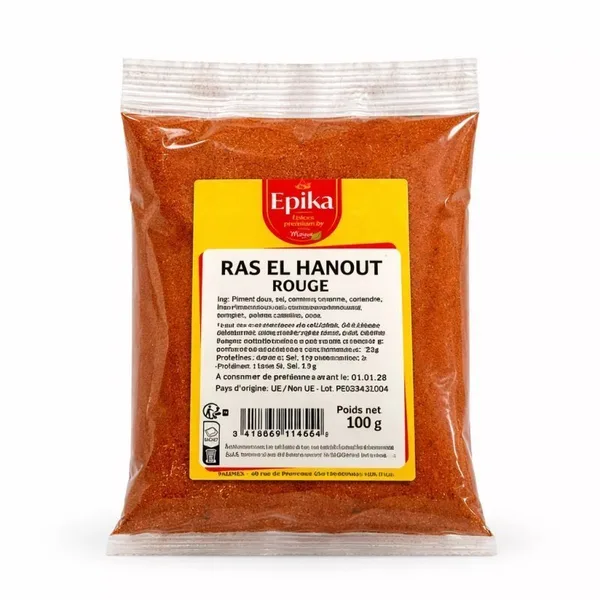
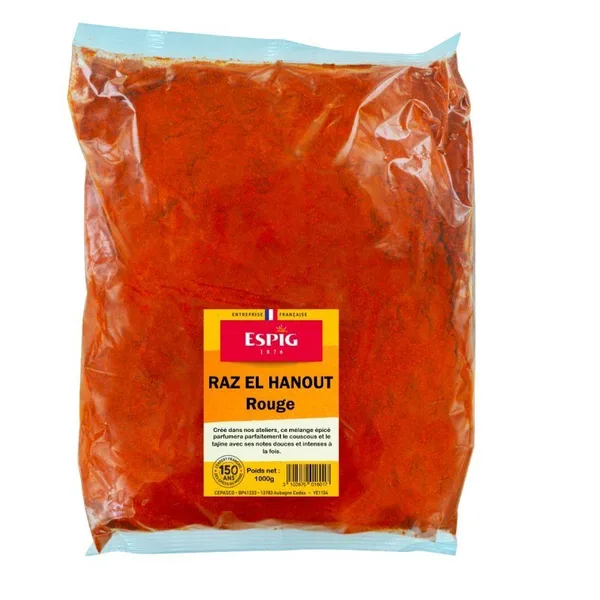
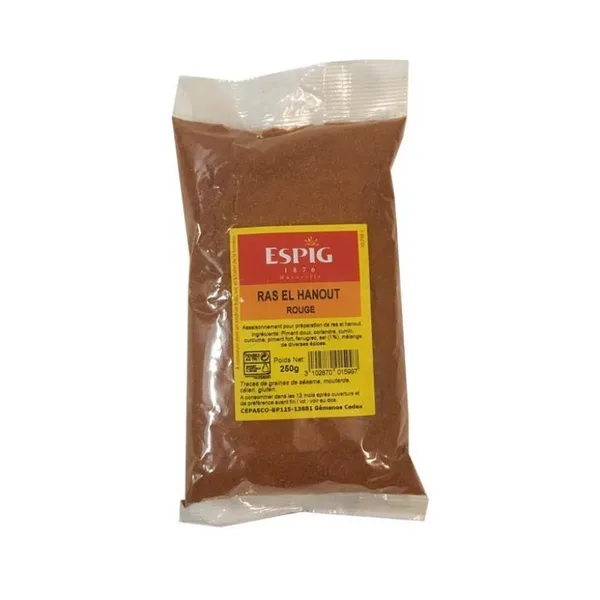
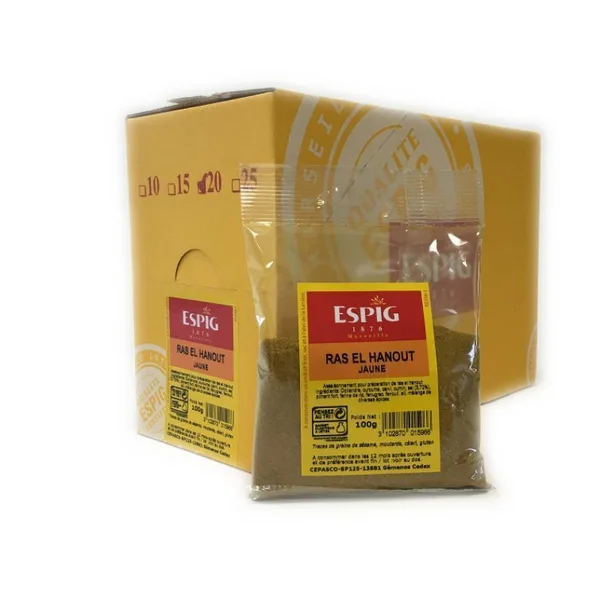
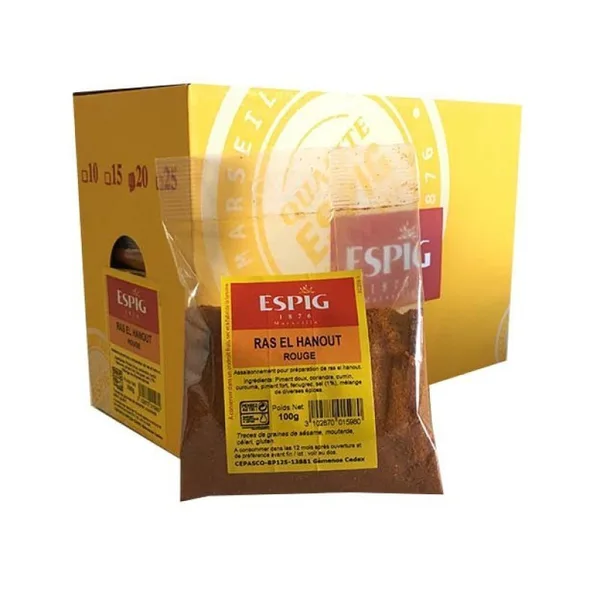
The wholesale ras el hanout aisle is the simplest in our whole spice range, and that is a virtue. There is only one decision to take: red or yellow. Everything else — the label, the pack size — follows from how you are organised. A food wholesaler since 1984, Palimex lists both profiles under the Epika and Espig labels, from the 250 g bag to the 20x100 g case.
That apparent simplicity nonetheless hides the aisle's costliest trap, and it has nothing to do with colour. We come to it below: it is the question of keeping one reference over time.
What the name says, and what it does not
"Ras el hanout" literally means "head of the shop": what the grocer had that was best, what they put forward. The name therefore describes an intention — the house's most carefully judged blend — and not a formula. This is where a professional buyer should pay attention: unlike a single spice, ras el hanout is not defined by a composition standard. Two suppliers may sell it under the same name without the contents being the same.
That does not make the product uncertain: it makes the reference decisive. What you buy is not "ras el hanout", it is this one, with its own profile, its own colour, its own dosage.
Red or yellow: what colour does to the plate
Colour here is no matter of appearance: it announces two families of use. Red is used where the dish must take on a deep tint and a forthright character; yellow where the preparation must stay golden and more enveloping.
| Profile | What it gives the dish | Where to use it |
|---|---|---|
| Red ras el hanout | Deep tint, marked character | Meat tagines, marinades, charcuterie preparations, slow-cooked dishes, coloured rice |
| Yellow ras el hanout | Golden tint, more enveloping expression | Poultry, fish, vegetables, semolina and couscous, pale preparations |
Many establishments end up ordering both, not out of indecision but because they cover two halves of a menu. If you build your own seasonings rather than starting from a blend, wholesale paprika gives you the red and wholesale turmeric the yellow — but you then take on all the balancing work yourself.
The rule that matters: fix your reference
Here is the trap announced above. A customer who liked your tagine comes back to find it identical. Yet if your ras el hanout changes, your dish changes — with nothing else in the recipe having moved. It is the one ingredient on a menu capable of altering a whole dish on its own, silently, on the occasion of a change of supplier.
Hence the method we recommend:
- Test both profiles on your actual dishes, not on a spoonful tasting.
- Settle on one reference per use — a red, a yellow if your menu calls for it — and name it on the recipe sheet.
- Always order the same one, label included: constancy is guaranteed by the label, not by the colour.
- Only switch deliberately, by repeating the trial, never because a reference was missing on a given day.
Pack sizes in the aisle
The aisle runs to four pack sizes, and the choice turns on rate of consumption:
- The 250 g bag, a trial or single-station size, useful precisely for comparing the two profiles before settling on a reference.
- The 500 g bag, available in yellow, for regular use without committing to volume.
- The 1 kg bag, in red as in yellow, for steady production and central kitchens.
- The 20x100 g case, from Epika as from Espig, for several stations or for shelf stock in a delicatessen: each unit stays sealed until it is opened.
Storing, and reading the label
In the storeroom, a blend follows the same rules as the rest of the dry goods: an opaque, resealed container, away from the heat of the ranges, first in first out, batch number and best-before date kept until the pack is finished. A ground blend is in fact in more of a hurry than a whole spice, since all its components are already exposed to the air.
One last professional reflex, particular to blends: read the ingredient list of the reference you settle on. A blend may contain salt or seasoning ingredients that a single spice does not, and that carries over into your own salting. The European framework for additives, flavourings and enzymes — what the Commission groups under food improvement agents — is what makes that reading possible and reliable. A minute spent on the label saves salting twice.
Our view as a wholesaler
With ras el hanout, the right choice is not the better of the two: it is the one you will keep. A decent red ordered for three years beats an excellent red changed every six months — your customers taste constancy before they taste nuance.
Our teams work daily with restaurateurs, caterers, butchers and delicatessens buying in bulk. We would rather hold two well-kept profiles than a collection of neighbouring blends in which the buyer no longer knows what is being compared. For other pre-balanced seasonings, our wholesale spice blends take over. Find the whole aisle at your wholesale spice supplier, and request your trade price: our bulk terms apply from the first tier, with pallet delivery and carriage paid depending on order value.