
Food truck : une gamme sèche compatible avec une réserve minuscule
How a food truck balances 5 kg packaging with a 1 m² storage space: stock rotation, repackaging, off-site storage, and ordering frequency.
A food truck handling dried fruits, olives, or aperitif mixes quickly faces a contradiction: wholesalers like Palimex operate in bulk formats with pallet or free-delivery options, while onboard storage may barely reach one square metre. Between the 10 kg carton and the 40 cm-deep shelf, smart decisions are required. This article explains how to build a dry range compatible with minimal storage space without increasing stockouts or waste.
The one-square-metre storage space: the real challenge for food trucks with dry products
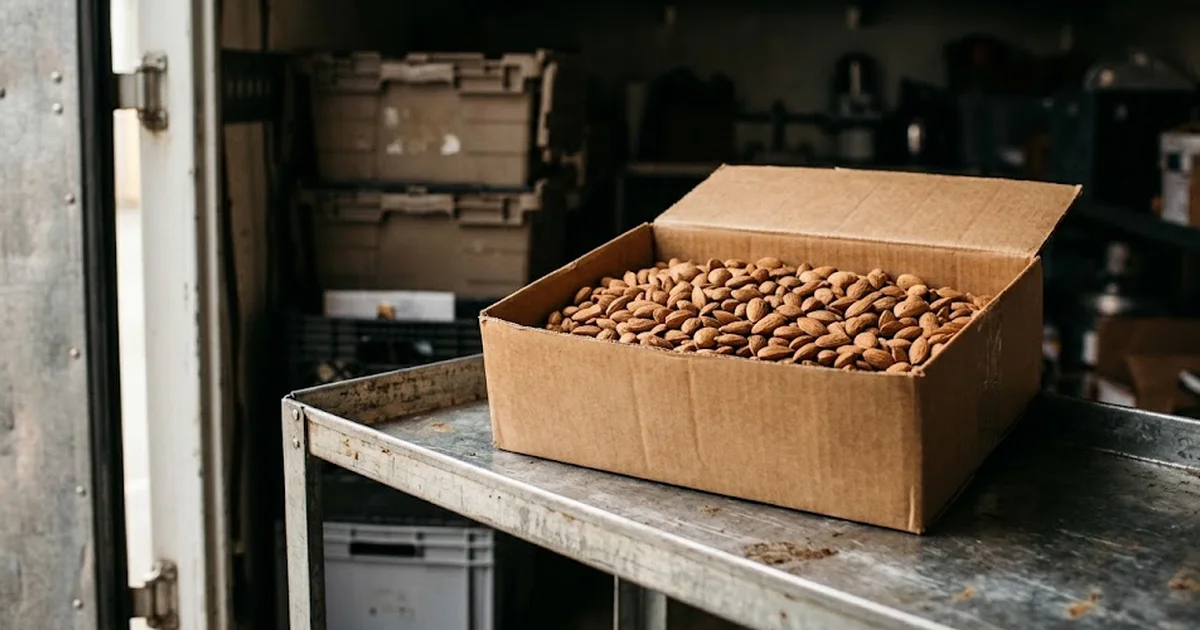
A food truck has neither a dedicated cold room nor a buffer storage like a traditional restaurant. The dry storage area is often limited to a few bins under the worktop or a closed cabinet between services. Working with dry products—dried fruits, spices, olives, aperitif snacks—remains practical as these items have a long shelf life and do not require cold chain breaks. The issue is not the product type but the space it occupies once delivered in 5, 10, or 12 kg cartons.
The key question to ask upfront is not 'which product to buy' but 'which product turns over fast enough to justify its floor space.' This decision shapes the entire procurement strategy.
5 kg format vs. daily rotation: how to decide without error
The minimum packaging size imposes a fixed purchase volume, but there is no need to store it all at once in its original form. The decision hinges on three criteria: the product’s consumption rate at the point of sale, its space efficiency per kilogram, and its ability to be repackaged without quality loss.
- High-turnover products: aperitif mixes, seasoned peanuts, soft fruits sold as sides—they justify a compact format replenished frequently rather than a large dormant volume.
- Low-turnover products: rare spices, specialty candied fruits—it is better to order these by pooling with another outlet or reducing their presence on the menu rather than tying up 5 kg that will take six months to sell.
- Versatile products: almonds, cashews, dates—usable in multiple recipes or for direct sale, they pay off their minimum packaging faster.
On the last point, almonds demonstrate the value of a multi-use product: blanched as a garnish, flaked as a topping, or powdered for a sweet-salty preparation. A single carton serves multiple menu variations, mechanically speeding up its turnover despite an initially constrained volume.
Repackaging into small portions: what this means for labelling
Faced with a 10 kg carton of dried fruits delivered in one go, the logical solution is to split it into smaller containers for daily service, leaving the main stock elsewhere. This practice is common and perfectly valid, but it requires the food truck to ensure traceability: as soon as a product leaves its original packaging to be transferred into a service bin or bag, essential information—product name, best-before date, batch number—must be transferred to the new container.
This is a point often overlooked during HACCP inspections, yet it only requires simple organisation: one label per repackaging bin, updated each time a new carton is opened.
At Palimex, we regularly see food trucks buying smart but repackaging poorly: the product is good, the rotation is right, but the service bin in the truck no longer has any batch or best-before information after three days. It’s the detail that costs during an inspection. Our field advice: always keep the original carton or its label in storage, even after the product has been transferred, until the batch is exhausted.
For the strictly regulatory aspects—mandatory information, transfer duration, bulk-specific cases—it is better to refer to dedicated content on labelling rather than improvising in a mobile kitchen. An additional point of attention: keeping a product technical sheet on hand allows you to retrieve information in case of doubt, a practice detailed in our guide on how to read a technical sheet for sizes and grades.
Off-site storage: a solution to handle minimum packaging sizes
When the ordered volume exceeds the onboard storage capacity, the simplest solution is off-site storage: a shared space, a storage area at a fixed partner location, or a rented unit near the food truck’s usual base. The principle is to build a buffer stock on the ground and only load the vehicle with the quantity needed for the day’s or week’s service.
- Identify a dry, frost-free, humidity-free location with stable temperature—a garage or a partner’s storage space is sufficient if storage conditions are met.
- Set up a fixed rotation schedule: a set day for restocking the truck from the off-site storage to avoid improvisation.
- Label each off-site storage container as if it were the truck itself, with visible best-before dates and batch numbers.
- Prioritise low-turnover products (specialty spices, candied fruits) in off-site storage and keep only high-turnover items onboard.
This setup allows purchasing in minimum packaging sizes without the vehicle’s storage becoming the bottleneck for the entire range. Best storage practices remain the same whether in the truck or off-site: stable temperature, protected from light, airtight containers. Details on shelf life by product category are covered in our article on storing dried fruits.
Ordering frequency and logistics: scheduling without overloading storage
There is no need to order all product ranges at once. Spreading orders based on the actual turnover of each product category smooths deliveries and prevents a one-square-metre storage space from being overloaded on Monday and empty by Thursday.
| Product category | Typical turnover in food trucks | Recommended ordering frequency | Recommended storage |
|---|---|---|---|
| Aperitif mixes / salted snacks | High | Weekly | Truck, compact format |
| Almonds, cashews | Medium to high | Every 1 to 2 weeks | Truck + off-site buffer |
| Dates, soft fruits | Medium | Every 2 weeks | Off-site storage recommended |
| Specialty spices | Low | Monthly or grouped | Off-site storage |
| Olives in buckets | Variable depending on menu | Per menu, grouped with other orders | Off-site storage or truck depending on format |
This differentiated schedule allows optimising free delivery or pallet shipments by grouping multiple product categories in a single delivery, rather than multiplying small orders that lose all logistical advantage. Pallet delivery and free delivery conditions are detailed in our guide to bulk ordering and free delivery.
Selection of dry products suited to limited space
Some products are particularly well-suited for food trucks with constrained storage, as they combine high turnover, culinary versatility, and good repackaging stability.
- A compact aperitif mix like the bucket of spicy peanuts takes up little space while covering direct takeaway sales without processing.
- Dried fruits from the dried fruits range allow creating multiple recipes from a limited number of products, reducing the number of different cartons to store simultaneously.
- Dates from the dates category work equally well for snacking or sweet-salty dishes, justifying their permanent presence despite limited space.
The goal is to limit the number of active SKUs in the truck rather than trying to have everything on hand: five fast-moving products are better than fifteen sitting idle.
Summary: building a dry range designed for available space
A food truck can perfectly handle bulk-packaged dry products despite minimal storage by focusing on three key areas: selecting fast-turnover, versatile products; organising rigorous repackaging while respecting best-before dates and batch numbers; and using off-site storage if needed to handle minimum packaging volumes. Ordering frequency should follow the actual turnover of each product category rather than a uniform schedule. For further details on labelling repackaged food products, the practical guides published by the DGCCRF provide a useful reference to consult alongside this article.
Frequently asked questions
Everything you need to know about this topic.
A question?
Get in touch directly.

Marketing & Communications Manager — Palimex / Meyva
As Marketing & Communications Manager at Palimex / Meyva, Aude Moyne leads the company's communications and digital marketing strategy: editorial content, email campaigns and the promotion of its product ranges. Her experience at Palimex, a specialist in dried fruit, nuts, olives and spices for professionals, has given her in-depth knowledge of the products, their origins and uses, and the expectations of food-industry professionals. The blog articles are written or supervised by her, in collaboration with Palimex's sales and product teams whenever a topic calls for specific expertise.
Our advice related to Pro tips
 pro-tips
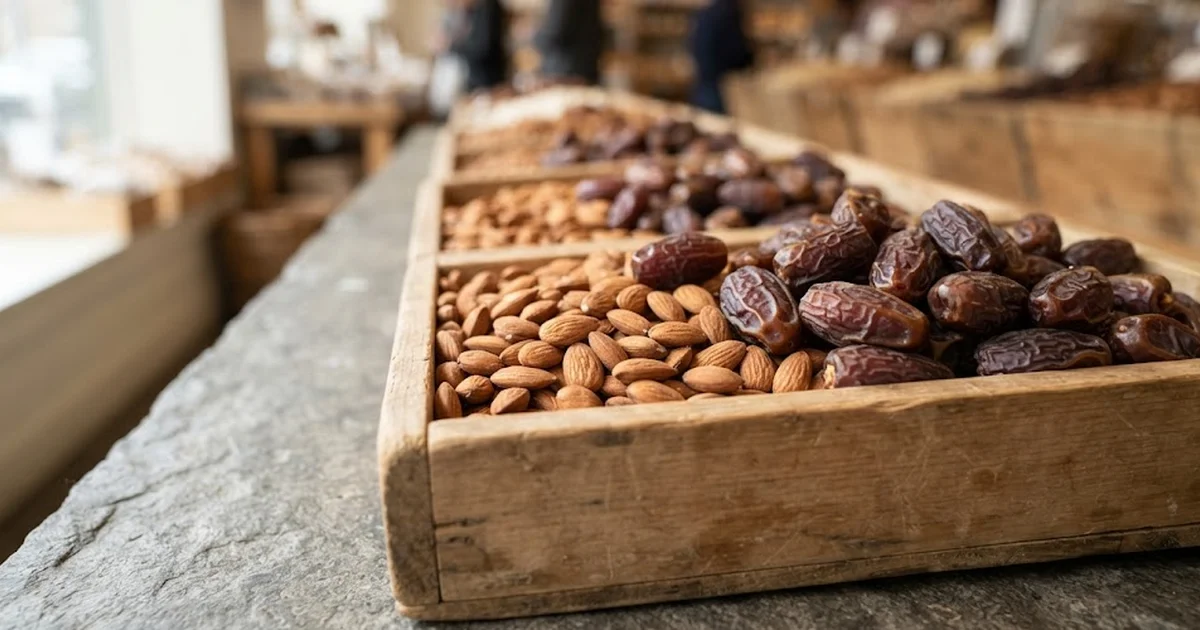
Bulk dried fruit section: making it profitable in gourmet grocery stores
How many SKUs, which layout, and what restocking schedule for 5 kg bulk packaging: a professional guide to a high-turnover, high-margin bulk dried fruit section.
 pro-tips
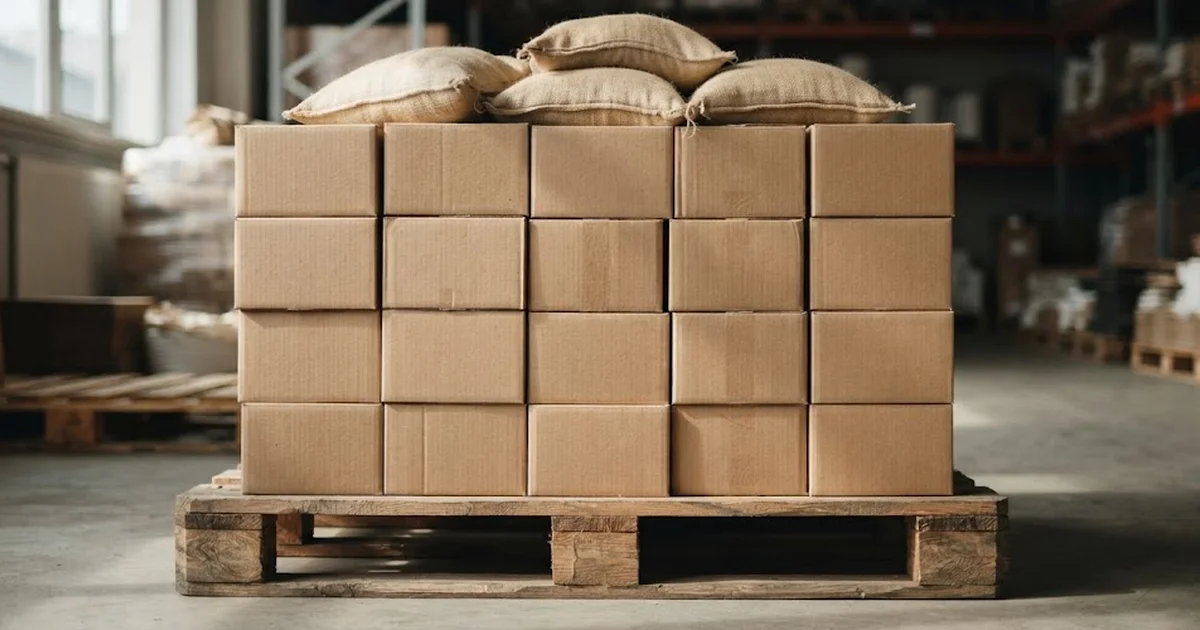
How Many Kilos on a Pallet: B2B Stacking and Height Guidelines
Weight, height, stackability, and securing: the Palimex method for building a full, stable professional pallet without crushing bags or cartons.
 pro-tips
Supplier Onboarding: Required Documents and Approval Form
What documents to require before onboarding a B2B food supplier: legal identity, technical data sheets, insurance, HACCP plan, recall procedure, terms and conditions. Complete guide.