

Dried fruits for professional pastry: almonds, pistachios, hazelnuts and walnuts
Palimex dried fruits for professional pastry: almonds, hazelnuts, pistachios, nuts, raisins, apricots, dates. Professional guide by Palimex for B2B wholesalers.
Why the quality of dried fruits is crucial in professional pastry
In pastry, each ingredient plays a precise structural and aromatic role. Dried fruits are no exception: a poorly calibrated almond compromises the consistency of a praline, an insufficiently roasted hazelnut weakens a Paris-Brest, a dull pistachio degrades the visual impact of an entremets. For the professional, the quality of dried fruits directly determines the quality of the finished product — and customer satisfaction.
Concretely, high-quality dried fruits provide:
- A better baking performance: premium almonds and hazelnuts retain their crunch after baking, without crumbling or releasing excessive oil
- A more intense and natural taste: the aromatic concentration of an Iranian AAA-grade pistachio is incomparable to an oxidized second-choice product
- A consistent and stable texture, essential for mass production where each piece must be identical to the previous one
- Perfect homogeneity for praline, dried fruit pastes, toppings, or inclusions — calibration eliminates granulometry variations
- Enhanced value of the finished product that justifies the price positioning, crucial in the face of growing competition in artisanal pastry
« Pastry is an exact science where the quality of raw materials is not a luxury, but a technical necessity. A praline made with poorly roasted hazelnuts or rancid almonds will never achieve the expected finesse. »
— Frédéric Bau, creative director at Maison Valrhona and a reference author in contemporary pastry
With volumes adapted to B2B and professional packaging, Palimex meets the needs of daily production as well as seasonal peaks: end-of-year holidays, Easter, Ramadan, summer, Valentine’s Day, or Mother’s Day.
Essential dried fruits in professional pastry: a variety guide
Each dried fruit has specific technical properties that determine its use in pastry. Here is a comprehensive overview of the essential varieties, with their professional applications and the formats available at Palimex.
Almonds: versatility for the pastry chef
The almond is the most widely used dried fruit in global pastry. Its relative aromatic neutrality, high fat content (around 50%), and ability to be transformed into multiple forms make it an indispensable ingredient.
Professional applications:
- Pralines and gianduja: the almond provides a smooth base and a rounded taste, complementary to the hazelnut
- Marzipan and almond paste: the fineness of the powder determines the final texture
- Macarons: the calibration of almond powder (tant-pour-tant) is critical for achieving a smooth and consistent shell
- Nougats and dragées: whole Californian or Spanish almonds offer the best size-to-price ratio
- Rocks and chocolate coatings: roasted almonds provide the desired textural contrast
- Financiers and frangipane: almond powder forms the aromatic and structural base
Formats available at Palimex: whole blanched or unblanched, flaked, in sticks, crushed, fine or granulated powder, and raw marzipan.
Hazelnuts: the soul of praline
The hazelnut is inseparable from French pastry. Its roasting reveals complex buttery and caramelized aromas that define the character of a praline or homemade spread. Piedmont IGP hazelnuts and Turkish hazelnuts (Tombul variety) are the most sought-after by professionals.
Professional applications:
- Homemade spread: minimum 40% hazelnuts for a premium result
- Hazelnut praline: the quality of roasting is key to aromatic intensity
- Biscuits, cookies, and shortbreads: crushed hazelnuts add crunch and depth
- Paris-Brest and entremets: hazelnut praline cream is a timeless classic
- Dacquoise: hazelnut powder partially replaces flour for a melting texture
Available whole with skin, blanched, roasted, crushed, or in powder.
Pistachios: the premium marker
The pistachio has become the signature ingredient of high-end contemporary pastry. Its intense green color and delicate taste make it an immediately recognizable quality marker for consumers. Professional demand has increased significantly in recent years, driven by the trend of pistachio desserts on social media.
Origins offered by Palimex according to needs:
- Iran: intense green color, pronounced taste, ideal for creams and visual decorations
- California: consistent size, milder taste, perfect for pralines and ice creams
- Turkey (Antep): balance between color and flavor, versatile in pastry and confectionery
Applications: pastry creams, ice creams, mousselines, pistachio praline, premium decorations and toppings, loukoums, and baklavas.
Walnuts and pecans: aromatic depth
Walnuts and pecans provide a unique aromatic complexity, blending subtle bitterness and buttery notes. Their high content of unsaturated fatty acids gives them a melting texture highly appreciated in travel pastries.
Professional applications:
- Brownies: pecans are the American standard, while walnut kernels are the French alternative
- Travel cakes: their fat content improves natural preservation
- Pies (walnut, pecan pie): timeless classics in bakery-pastry
- Premium biscuits and cookies: caramelized pecan pieces create a high-end product
Soft dried fruits: essentials for yeast doughs
Dried apricots, Smyrna and Corinth raisins, figs, Medjool and Deglet Nour dates, cranberries, candied citrus peels… These soft dried fruits are the pillars of Viennese pastries, yeast doughs, and artisanal confectionery.
- Fruit cakes: traditional mix of raisins, peels, and candied cherries
- Panettone and stollen: Smyrna raisins, candied orange and citron peels
- Brioches and specialty breads: raisins, figs, apricots depending on the season
- Artisanal energy bars: dates as a natural binder, cranberries for acidity
- Mendiants and filled chocolates: apricots, figs, and dates as inclusions
Comparative table of dried fruits by pastry use
To simplify your sourcing choices, this table summarizes the technical characteristics of each dried fruit in a professional pastry production context.
| Dried fruit | Main uses | Recommended professional formats | Baking performance | Available origins |
|---|---|---|---|---|
| Almond | Praline, macaron, frangipane, financier, nougat | Powder, flaked, whole, sticks, paste | Excellent | Spain, California, Mediterranean basin |
| Hazelnut | Praline, spread, dacquoise, cookies | Whole, roasted, crushed, powder | Very good | Turkey, Italy (Piedmont), Georgia |
| Pistachio | Cream, ice cream, praline, decoration, baklava | Blanched, crushed, powder, whole | Good (decoration after baking) | Iran, California, Turkey |
| Walnut / Pecan | Brownie, travel cake, pie, biscuit | Whole kernels, pieces, crushed | Good | France (Grenoble, Périgord), United States |
| Raisins | Panettone, brioche, cake, stollen | Smyrna, Corinth, Sultana, bulk | Excellent | Turkey, Greece, Iran |
| Dates | Energy bars, confectionery, filling | Medjool, Deglet Nour, date paste | Good (as inclusion) | Tunisia, Algeria, Israel |
| Dried apricots | Cakes, mendiants, confectionery, fruit pastes | Soft, diced, whole | Very good | Turkey (Malatya) |
How to choose a dried fruit supplier for professional pastry
The consistency of your recipes depends directly on the consistency of your supplies. In pastry, a change in batch should never result in a change in outcome. That’s why choosing a supplier is a strategic decision, not just a logistical one.
Here are the essential criteria to evaluate:
- Breadth and depth of range: a supplier capable of covering all your dried fruit needs avoids multiplying contacts and simplifies order management
- Quality and size consistency: from one batch to another, organoleptic (taste, texture, color) and physical (size, moisture content) characteristics must remain constant
- Traceability and technical information: geographic origin, harvest, residual moisture content, storage conditions, compliance with French and European health standards — this data must be accessible upon request
- Reliable and responsive logistics: in pastry, a supply shortage can halt an entire production. Delivery times must be short and respected
- Pricing adapted to professional volumes: consistent prices based on ordered quantities, with no surprises or hidden fees
- Technical advice and support: a good supplier guides you toward the origin and format best suited to each application
At Palimex, we have been working for over 25 years with food professionals: pastry chefs, chocolatiers, bakers, ice cream makers, confectioners, distributors, and food manufacturers. This experience translates into an in-depth knowledge of the technical requirements of each profession. Also, discover our dried fruit storage guide to optimize the shelf life of your stocks.
Professional techniques: getting the most out of your dried fruits
Beyond choosing raw materials, mastering preparation techniques is essential to fully exploit the aromatic and textural potential of dried fruits in pastry.
Roasting: unlocking aromas
Roasting is the most critical step in preparing dried fruits for pastry. It triggers the Maillard reaction, which develops hundreds of aromatic compounds absent in the raw product. For hazelnuts, roasting at 150-160°C for 12 to 15 minutes is generally recommended. For almonds, a slightly lower temperature (140-150°C) preserves their light color while developing aromas.
Key points to watch:
- Always roast on a uniform tray in a single layer to ensure even cooking
- Dried fruits continue cooking after removal from the oven: remove them slightly before reaching the desired color
- Cool quickly on a rack to stop residual cooking
Crushing and granulometry
In professional production, consistent granulometry determines the final texture of the product. Irregular crushing produces heterogeneous inclusions that affect appearance and mouthfeel. For artisanal praline, the fineness of grinding directly determines the smoothness of the paste.
Storage in the lab
Dried fruits are sensitive to oxidation, moisture, and cross-contamination. In a pastry lab:
- Store in airtight containers, away from light
- Ideal temperature: between 10 and 15°C, never above 20°C for prolonged storage
- Follow the FIFO (First In, First Out) principle to ensure freshness
- Separate oily dried fruits (almonds, hazelnuts) from soft dried fruits (apricots, dates) to prevent moisture transfer
Usage ideas and seasonal inspirations for professionals
Dried fruits allow you to refresh your displays with the seasons and create limited-edition ranges that build customer loyalty. Here are concrete application ideas, tested by professionals.
Viennese pastries and bakery
- Flaked almonds on almond croissants and puff pastries: a classic that justifies a premium price
- Smyrna raisins for traditional brioches and raisin bread: choose a consistent size for even distribution in the dough
- Crushed walnuts and hazelnuts in specialty breads: walnut bread, Nordic hazelnut bread
Fine pastry and entremets
- Crushed pistachios on spring and summer entremets: the visual impact of pistachio green is immediate
- Almond-hazelnut praline as an insert or crémeux: the 60/40 hazelnut-almond ratio is the professional standard for a balanced praline
- Medjool dates for premium desserts and confectionery: their generous size and melting flesh make them an exceptional product
Chocolate and confectionery
- Whole roasted hazelnuts for chocolate coating and rocks: the size must be perfectly consistent for even coating
- Salted roasted almonds for bean-to-bar chocolate tablets: the sweet-salty trend continues to grow
- Pistachios and cranberries for mendiants: the color contrast (green, red, brown) is a selling point in displays
To further enhance your creations, check out our article on dried fruit market trends and professional consumer expectations.
Palimex advantages for pastry professionals
For over 25 years, Palimex has supported food professionals with a range designed for the demands of daily production.
| Criterion | What Palimex offers |
|---|---|
| Availability | Year-round stock, including during peak seasonal demand |
| Packaging | 200 g bags, 5 and 10 kg cartons, buckets, bulk, full pallets |
| Range | Oily dried fruits, soft dried fruits, candied fruits, seeds, spices |
| Selection | Products rigorously selected based on size, color, and freshness criteria |
| Origins | Multi-origin sourcing (Turkey, Iran, California, Mediterranean basin) |
| Delivery | Fast shipping throughout mainland France |
| Support | Personalized advice on origins and formats suited to each profession |
Whether you are an artisanal pastry chef, chocolatier, baker, ice cream maker, or food manufacturer, our team helps you choose the products best suited to your recipes and production volumes.
Why the origin of dried fruits matters in professional pastry
The geographic origin of a dried fruit is not just a marketing argument. It determines measurable technical characteristics: fat content, aromatic profile, color, average size, and behavior during processing. A pastry chef who masters these differences can precisely adjust their recipes.
For example, Valencia almonds (Spain) have a more pronounced taste and thinner skin than Californian almonds, which are more neutral and consistent in size. For a macaron, the Californian consistency is often preferred. For a characterful frangipane or nougat, the Mediterranean almond provides a more assertive taste signature.
Similarly, Turkish hazelnuts (Tombul variety, round and compact) are ideal for praline due to their high oil content and deep aroma after roasting. Piedmont hazelnuts, rarer and more expensive, are reserved for ultra-premium ranges where the IGP designation is a selling point.
Palimex offers multi-origin sourcing that allows each professional to choose the most relevant origin for their application, positioning, and budget.
Summary: structuring your dried fruit sourcing for pastry
Dried fruits are a strategic sourcing item for any pastry professional. The quality of the raw material, batch consistency, format diversity, and supplier reliability are all factors that directly influence the quality of your products and the profitability of your business.
In summary, three principles guide effective professional sourcing:
- Select the origin and format suited to each application rather than seeking a universal product
- Ensure consistency by working with a supplier capable of maintaining quality from one batch to another
- Optimize storage to preserve organoleptic qualities until use in production
With over 25 years of experience with food professionals, Palimex supports you in the selection, packaging, and delivery of dried fruits tailored to your professional requirements. Request a personalized quote or contact our team to identify the origins and formats best suited to your recipes.
Further reading
Frequently asked questions
Everything you need to know about this topic.
A question?
Get in touch directly.

Marketing & Communications Manager — Palimex / Meyva
As Marketing & Communications Manager at Palimex / Meyva, Aude Moyne leads the company's communications and digital marketing strategy: editorial content, email campaigns and the promotion of its product ranges. Her experience at Palimex, a specialist in dried fruit, nuts, olives and spices for professionals, has given her in-depth knowledge of the products, their origins and uses, and the expectations of food-industry professionals. The blog articles are written or supervised by her, in collaboration with Palimex's sales and product teams whenever a topic calls for specific expertise.
Our advice related to Pro tips
 Pro tips
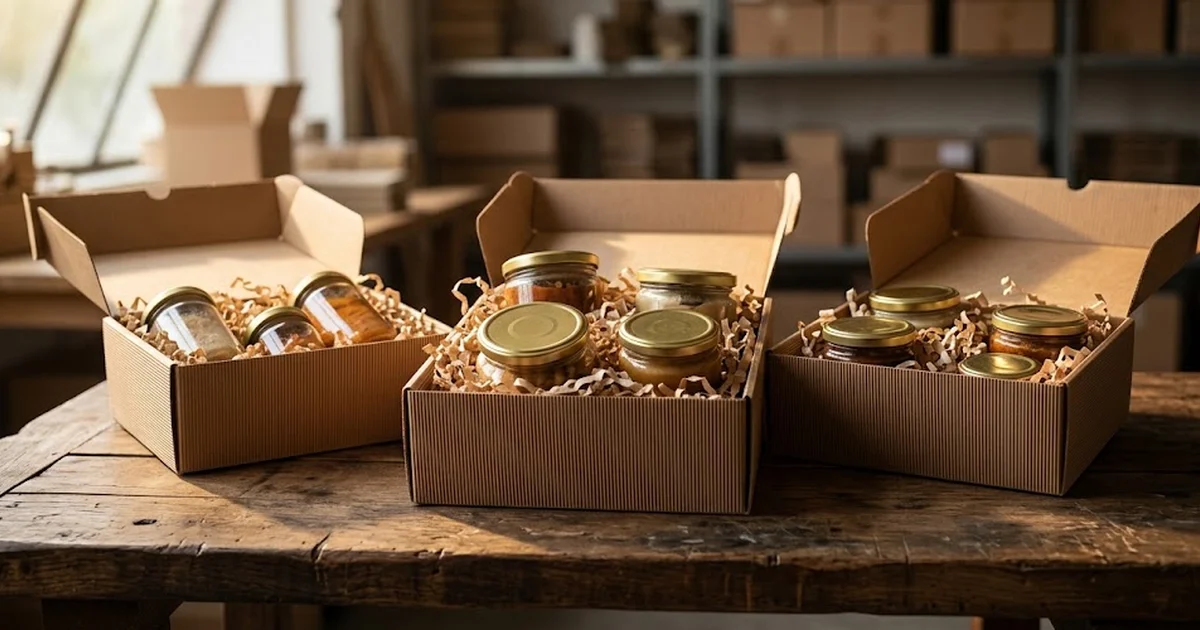
Paniers garnis de fin d'année pour les entreprises : les composer en épicerie fine
Composez des paniers garnis de fin d'année rentables pour entreprises et CSE : sélection de produits, formats stables, prix de revient et facturation B2B.
 Pro tips
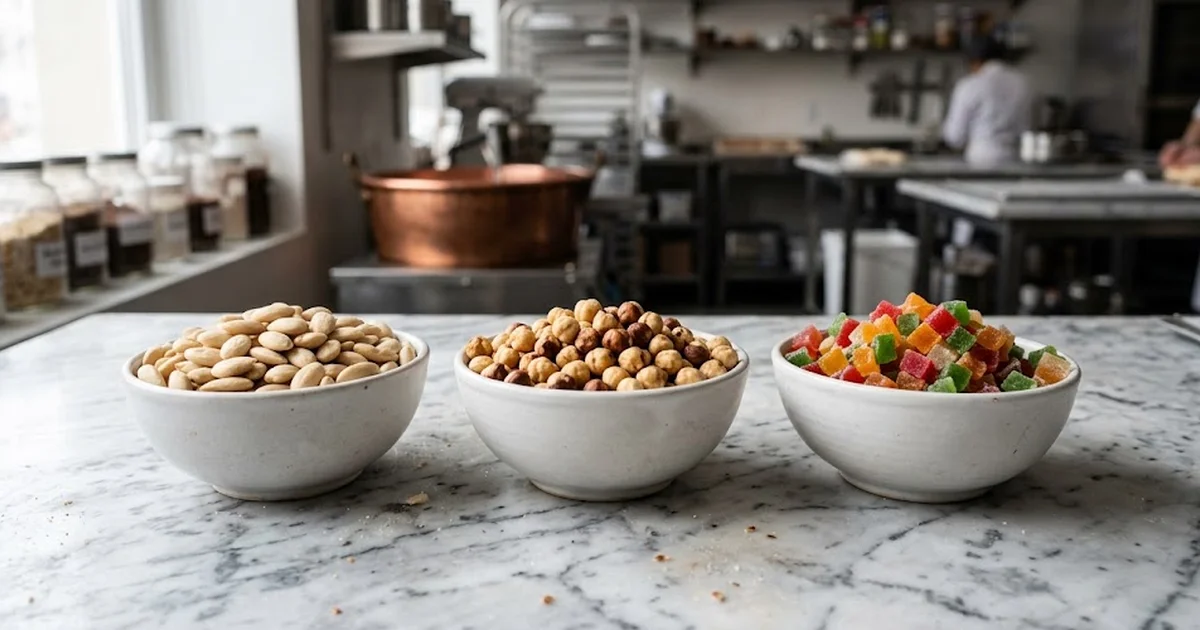
Commandes de fin d'année : le calendrier d'achat d'un pâtissier-chocolatier, d'octobre à décembre
Commandes de fin d'année : calendrier d'achat d'octobre à décembre pour pâtissier-chocolatier. Cadencez fruits secs, confits et marrons sans rupture.
 Pro tips
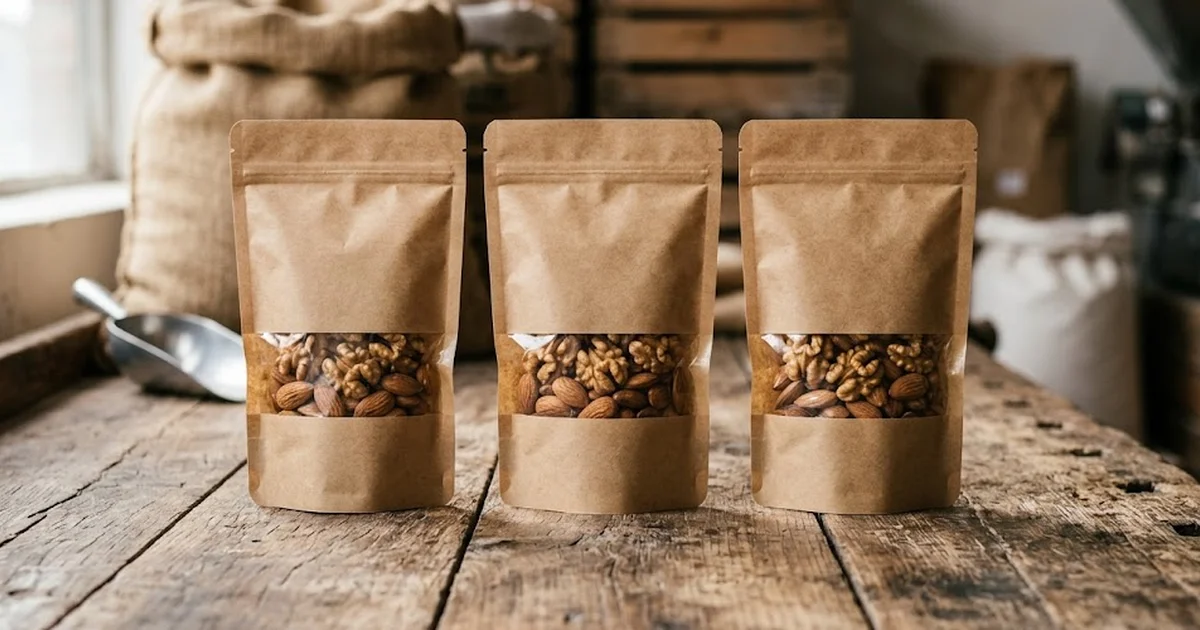
Triman, REP et éco-contribution : l'emballage d'un préemballé alimentaire
Reconditionnement de denrées et vente au consommateur : obligations REP, identifiant IDU, signalétique Triman et Info-tri. Le guide légal pour les professionnels.