
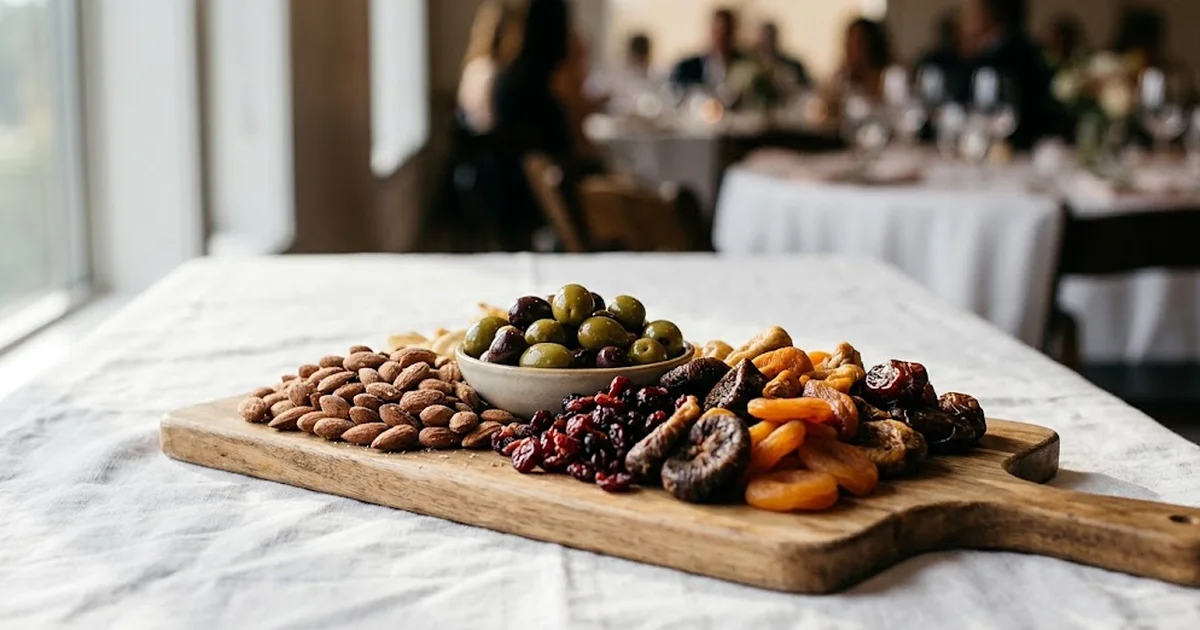
Traiteur : plateau apéritif, grammage par convive et coût
Portion size per guest, salty/sweet balance, products that withstand waiting times, and cost-per-person calculation: the caterer's guide to bulk aperitif trays.
Why portion size per guest makes all the difference for caterers
An improperly sized aperitif tray costs twice: if too generous, it eats into the provider’s margin; if too meagre, it risks client complaints and a low-end service image. For an events business handling back-to-back cocktails, welcome drinks, and corporate receptions, portion size per guest is no minor detail—it’s the variable that drives bulk purchasing, order logistics, and invoiced pricing.
At Palimex, a food wholesaler based in Rungis since 1984, this question arises with every professional order: how many kilograms of olives, nuts, or dried fruit for 50, 100, or 300 guests? The answer depends on the event format, service duration, and the balance between salty and sweet products—three parameters a caterer must control before placing an order.
Portion size per guest by event format
Portion size is not fixed: it varies significantly depending on whether the event lasts twenty minutes or three hours, and whether it precedes a sit-down meal or serves as the meal itself. Below are the benchmarks we provide to caterers and organisers ordering in bulk from Palimex.
| Event format | Average duration | Total portion size per guest | Indicative distribution |
|---|---|---|---|
| Welcome drink before meal | 30 to 45 min | 60 to 80 g | 60% salty (olives, salted nuts) / 40% sweet (candied fruit, trail mix) |
| Cocktail reception (no sit-down meal afterwards) | 2 to 3 h | 150 to 200 g | 50% salty / 50% sweet, with added snacks and appetizers |
| Corporate event / seminar | 1 h to 1h30 | 90 to 120 g | 65% salty / 35% sweet |
| Continuous CHR buffet (bar, hotel) | Rotating service | 100 g per hour of attendance | Adjustable based on stock rotation and footfall |
These portion sizes apply to the overall aperitif mix (nuts, olives, dried fruit, snacks). They should be increased if the aperitif tray is the sole catering point of the evening, and decreased if it precedes a sit-down dinner.
Salty/sweet balance: crafting a tray that doesn’t bore guests
A tray with only salty items tires the palate in under an hour; one that’s too sweet feels like a children’s party rather than a professional reception. The balance between the two is what sets a thoughtfully designed aperitif tray apart from a simple bulk purchase of products by weight.
- Salty range: pitted or stuffed olives, plain or lightly roasted nuts (almonds, cashews, pistachios), aperitif mixes like bulk aperitif blends for caterers.
- Sweet-tart range: candied fruit, dried fruit (apricots, figs, mango), pitted prunes—see our selection of dehydrated fruit.
- Crunchy/snacking range: roasted and spiced aperitif mixes to break up the soft texture of candied fruit and reignite appetite during service.
- Global flavours: spices and exotic blends to give the tray a cohesive theme rather than a disjointed assortment of containers.
The rule of thumb we recommend: never exceed 60% of a single flavour profile across the entire tray, regardless of the event format. This also applies to sizing: a tray made up solely of large items (big nuts, large candied fruit) can seem lacking in finesse, whereas a mix of sizes suggests a more careful selection.
Products that withstand waiting and extended service
An aperitif tray may remain on display for several hours at room temperature, under lighting that accelerates oxidation for some products. The choice of items must account for this in-service storage constraint, in addition to the product’s shelf life in stock.
- Olives in brine or oil naturally hold up well, provided they are presented in a container that limits evaporation.
- Plain nuts (almonds, walnuts, hazelnuts) can be displayed for several hours without noticeable texture loss, unlike coated nuts, which may stick or soften under room heat.
- Dehydrated fruit resists ambient air well during standard service times but should be avoided in direct sunlight or near heat sources (heated buffets, spotlights).
- Candied fruit requires faster stock rotation once removed from original packaging: best reserved for short formats (welcome drinks) rather than three-hour cocktails.
At Palimex, we frequently see caterers return after an event to adjust their next order: too much candied fruit that softened by the end of the evening, or not enough olives, which always go first. Our advice, after over forty years of sourcing at Rungis: build your tray around a base of stable products (olives, plain nuts) and add more fragile items only as a complement, in measured quantities. This base absorbs the unexpected—service delays, room heat, higher-than-expected attendance.
Calculating cost per person without cutting into margins
Cost per guest is calculated based on the portion size and bulk purchase price per kilogram, never from retail pricing. This is one of the key advantages of professional packaging: formats range from retail bags sold by the case to bulk sacks, with pallet or carriage-paid delivery depending on volume.
Simple calculation method for caterers:
- Determine the total portion size per guest using the table above.
- Allocate this portion size across the selected product categories (salty, sweet, snacking).
- Multiply each quantity by the bulk purchase price per kilogram of the chosen SKU.
- Sum to obtain the raw material cost per guest, before the caterer’s markup.
Example for a 150 g/guest cocktail reception, 100 people: 15 kg of total aperitif mix. Allocating 6 kg of olives, 5 kg of plain nuts, and 4 kg of candied fruit keeps material costs under control, provided these volumes are purchased in cartons or bulk rather than small packs—this is the logic of bulk buying for professionals.
To refine this calculation based on your usual ranges, our page bulk pricing for nuts and olives for professionals details price tiers by packaging.
Packaging, logistics, and bulk ordering for events
A caterer handling multiple events per month benefits from anticipating stock rotation rather than ordering event by event. Dry products (nuts, spices, dried vegetables) store easily for several weeks under proper conditions, allowing for smoother ordering and a secure base stock.
- Minimum packaging: 5 kg per SKU, suited to regular professional use rather than one-off purchases.
- Pallet or free delivery: preferred when multiple events are planned in the same month to reduce per-unit logistics costs.
- Traceability and batches: every professional order must allow for batch and shelf-life tracking, a non-negotiable HACCP requirement for any caterer handling food prior to service.
- Preventing stockouts: the most consumed items at a cocktail (olives, plain nuts) should be ordered with a 10–15% safety margin over theoretical calculations to account for attendance variations.
For general hygiene principles applicable to the handling and storage of food in collective and event catering, the economie.gouv.fr website is a useful reference for caterers looking to verify their regulatory obligations.
Also see our detailed storage guidelines by product category in our article on best practices for storing nuts and dehydrated fruit.
Summary: building a reliable aperitif tray, event after event
Designing an aperitif tray that holds up relies on three key decisions: setting the right portion size for the event format, balancing salty/sweet/crunchy profiles without overloading one side, and choosing products whose texture withstands several hours of service. Cost per guest then follows naturally, provided purchases are made in professional packaging rather than retail.
For a caterer handling multiple events, this method becomes a repeatable standard: a base of stable products ordered in bulk, supplemented event by event based on duration and format. This consistency ensures both service quality and margin control, with no last-minute surprises.
Further reading
Frequently asked questions
Everything you need to know about this topic.
A question?
Get in touch directly.

Marketing & Communications Manager — Palimex / Meyva
As Marketing & Communications Manager at Palimex / Meyva, Aude Moyne leads the company's communications and digital marketing strategy: editorial content, email campaigns and the promotion of its product ranges. Her experience at Palimex, a specialist in dried fruit, nuts, olives and spices for professionals, has given her in-depth knowledge of the products, their origins and uses, and the expectations of food-industry professionals. The blog articles are written or supervised by her, in collaboration with Palimex's sales and product teams whenever a topic calls for specific expertise.
Our advice related to Grocery & Recipes
 Grocery & Recipes
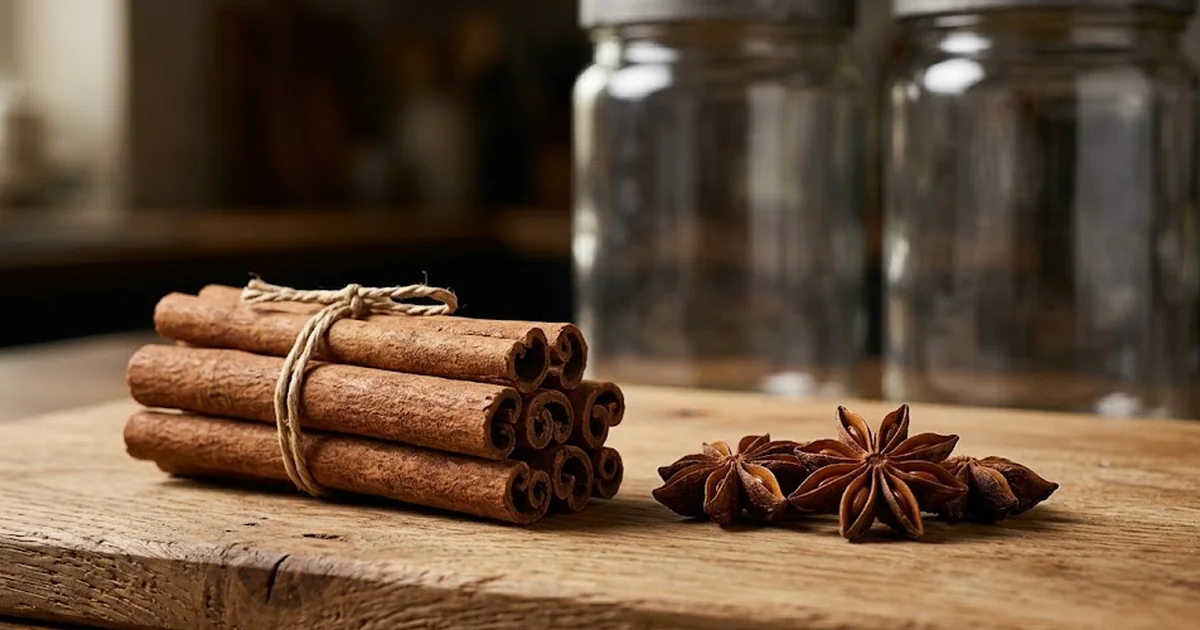
Épices de l'hiver : pain d'épices, vin chaud et pâtisserie de Noël, dosage et achat
Guide B2B des épices d'hiver pour boulangers, pâtissiers et CHR : dosages au kilo et au litre, mélanges vin chaud et pain d'épices, approvisionnement en gros.
 Grocery & Recipes
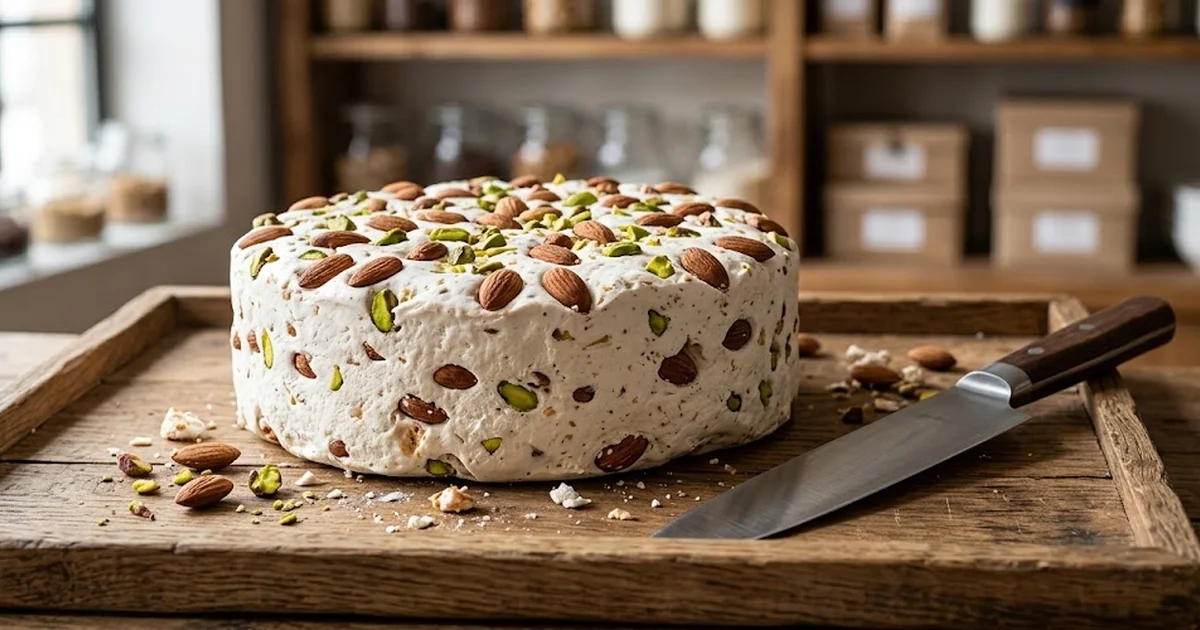
Nougat en meule : découpe à la coupe, conservation et vente au poids
Guide B2B pour épiceries et confiseries : réussir la découpe à la coupe du nougat en meule, limiter les pertes, maîtriser le stockage et l'affichage au poids.
 Grocery & Recipes
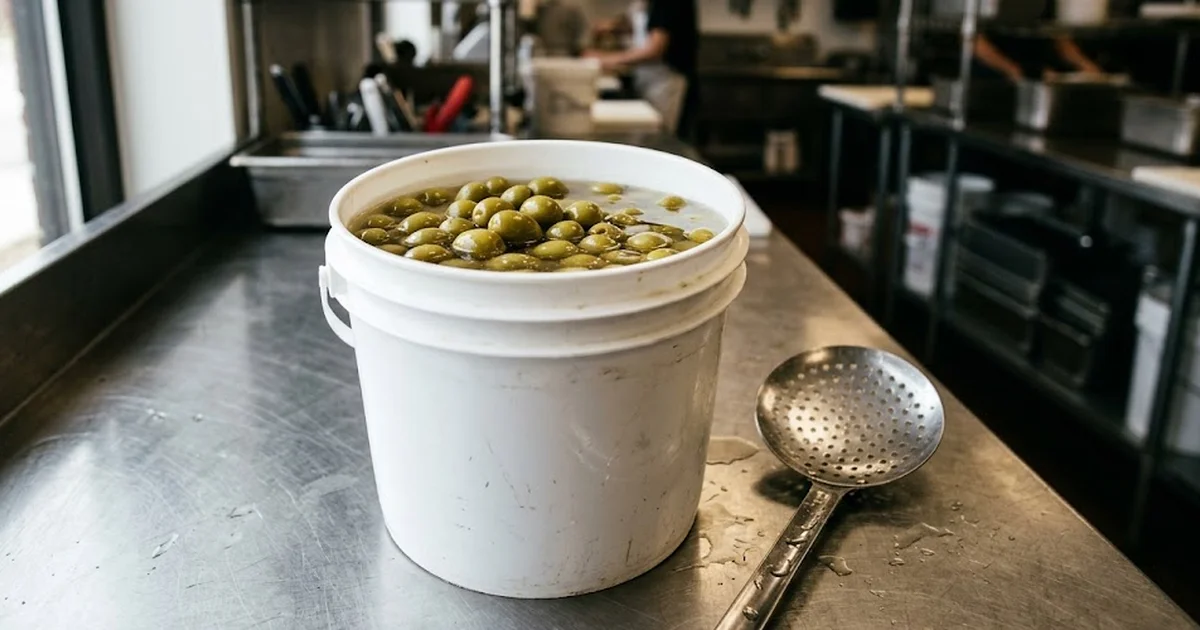
Seau d'olives entamé : durée de vie, saumure et gestion du reste
Comment conserver un seau d'olives entamé ? Rôle de la saumure, température, règles d'hygiène et gestion des tapenades : le guide professionnel Palimex.