
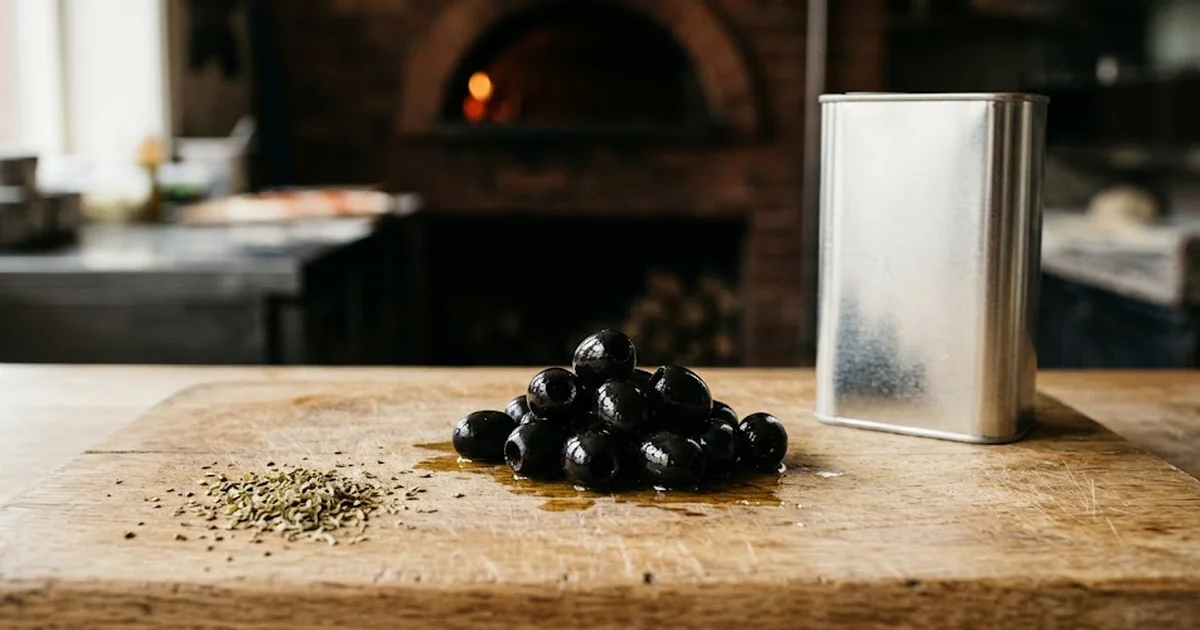
Pizzeria : la commande type en olives, huiles et épices
Olive sizes, cooking oil vs. seasoning oil, oregano dosage: Build your pizzeria's recurring wholesale order with space-efficient formats.
For a pizzeria, a recurring order isn’t just about restocking what’s missing from storage. It’s a precision exercise: selecting the right olive size to withstand cooking, the right oil depending on whether it goes in the oven or finishes as a drizzle on a freshly baked pizza, and the right spice blend to maintain consistent flavour week after week. This article breaks down, item by item, the standard order for a professional pizzeria with a SIRET number: olives, oils, oregano, and blends, calculated by pizza portions and weekly turnover, with formats designed for tight storage spaces.
Why a pizzeria needs a standard recurring order
A pizzeria that improvises its order from one week to the next always ends up choosing between two problems: running out during Friday night’s peak service or overstocking a product that loses quality before it’s used. A standard order—a fixed reference of products, sizes, and quantities, adjusted only to cover volume—solves this problem once and for all.
- It secures critical items: olives, oils, and spices, which are used in nearly every pizza served.
- It simplifies supplier relations: a recurring purchase order, without re-entering details each week.
- It streamlines HACCP compliance: identified batches, monitored use-by dates, and FIFO rotation effortlessly maintained.
- It reduces waste from packaging formats mismatched to the kitchen’s actual throughput.
This recurring order logic relies on standard packaging formats. Before setting quantities, you must first choose the right products—and that’s where olive size and oil type make all the difference in cooking.
Pitted olives: which size to choose for oven cooking
Not all olives perform the same at 300-450°C in a pizza oven. An olive that’s too small dries out and hardens, while one that’s too large or overly saturated with brine releases liquid that softens the dough and causes toppings to slide. Size selection is therefore about performance, not just taste.
- Medium pitted olives: the most common compromise in pizzerias, they retain a firm texture after cooking and distribute evenly on the dough.
- Black olives in slices: practical for consistent visual presentation, they handle the short cooking time of a pizza oven well.
- Pitted green olives: reserved for recipes requiring a tangy contrast, used in smaller quantities as they have a stronger flavour impact.
Table olive classification criteria are based on internationally recognised standards, particularly those set by the International Olive Council, which defines commercial size categories and preparation methods. In the kitchen, the product’s technical data sheet is what matters daily: it specifies the exact size and preparation method (pitted, sliced, whole). To read and compare multiple references before ordering, the article sizes and grades of dried fruits: reading a technical data sheet applies directly to olive data sheets.
For procurement, MEYVA olive buckets cover most high-volume pizzeria needs, while 2 kg buckets are better suited to smaller establishments or storage spaces with limited floor space.
At Palimex, we see the same mistake in pizzerias every week: ordering the cheapest olive per kilo without checking its residual moisture content. An overly moist olive releases water in the oven, softening the dough and causing toppings to sink in the centre. The right approach is to compare technical data sheets before settling on a fixed reference, then sticking to it week after week—consistency in pizza depends on it as much as the recipe itself. — The Palimex team, foodservice wholesaler in Rungis
Seasoning oil and cooking oil: don’t mix up their uses
A professional pizzeria actually uses at least two distinct oils, and confusing them means either wasting a high-quality oil in cooking or seasoning with a neutral oil that adds nothing to the finished product.
| Use | Desired characteristic | Application timing |
|---|---|---|
| Cooking oil / dough greasing | High smoke point, neutral flavour | Before baking, on the dough or work surface |
| Seasoning oil | Distinct aromatic profile, visible drizzle for finishing | After baking, just before service |
| Oil for antipasti marinade | Good container stability, potential for flavouring | In advance, for vegetables or olives used in appetizer trays |
The simple rule to follow in the kitchen: cooking oil should never be used to finish a pizza, and seasoning oil should never be used for frying or mould greasing, or it will lose its aromatic value after the first high-heat use. Setting a reference for each use, clearly labelled on the storage container, prevents mix-ups during peak service.
Oregano and spice blends for pizzerias: dosage and consistency
Oregano is the signature spice of Neapolitan pizza and its variations, but its aromatic strength varies significantly from one batch to another depending on origin and drying method. A pizzeria that changes suppliers or references with each order risks inconsistent flavour from week to week, which regular customers notice quickly.
- Set a single oregano reference for the entire year, and only change it after comparative tasting.
- Measure by weight, not by hand: a fixed weight per pizza ensures consistency, regardless of who prepares it.
- Store oregano and blends in airtight containers, protected from light and kitchen humidity, to preserve aroma between orders.
- Plan a complementary blend (Herbes de Provence, pizzaiolo mix) for recipes outside the core menu, without multiplying unnecessary references.
To establish a reliable weight per portion and avoid over- or under-dosing during busy periods, the article dosing spices in commercial kitchens: weight per portion provides a method that can be directly applied to a pizzeria, even outside a collective catering setting. The spices catalogue allows you to compare origins and available packaging to set a stable reference.
Formats for tight storage: focus on turnover, not stock
The most common constraint in pizzerias isn’t consumption volume but available storage space. A 6 to 10 m² storeroom can’t accommodate 20 kg cartons of olives or 25-litre oil drums that sit for three weeks before being opened. The standard order logic must therefore account for actual product turnover, not just price per kilo.
- Identify the actual weekly volume consumed per product, based on the number of pizzas sold.
- Choose the packaging closest to this volume, without excess, even if it means ordering more frequently.
- Prioritise stackable and resealable formats to optimise tight storage space.
- Organise FIFO rotation: always use the oldest batch first, with use-by dates visible on the front of containers.
At Palimex, delivery is available by pallet or free delivery depending on order volume: details are explained in the article free delivery and pallet delivery: wholesale order guide, useful for calibrating a weekly order without exceeding the establishment’s actual storage capacity.
For establishments offering an appetizer selection in the waiting area while wood-fired pizzas cook, a ready-to-serve mix like the MEYVA appetizer cocktail bucket can supplement the order without adding references to manage in storage.
Building your weekly standard order: a quantified example for a pizzeria
Here’s an example of the reasoning, to be adjusted based on actual weekly pizza sales. This is a calculation base, not a fixed standard: each establishment must verify its own consumption before setting quantities.
| Item | Average portion per pizza | Base: 300 pizzas/week | Recommended format |
|---|---|---|---|
| Pitted olives | 6 to 8 g | 2 to 2.4 kg/week | 2 kg bucket, two orders per month |
| Seasoning oil | 3 to 5 ml | 1 to 1.5 L/week | 5 L drum, monthly turnover |
| Cooking oil | Varies by tray/dough use | 2 to 3 L/week | 5 L drum dedicated to cooking |
| Oregano | 1 to 1.5 g | 300 to 450 g/week | 1 to 2 kg packaging, replenished every three to four weeks |
This base allows you to set a stable ordering rhythm: two deliveries per month for olives and oil, and a quarterly restock for spices in larger packaging if storage allows. The goal remains the same: never run out of an item that affects every pizza served, without tying up cash or storage space in dormant stock.
For establishments delivering from a distant depot or looking to consolidate multiple orders to reach the free delivery threshold, delivery terms and drive & collect options allow you to adjust the rhythm without increasing logistics costs.
Summary: a standard order that protects menu consistency
A pizzeria’s recurring order rests on three simple pillars: the right olive size to withstand cooking, the right oil for seasoning or cooking, and a stable dosage of oregano and spice blends week after week. By setting these references once and for all, then matching formats to actual turnover rather than price per kilo, a pizzeria secures both its tight storage space and the consistent flavour that keeps customers coming back. The rest—free delivery, pallets, drive—is just a matter of logistics once these product choices are made.
Frequently asked questions
Everything you need to know about this topic.
A question?
Get in touch directly.

Marketing & Communications Manager — Palimex / Meyva
As Marketing & Communications Manager at Palimex / Meyva, Aude Moyne leads the company's communications and digital marketing strategy: editorial content, email campaigns and the promotion of its product ranges. Her experience at Palimex, a specialist in dried fruit, nuts, olives and spices for professionals, has given her in-depth knowledge of the products, their origins and uses, and the expectations of food-industry professionals. The blog articles are written or supervised by her, in collaboration with Palimex's sales and product teams whenever a topic calls for specific expertise.
Our advice related to Grocery & Recipes
 Grocery & Recipes
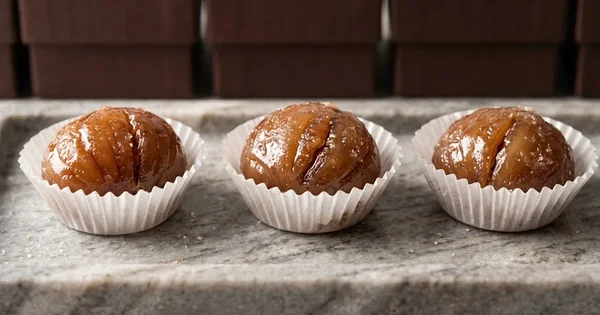
Marrons glacés : conserver, présenter et vendre à la pièce
Guide pro marrons glacés : hygrométrie, DLUO, mise en valeur en vitrine, vente à la pièce ou au poids et réemploi des brisures en pâtisserie pour les fêtes.
 Grocery & Recipes
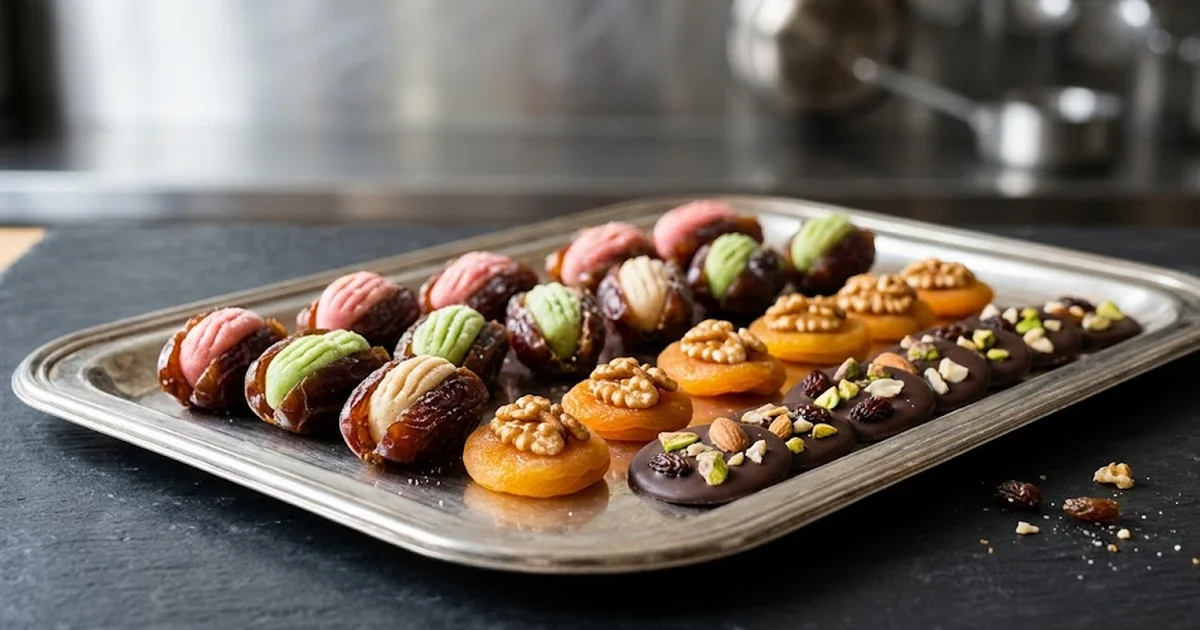
Plateaux sucrés des fêtes chez le traiteur : dattes fourrées, fruits déguisés, grammage et coût
Guide traiteur des plateaux sucrés de fêtes : grammage par convive, dattes fourrées, fruits déguisés, calcul du coût matière et conservation en laboratoire.
 Grocery & Recipes
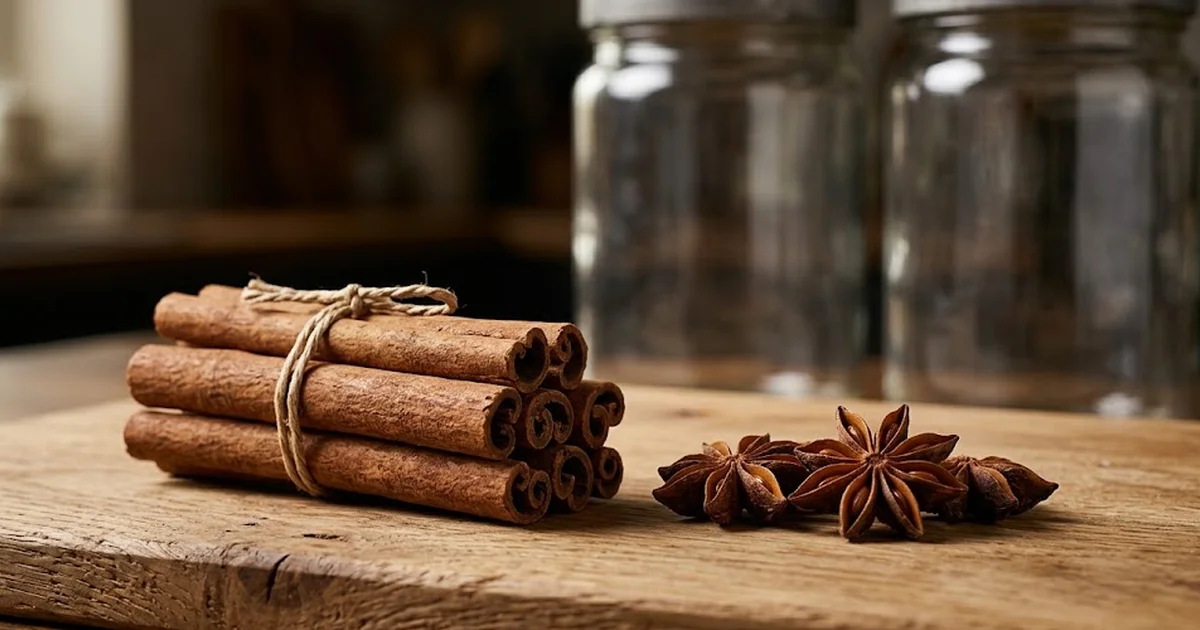
Épices de l'hiver : pain d'épices, vin chaud et pâtisserie de Noël, dosage et achat
Guide B2B des épices d'hiver pour boulangers, pâtissiers et CHR : dosages au kilo et au litre, mélanges vin chaud et pain d'épices, approvisionnement en gros.