
Biscuiterie artisanale : fruits secs en pâte, tenue et cuisson
Pieces, moisture, migration, rancidity: the behaviour of dried fruits in dry dough. Sizes and formats to order for controlled professional baking.
In a biscuit dough, dried fruit is never merely a decorative element: it interacts with hydration, gluten structure (or its absence), and baking time. For an artisanal biscuit maker, pastry chef, or caterer working at scale, these interactions directly determine the breakage rate during baking, the biscuit’s stability after cooling, and the visual consistency of the final batch. This article details the material behaviours to anticipate—pieces, migration, residual moisture, lipid oxidation—and the bulk dried fruit formats to order to minimise production non-conformities.
Understanding the behaviour of dried fruits in dry dough
A dry dough (shortbread, shortcrust, crisp biscuit) has a minimally elastic structural network. It does not "absorb" the same stresses as a leavened dough or a more hydrated cake batter. Each dried fruit inclusion introduces its own mechanical and hygrometric variable.
- Mechanical stress: a piece that is too large or has sharp edges cracks the dough during shaping or rolling.
- Hygrometric stress: a dried fruit with poorly controlled residual moisture releases water into the dough during resting or baking.
- Thermal stress: the lipids in oilseeds (nuts, hazelnuts, almonds) react differently depending on the duration of heat exposure.
- Distribution stress: some pieces, denser or heavier in sugar (candied fruits), migrate within the dough before baking.
These four points structure the remainder of this article, with the recommended formats and sizes for each in professional procurement.
Pieces and crushed: sizing to preserve dough structure
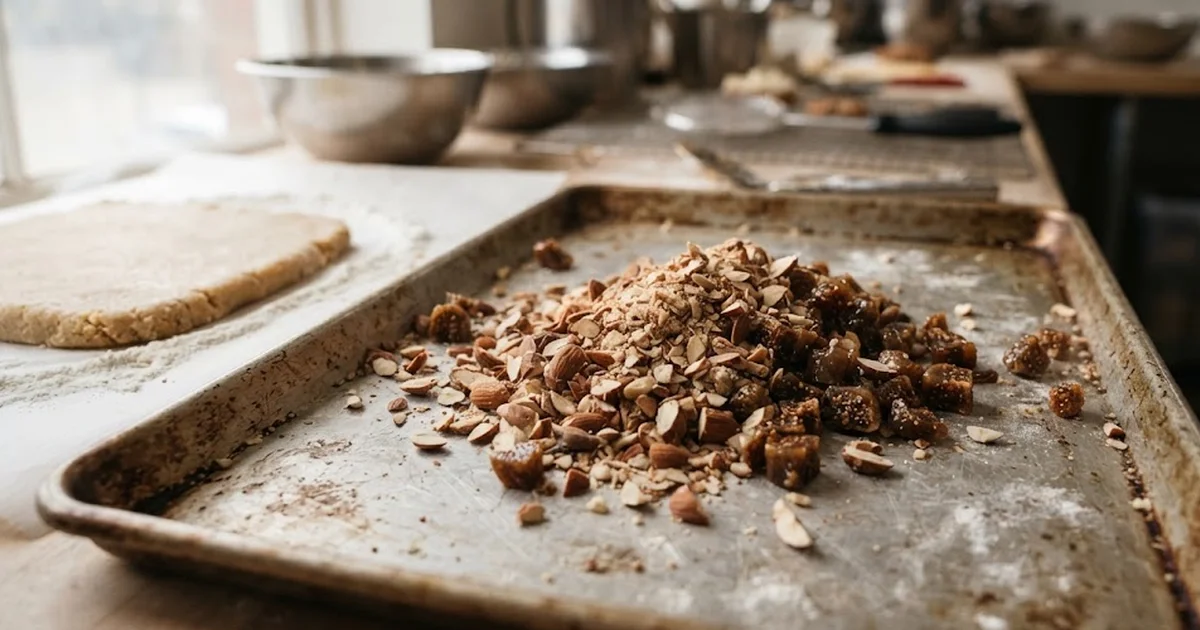
The primary cause of breakage post-baking is the size of the inclusion. An angular fragment that is too large relative to the dough’s thickness acts as a mechanical breaking point: the dough cracks around the dried fruit during baking as moisture evaporates and the structure contracts.
For a standard-thickness dry dough (4 to 8 mm), fine to medium crushed pieces limit this risk, provided the size remains consistent across the ordered batch. A mix of large fragments and residual powder results in uneven baking: the powder burns faster than the biscuit, while large pieces remain raw at the core. This is why grade selection directly impacts production consistency, as detailed in our guide on how to read a technical data sheet for size and grade.
- Crushed almonds: prioritise homogeneous sieving over ungraded milling output.
- Figs in chunks: a cube format such as fig cube 8x10 mm offers a regular size suited to thin doughs, without the sharp edges of roughly cut pieces.
- Whole vs chopped raisins: whole raisins work for thicker doughs; chopped raisins limit breaking points in fine shortbreads.
For almond-based inclusions, the almonds range offers several granulometries to adjust the size according to the target dough thickness, eliminating the need for an internal crushing step that is labour-intensive.
Residual moisture: preventing biscuit softening post-baking
A dry biscuit must remain dry after cooling and throughout its commercial shelf life. The main threat to this stability is the residual moisture of the incorporated dried fruit, which continues to migrate into the dough several hours after leaving the oven.
This phenomenon is particularly sensitive with soft fruits (apricots, prunes, figs with a tender texture), whose moisture content is intentionally higher than that of standard dried fruits to preserve their mouthfeel for retail sale. Incorporated as-is into dry dough, they continue to release water post-baking, gradually softening the biscuit around the inclusion—a defect often detected only after 24 to 48 hours of storage, and thus after packaging.
"In our advisory work with biscuit makers, the most common non-conformity never appears at the oven exit: it appears the next day, when the box is already sealed. A dried fruit chosen for its soft texture rather than for a moisture content compatible with long baking is the classic pitfall. We systematically recommend verifying the technical data sheet and the batch before scaling a recipe to production, not just at the first order." — The Palimex team, sourcing dried fruits and dehydrated fruits
Managing residual moisture directly ties into upstream storage challenges: a batch poorly stored in reserve before incorporation worsens the phenomenon. Our article on storing dried fruits in professional storage details the rotation and best-before date (BBD) conditions to observe even before production.
Candied fruits, dates, and migration in dough: distribution and stability
Candied fruits and pitted dates have a high sugar density that alters their mechanical behaviour in unleavened dough. Before baking, during cold resting or shaping, these heavier, stickier inclusions tend to migrate toward the bottom of the rolled dough due to their own weight and adhesion to the surface.
This migration produces a classic visual defect: uneven distribution of candied fruits on the surface, with a concentration on the underside that sticks to the conveyor or tray during baking. To limit this phenomenon:
- Lightly flour the pieces before incorporation to reduce adhesion and migration.
- Reduce resting time at room temperature between shaping and baking.
- Prioritise a regular cut size rather than whole pieces or those too heterogeneous in weight.
- For dates, choose a pre-cut chunk format rather than reprocessing a whole date in-house, which extends preparation time and increases batch variability.
The dates range allows selection of a format directly compatible with dough incorporation, without additional pitting or cutting in the kitchen. For recipes combining dried fruits and fruit paste as filling or inclusion, the fruit pastes category offers a more stable alternative in baking than traditional candied fruit, with significantly reduced migration due to a firmer consistency.
Nuts, almonds, and rancidity in long baking: sourcing, batches, and rotation
Oilseeds (walnuts, almonds, hazelnuts, pistachios) introduce a lipid load that reacts to prolonged heat exposure. In long, low-intensity baking—typical of dry biscuits seeking a uniformly crisp texture—the unsaturated fats in certain nuts oxidise faster than those in almonds, producing a bitter or rancid note detectable upon tasting, even if the biscuit’s visual appearance does not reveal it.
This risk is not uniform across species, size, or especially the freshness of the batch at the time of order. Rapid stock rotation and batch number verification upon receipt significantly reduce this risk, particularly for oilseeds richest in lipids.
| Dried fruit | Rancidity sensitivity in long baking | Recommended size for dry dough | Sourcing vigilance point |
|---|---|---|---|
| Blanched / slivered almond | Low to moderate | Fine slivered or powdered depending on dough thickness | Check BBD and batch appearance upon receipt |
| Walnut (kernels) | High | Medium crushed, avoid whole kernels in thin dough | Prioritise short rotation, limited stock in warm storage |
| Hazelnut | Moderate to high | Fine to medium crushed | Check odour when opening the box before incorporation |
| Pistachio | Moderate | Fine crushed, use on surface rather than in core | Regular sourcing, avoid prolonged storage in temperature-controlled reserve |
| Date / candied fruit | Not applicable (low lipid content) | Calibrated chunks | Vigilance on residual moisture rather than oxidation |
To refine the grade selection for a high-turnover oilseed in biscuit production, our comparison on cashew grades W320 versus W240 details a reading method applicable to other bulk-ordered oilseed families.
Formats and sizes to order: aligning procurement with production recipes
Professional procurement requires reasoning in homogeneous batches rather than small trial quantities. Before validating a format, it is recommended to verify three elements on the supplier’s technical data sheet:
- The exact size (mm or standardised grade) and its tolerance variation within the batch.
- The indicative moisture content, particularly for soft fruits and candied fruits.
- The packaging date and remaining BBD upon receipt, to anticipate stock rotation.
For dried apricots, often used in chunks in shortbread or cookie-type biscuits, a calibrated format such as dried apricot N1 in 5 kg packaging standardises in-house cutting without prior manual sorting, reducing variability between production batches.
In summary: ordering with the right approach for stable biscuit production
The behaviour of dried fruit in dry dough depends less on the recipe itself than on the size, residual moisture content, and freshness of the ordered batch. Anticipating breakage through homogeneous size selection, limiting post-baking softening by controlling residual moisture, preventing candied fruit migration through regular sizing, and monitoring the rotation of oilseeds most sensitive to rancidity are the four operational levers for stable production. To further explore dried fruit selection by use in professional pastry, our guide on the ten essential dried fruits for pastry chefs and caterers complements this technical overview. For hygiene and storage best practices in professional kitchens, the general recommendations published by the French Agency for Food, Environmental and Occupational Health & Safety remain a useful reference for batch management in workshops.
Frequently asked questions
Everything you need to know about this topic.
A question?
Get in touch directly.

Marketing & Communications Manager — Palimex / Meyva
As Marketing & Communications Manager at Palimex / Meyva, Aude Moyne leads the company's communications and digital marketing strategy: editorial content, email campaigns and the promotion of its product ranges. Her experience at Palimex, a specialist in dried fruit, nuts, olives and spices for professionals, has given her in-depth knowledge of the products, their origins and uses, and the expectations of food-industry professionals. The blog articles are written or supervised by her, in collaboration with Palimex's sales and product teams whenever a topic calls for specific expertise.
Our advice related to Grocery & Recipes
 Grocery & Recipes
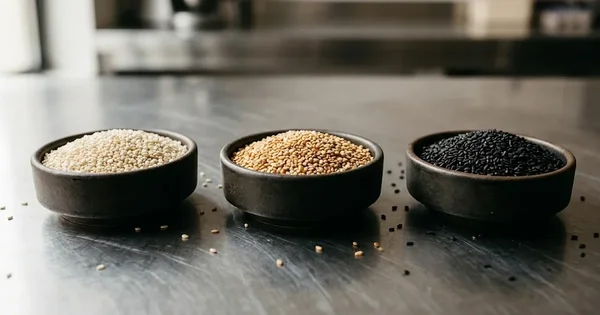
Sésame en gros : blanc, noir, grillé, et leurs usages
Guide pro du sésame en gros : blanc, complet, noir ou grillé. Usages culinaires, cuisson, prévention du rancissement et approvisionnement B2B chez Palimex.
 Grocery & Recipes
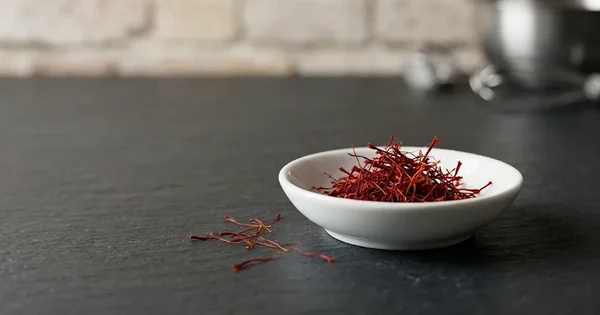
Safran en CHR : lire le grade, doser et repérer une falsification
Guide safran CHR : distinguer filaments et poudre, repérer les falsifications, réussir l'infusion et maîtriser le coût matière par portion en cuisine pro.
 Grocery & Recipes
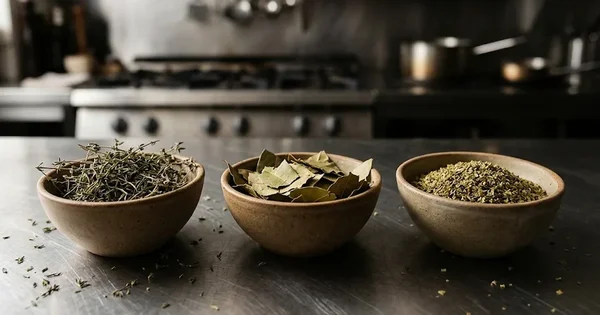
Herbes aromatiques séchées : rendement face au frais et conservation en réserve
Rendement herbes séchées vs frais, équivalences de cuisson, tolérance au séchage et stockage en réserve CHR : guide technique et logistique pour les pros.