
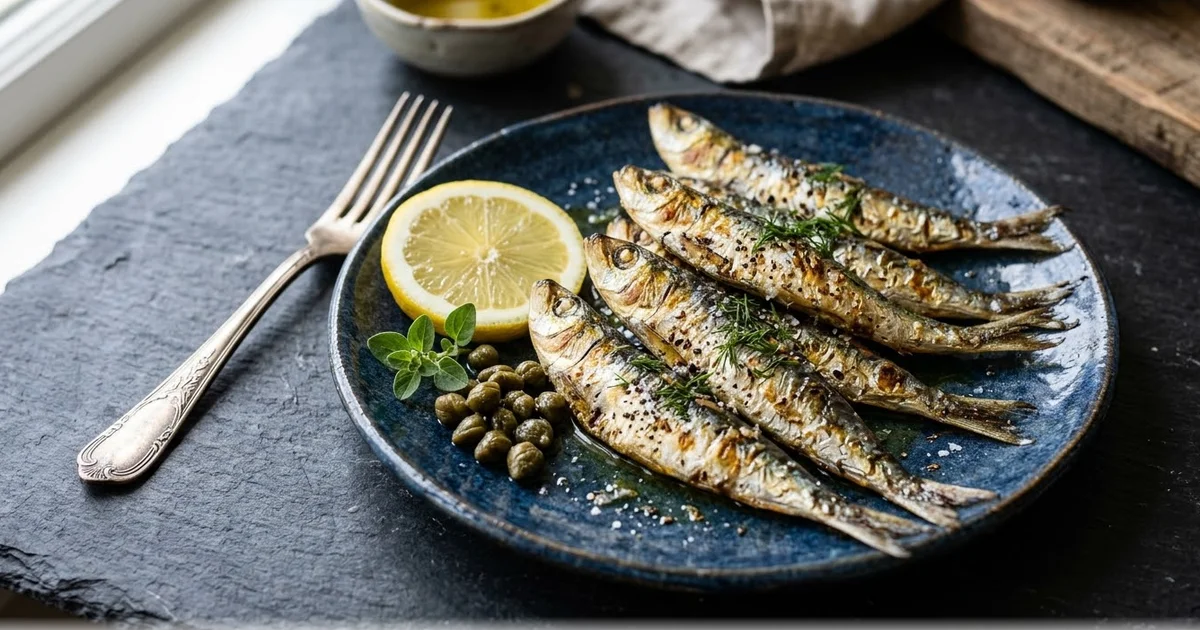
Moroccan canned sardines: formats and B2B margin
Moroccan canned sardines for grocery stores and foodservice: in oil, tomato sauce, tajine. Formats, best-before date, stock rotation and resale margin.
Moroccan canned sardines hold a special place in the grocery and foodservice offer: the ultimate emergency product, they combine a long best-before date, controlled purchase price and comfortable resale margin. For gourmet grocery stores, sandwich shops and caterers looking for a slow but reliable turnover reference, Moroccan sardines from the Atlantic fishery remain a safe bet in the canned goods aisle. This article details the origins, preparations, packaging formats and margin levers to know in order to intelligently integrate this reference into your assortment.
Origins and Moroccan Atlantic fishery: a strategic sourcing for professionals
Morocco ranks among the world's leading producers of canned sardines, thanks to a particularly fish-rich Atlantic coastline between Agadir, Safi and Dakhla. This fishing zone benefits from a natural upwelling that promotes the abundance of sardine schools (Sardina pilchardus), caught in small quantities and quickly processed in historic canneries, some of which have been active for several decades.
For a professional buyer, knowing the product's origin is not a marketing detail: it is a traceability and HACCP compliance criterion to include in your supplier file. Batches of Moroccan canned sardines are generally accompanied by complete traceability information (batch number, manufacturing date, FAO catch area), essential for your own sanitary management system and to respond to any inspections.
- Fishing zone: Moroccan North-East Atlantic, main FAO zone 34
- Species: European pilchard (Sardina pilchardus), variable size depending on the season
- Processing: canning carried out in the immediate vicinity of landing ports, ensuring freshness and rapid processing
- Traceability: batch number, production date and best-before date indicated on each can and carton
This Atlantic sourcing also explains the regularity of supply, a key point for wholesalers who must guarantee continuous availability to their foodservice and grocery customers. To delve deeper into sourcing criteria for gourmet grocery products, consult our article on Flavors of the World > Oriental, which lists all the Moroccan and Oriental references in our catalog.
Available preparations: vegetable oil, olive oil, tomato, harissa and tajine
Moroccan canned sardines come in several preparations, each meeting different culinary uses and customer targets. The choice of preparation directly impacts the product's positioning on the shelf and the type of final use by your customer (restaurateur, sandwich shop, emergency grocery store).
| Preparation | Flavor profile | Typical professional use |
|---|---|---|
| Vegetable oil | Neutral, economical, soft texture | Sandwich shop, prepared dishes, entry-level grocery |
| Olive oil | Finer, fruity notes | Gourmet grocery, aperitif, restaurant menus |
| Tomato sauce | Tangy, acidic | Prepared dishes, snacking, fast food |
| Harissa sauce | Spicy, typical of Oriental cuisine | Oriental restaurants, Maghreb specialty grocery stores |
| Tajine preparation | Mild spices, cumin and paprika notes | Caterers, prepared dishes, themed menus |
The vegetable oil preparation remains the best-selling in volume thanks to its competitive purchase price, but tomato and harissa preparations are gaining ground in the Oriental restaurant and premium sandwich shop markets. These canned goods also pair very well with our spices for tajine to create prepared dishes with a strong culinary identity.
Can formats and carton packaging for foodservice and grocery
The packaging format directly determines the supply logistics and the reference's profitability. In B2B, the reasoning is always based on full cartons, compatible with pallet delivery or free shipping depending on the ordered volume.
- 125 g can: classic grocery format, ideal for per unit sales on the shelf
- 155-160 g can: foodservice format, often used in sandwich shops and snacking
- Carton of 24 to 50 cans: standard packaging for bulk orders
- Mixed carton (several preparations): interesting for testing an assortment without tying up too much cash in a single reference
We recommend that new professional accounts start with a mixed carton including vegetable oil, olive oil and tomato sauce, in order to quickly identify their own customers' preferences before scaling up orders on the best-performing reference. This test logic aligns with our general recommendations on stock rotation in gourmet grocery.
Long best-before date and slow rotation: a logistical asset for your point of sale
One of the main advantages of Moroccan canned sardines for a professional lies in its particularly long best-before date, often exceeding three years from the manufacturing date. This type of slow-rotation product offers concrete logistical benefits compared to fresh or frozen products.
"At Palimex, we see Moroccan sardines as a staple reference: they do not generate the volume of a best-selling dried fruit, but they secure your emergency offer and rotate without cold chain constraints. In our customer orders, mixed cartons of olive oil and tomato sell faster than all-vegetable oil, a signal we recommend following in your own stock management."
For optimized stock management, it is advisable to apply the classic FIFO (first in, first out) principles even for a product with a long best-before date, to avoid any accumulation of old batches in storage. This point is further developed in our guide on preservation of dry products and best-before date management.
| Criterion | Canned sardine | Fresh / frozen product |
|---|---|---|
| Average best-before date | 24 to 36 months | A few days to a few months |
| Storage constraint | Room temperature | Mandatory cold chain |
| Product breakage risk | Very low | High |
| Expected rotation | Slow to moderate | Fast |
Professional uses: emergency grocery, sandwich shops and prepared dishes
The versatility of use is a strong commercial argument to convince your own professional customers to integrate Moroccan sardines into their menu or shelf. Here are the main outlets observed among our wholesale and retail customers.
- Emergency grocery: an essential product in the canned goods aisle, appreciated for its affordable price and long shelf life
- Sandwich shops and snacking: base for Mediterranean sandwiches or wraps, particularly with the oil or tomato preparation
- Prepared dishes and catering: integration into stewed dishes, composed salads, revisited tajines with the dedicated preparation
- Oriental foodservice: featured on Moroccan or Tunisian restaurant menus, often paired with specific spices
- Aperitif and starter: the olive oil version lends itself well to presentation as a starter in upscale establishments
These multiple uses justify offering several preparations in parallel rather than a single reference, in order to cover all the needs of your professional clientele, whether it is foodservice, catering or gourmet grocery.
Resale margin and pricing strategy for professionals
Moroccan canned sardines offer an interesting margin profile for resellers, provided the selling price is well calibrated according to the format and preparation. The purchase price for full cartons remains significantly lower than that of equivalent European canned goods, leaving a comfortable margin for resale while remaining competitive on the shelf.
- Negotiate order volumes in full cartons to optimize the per unit purchase price
- Differentiate the selling price according to the preparation (olive oil and harissa are better valued than vegetable oil)
- Highlight the origin and traceability to justify a gourmet grocery positioning rather than entry-level
- Anticipate demand seasonality, stronger during holiday periods and Ramadan months for Oriental customers
To refine your overall pricing strategy for dry and canned products, we invite you to consult our general approach to stock rotation and margin management in gourmet grocery, applicable to your entire world cuisine assortment.
From a regulatory and sanitary perspective, Moroccan fishery production data is regularly documented by international organizations such as the FAO (Food and Agriculture Organization of the United Nations), a useful resource for understanding the production context of your suppliers.
Summary: how to choose Moroccan canned sardines for your professional activity
Moroccan canned sardines remain a relevant reference for any food professional looking to secure their emergency offer while controlling cash flow thanks to a long best-before date. The choice of preparation (vegetable oil, olive oil, tomato, harissa, tajine) should be guided by your end customer's profile, while the packaging format should be considered in full cartons to optimize pallet delivery logistics. Well-positioned on the shelf or menu, this reference maintains an attractive resale margin and effectively complements an Oriental product assortment. To learn more, discover our entire selection in the Flavors of the World > Oriental category.
Further reading
Frequently asked questions
Everything you need to know about this topic.
A question?
Get in touch directly.

Marketing & Communications Manager — Palimex / Meyva
As Marketing & Communications Manager at Palimex / Meyva, Aude Moyne leads the company's communications and digital marketing strategy: editorial content, email campaigns and the promotion of its product ranges. Her experience at Palimex, a specialist in dried fruit, nuts, olives and spices for professionals, has given her in-depth knowledge of the products, their origins and uses, and the expectations of food-industry professionals. The blog articles are written or supervised by her, in collaboration with Palimex's sales and product teams whenever a topic calls for specific expertise.
Our advice related to Grocery & Recipes
 Grocery & Recipes
Épices de l'hiver : pain d'épices, vin chaud et pâtisserie de Noël, dosage et achat
Guide B2B des épices d'hiver pour boulangers, pâtissiers et CHR : dosages au kilo et au litre, mélanges vin chaud et pain d'épices, approvisionnement en gros.
 Grocery & Recipes
Nougat en meule : découpe à la coupe, conservation et vente au poids
Guide B2B pour épiceries et confiseries : réussir la découpe à la coupe du nougat en meule, limiter les pertes, maîtriser le stockage et l'affichage au poids.
 Grocery & Recipes
Seau d'olives entamé : durée de vie, saumure et gestion du reste
Comment conserver un seau d'olives entamé ? Rôle de la saumure, température, règles d'hygiène et gestion des tapenades : le guide professionnel Palimex.