

Certification halal : ce que le certificat couvre réellement
Scope, certifying body, batch traceability: the B2B guide to reading a halal certificate and avoiding unpleasant surprises in the warehouse.
In the market for food products aimed at a Muslim clientele, the halal certificate is widely circulated, readily displayed, but rarely read in detail. For a professional buyer—gourmet grocery, restaurateur, caterer, wholesaler—the question is not whether a document exists, but what it precisely covers, how far its scope extends, and when its guarantee ends. This article provides a technical breakdown of a halal certificate: scope, certifying body, batch traceability, and continuity of the supply chain up to delivery.
What the halal certificate actually certifies: scope and coverage
A halal certificate is not a general declaration about an entire company. It applies to a specific scope, which must be identified before any further review: a given product, a SKU, a production site, or a validity period. Confusing the certification of a factory with the certification of a specific product is the most common mistake among buyers unfamiliar with these documents.
- The targeted product: exact designation, article code, and, where applicable, packaging format.
- The production or packaging site: address of the relevant facility, which may differ from the brand’s head office.
- Validity period: issue date and expiration date, often annual and renewable.
- Process reference: ingredients, additives, and processing aids covered by the audit.
A certificate mentioning a factory does not automatically guarantee that all production lines in that factory are covered. Some lines may be dedicated, while others may be shared with non-certified production. This is a point to systematically verify before including a SKU in your sourcing of dried and dehydrated fruits.
What the certificate does not guarantee: key limitations
A certification document is not a universal guarantee. It complies with a specific standard, audited at a given time, and does not necessarily cover everything a buyer might implicitly assume.
- It does not automatically guarantee the absence of cross-contamination with allergens or other non-certified ingredients, unless explicitly stated in the document.
- It does not certify the HACCP compliance of the site, which requires a separate food safety audit.
- It does not extend by default to the supplier’s entire range: each SKU must be verified individually.
- It does not cover stages after leaving the factory—storage, transport, repackaging—unless these stages are explicitly included in the audited scope.
A logo on a box never replaces reading the source document. The logo is a commercial shortcut; the certificate is the contractual document.
Certifying body: how to verify its credibility and legitimacy
Not all certifying bodies are equal in terms of audit rigor, frequency of inspections, or recognition in export markets. Before accepting a certificate, it is useful to verify the identity and credibility of the issuing body.
| Element to verify | Question to ask | Why it matters |
|---|---|---|
| Identity of the body | Full name, contact details, verifiable legal existence | Rules out documents issued by informal structures |
| Recognition zone | Is the body recognised in target markets (export, foodservice distribution)? | An unrecognised certificate may block resale or export |
| Audit frequency | Annual, bi-annual, or one-off initial audit? | A single, outdated audit loses reliability over time |
| Certificate number | Is the number verifiable with the issuing body? | Allows confirmation of authenticity at source |
| Language and signature | Signed, dated document in a language usable for your supplier file | Facilitates archiving and internal checks |
For a wholesale buyer, this verification process naturally integrates into warehouse quality control procedures, alongside checks for best-before dates and batch numbers.
Batch traceability: reading references and linking them to the received product
A generic halal certificate without a batch reference has limited value once the buyer receives goods that must be proven compliant to an end customer. Traceability relies on the ability to link the document to the physically delivered product.
- Verify that the batch number on the box matches the one stated in the certificate or a related attestation.
- If in doubt, request a batch-specific compliance attestation rather than a generic annual certificate.
- Keep all documents (certificate, delivery note, batch label) in the same supplier file for easy access in case of an audit.
- Cross-check the production date with the certificate’s validity period to exclude any product manufactured outside the covered period.
This documentary rigor aligns with general best practices for managing best-before dates and stock rotation already applied to other product categories in the catalogue.
Breaking the chain: storage, transport, and cross-contamination risks
A product certified at the factory may lose its certification guarantee if the supply chain is not controlled up to delivery. This is a point often overlooked, even by well-intentioned suppliers.
At Palimex, we systematically remind our professional clients that a halal certificate does not travel alone with the goods: it is the buyer’s responsibility to ensure that packaging, transport, and storage have not introduced a break in the chain. A box stored next to a non-certified SKU, without clear physical separation, may be enough to invalidate the initial guarantee, even if the product itself was originally compliant.
- Verify physical separation of certified and non-certified SKUs in the warehouse.
- Check that the carrier has not consolidated shipments with products that could contaminate through direct contact.
- Ensure that any repackaging is carried out under conditions compatible with the initial certificate’s scope.
This is particularly critical for full-pallet or free-delivery shipments, where multiple SKUs may be transported together.
Practical checklist before approving a supplier or SKU
To include a halal-certified SKU in a professional catalogue, a methodical review of the documentation prevents unpleasant surprises during customer audits or external inspections.
- Identify the exact product covered by the certificate, without extrapolating to an entire range.
- Verify the identity and reputation of the certifying body.
- Check the validity period and issue date of the document.
- Request confirmation that the delivered batch number matches the references in the certificate or related attestation.
- Ask the supplier about the separation of flows in the factory, storage, and transport.
- Archive all documents in a supplier file for quick access.
This documentary vigilance complements the requirements already applied to the sourcing of dried fruits, spices, and olives: size, origin, best-before dates, and now a detailed review of religious certifications when required by the end market. For a general definition and reference framework on halal certification practices, a useful encyclopaedic resource is available on this reference page, though it should always be cross-referenced with the documentation specific to each certifying body.
Summary: read the document, not the logo
A halal certificate is a valuable tool, but it never replaces a careful reading of its content. The exact scope, the identity of the certifying body, batch traceability, and continuity of the supply chain are the four key factors that determine the document’s real value. For a professional buyer, documentary rigor protects both compliance with end customers and the credibility of the business. Before approving a SKU based solely on this criterion, it is best to request the certificate, read it line by line, and verify its consistency with the batch actually delivered.
Further reading
Frequently asked questions
Everything you need to know about this topic.
A question?
Get in touch directly.

Marketing & Communications Manager — Palimex / Meyva
As Marketing & Communications Manager at Palimex / Meyva, Aude Moyne leads the company's communications and digital marketing strategy: editorial content, email campaigns and the promotion of its product ranges. Her experience at Palimex, a specialist in dried fruit, nuts, olives and spices for professionals, has given her in-depth knowledge of the products, their origins and uses, and the expectations of food-industry professionals. The blog articles are written or supervised by her, in collaboration with Palimex's sales and product teams whenever a topic calls for specific expertise.
Our advice related to Grocery & Recipes
 Grocery & Recipes
Épices de l'hiver : pain d'épices, vin chaud et pâtisserie de Noël, dosage et achat
Guide B2B des épices d'hiver pour boulangers, pâtissiers et CHR : dosages au kilo et au litre, mélanges vin chaud et pain d'épices, approvisionnement en gros.
 Grocery & Recipes
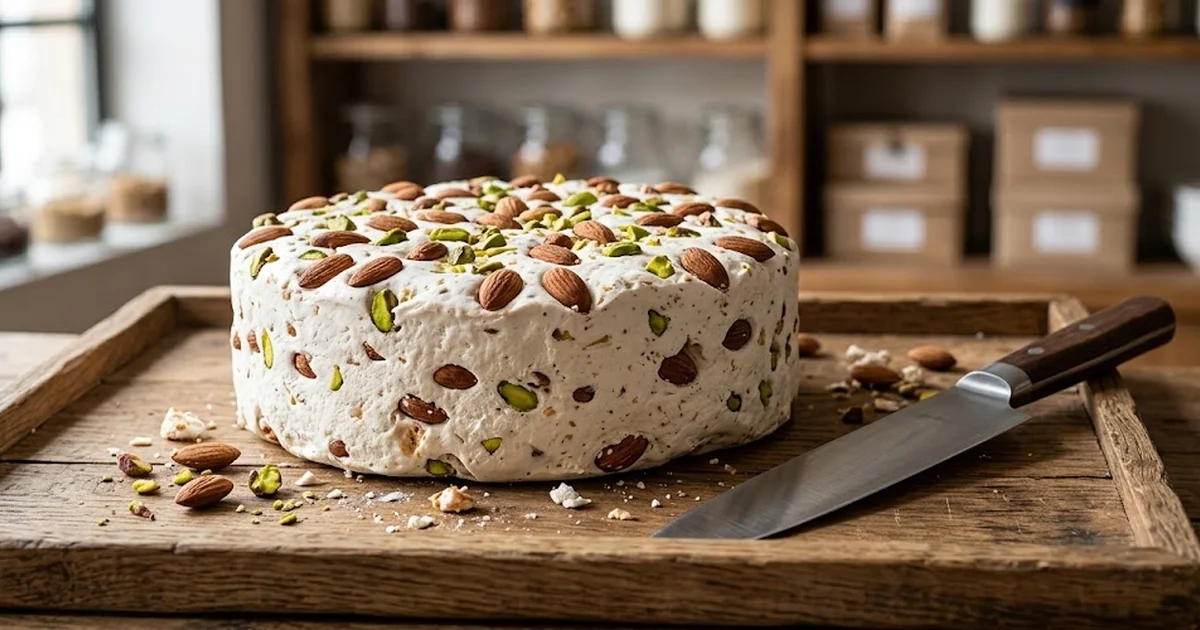
Nougat en meule : découpe à la coupe, conservation et vente au poids
Guide B2B pour épiceries et confiseries : réussir la découpe à la coupe du nougat en meule, limiter les pertes, maîtriser le stockage et l'affichage au poids.
 Grocery & Recipes
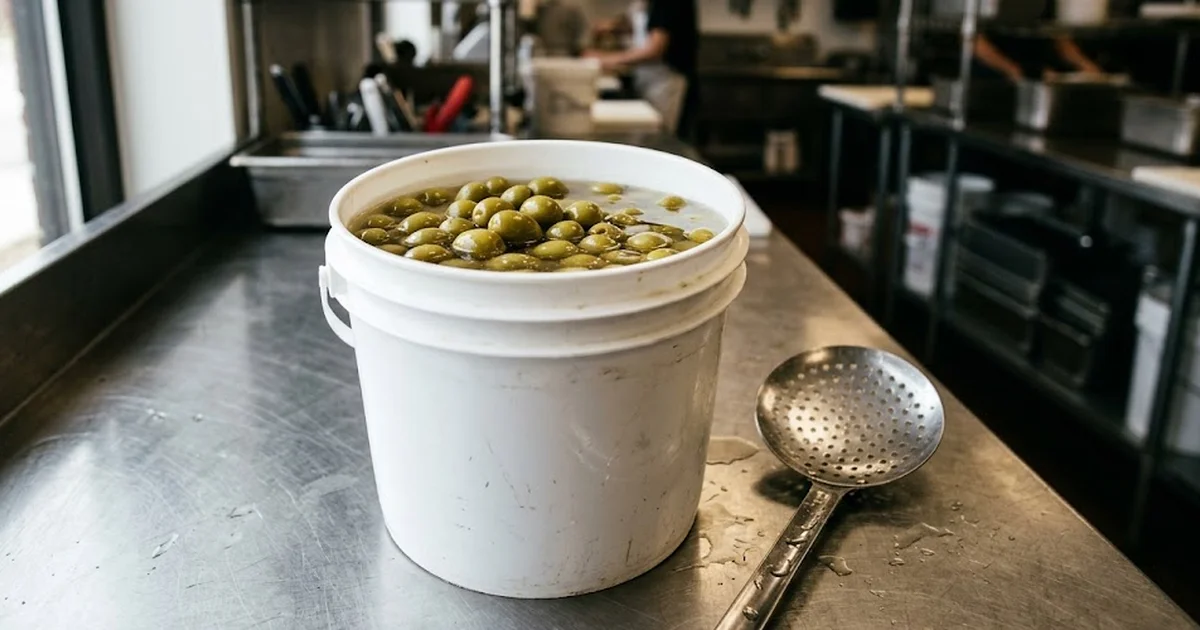
Seau d'olives entamé : durée de vie, saumure et gestion du reste
Comment conserver un seau d'olives entamé ? Rôle de la saumure, température, règles d'hygiène et gestion des tapenades : le guide professionnel Palimex.