
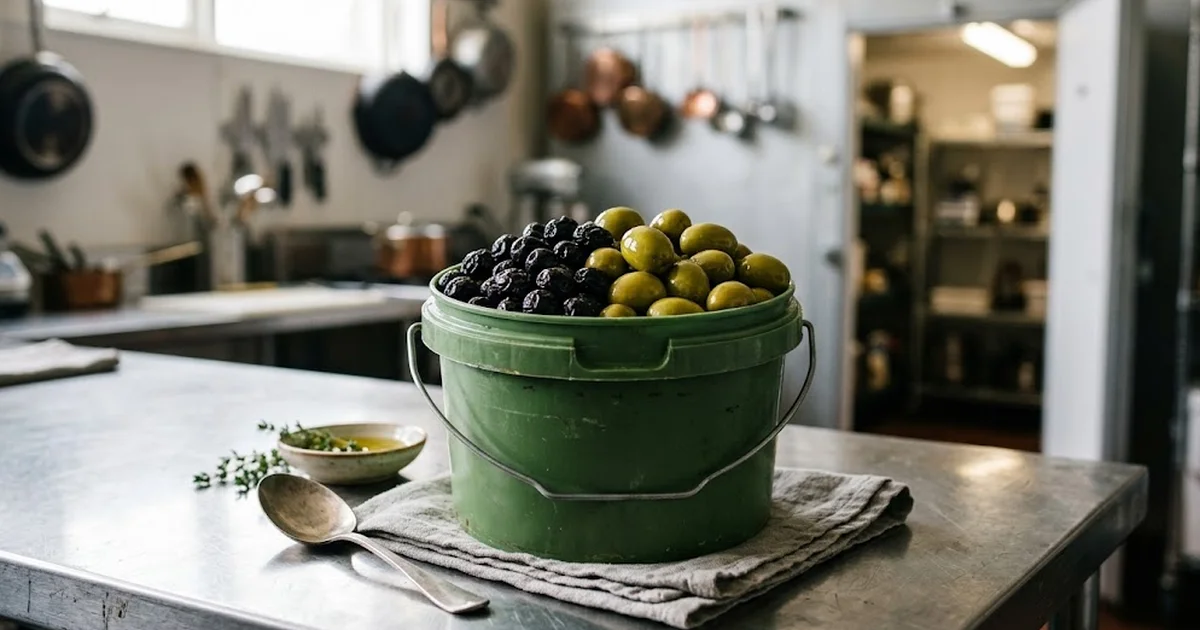
Olives de table : Nyons, Kalamata, Picholine, Chalkidiki
Professional guide to table olives: Nyons, Kalamata, Picholine, Chalkidiki – flavour profiles, sizes, CHR applications, and bucket packaging.
Creating a coherent table olive menu is not about stacking SKUs based on purchasing opportunities. For a restaurateur, caterer, or gourmet grocery store, each variety serves a specific purpose: aperitif, cooking, tapenade, or garnish for slow-cooked dishes. This professional guide details the flavour profiles, flesh, size, and packaging of the four key market references—Nyons, Kalamata, Picholine, and Chalkidiki—to help you structure an assortment tailored to your business volume and clientele.
Understanding the main table olive families for foodservice
Before selecting SKUs, it is useful to distinguish the main table olive families by their maturity colour, preparation method, and geographical origin. These criteria directly determine their use in professional kitchens and their positioning on a menu or display.
- Dried wrinkled black olives (Nyons type): harvested at full maturity, concentrated texture, ideal for standalone consumption or slow cooking.
- Black olives in brine (Kalamata type): fleshy, fruity and slightly tangy flavour, an essential reference for aperitifs and Mediterranean salads.
- Firm green olives (Picholine type): crunchy flesh, vegetal notes, highly sought after for aperitif service and kitchen slicing.
- Fleshy green olives (Chalkidiki type): large size, thick and mild flesh, often offered pitted or stuffed for foodservice trays.
These four families cover the core needs of a foodservice professional: aperitifs, hot cuisine, cold preparations, and processing (tapenade, stuffings). Also explore our guide to selecting aperitif olives for foodservice to delve deeper into the topic.
Nyons, Kalamata, Picholine, Chalkidiki: flavour profiles and culinary uses
Each variety has an aromatic profile and texture that guide its culinary use. The table below summarises the key characteristics for composing your menu or product range.
| Variety | Colour / maturity | Flesh | Flavour profile | Recommended professional use |
|---|---|---|---|---|
| Nyons | Black, wrinkled, dried | Firm, concentrated | Dried fruit notes, slightly bitter, intense flavour | Premium aperitifs, slow cooking, game accompaniment |
| Kalamata | Purple-black, in brine | Fleshy, supple | Fruity, tangy, balsamic vinegar notes | Mediterranean salads, aperitif trays, black tapenade |
| Picholine | Green, firm | Crunchy | Vegetal, slightly bitter, salty finish | Aperitifs, slicing for garnishes, Provençal cuisine |
| Chalkidiki | Green, large size | Thick, juicy | Mild, low bitterness, generous texture | Foodservice trays, stuffed, display presentation |
For tapenade and processed preparations, Kalamata and Nyons stand out for their aromatic concentration. Refer to our professional tapenade recipe for foodservice kitchens to scale your raw material requirements.
Size, flesh, and bucket packaging: key B2B procurement criteria
In professional procurement, size is not merely an aesthetic indicator: it determines kitchen yield, portion weight, and ingredient cost. A larger size means lower net weight per unit but greater visual impact on trays or displays.
- Small size: high yield, suited for blended preparations (tapenade, stuffings, sauces).
- Medium size: versatile, ideal for aperitif servings in bowls and salads.
- Large size: strong visual effect, preferred for foodservice trays and gourmet grocery displays.
Bucket packaging remains the standard for high-turnover kitchens: it enables compact cold storage, easy handling during prep, and extended shelf life thanks to the covering brine. For larger volumes, pallet or free delivery optimises logistics costs for regular orders.
At Palimex, we systematically advise kitchens starting their olive range to begin with a medium-sized bucket of Picholine and a bucket of Kalamata: this duo covers aperitifs and hot cuisine without multiplying stock SKUs. The most common mistake we observe among our foodservice clients is layering too many sizes for the same variety, which complicates batch management and cold storage rotation.
Building a coherent olive range for your establishment
The coherence of an olive range depends on aligning the type of establishment, service volume, and actual culinary uses. Rather than multiplying SKUs, it is more cost-effective to structure the offering around three to four complementary varieties.
- Identify the primary use: aperitifs only, integration into dishes, or processing (tapenade, stuffings).
- Select one black and one green variety to cover the visual and flavour diversity expected in dining rooms.
- Choose a size suited to the service format: aperitif bowls, buffets, or cooked dishes.
- Include a processing reference (Nyons or Kalamata) for in-house preparations like tapenade or sauce.
- Adjust order quantities based on rotation observed in previous procurement cycles.
This approach applies to both traditional restaurants and gourmet grocers offering bulk sections. For professionals also handling bulk pastry ingredients and sweet groceries, our guide to storage and shelf-life management for dried fruits outlines principles transferable to packaged olive storage.
Example range composition for three establishment profiles
- Traditional restaurant: Picholine (aperitifs) + Kalamata (salads and garnishes).
- Event caterer: Chalkidiki (trays) + Nyons (refined preparations, tapenade).
- Gourmet grocery: all four varieties in small packaging for professional retail, with monitored rotation.
Storage, stock rotation, and shelf life: best logistics practices
Managing olives in a professional kitchen requires the same rigour as other sensitive ingredients. The preservation brine plays a critical role in product stability once the bucket is opened, and maintaining the cold chain determines the commercial shelf life of the SKU.
- Store opened buckets in the refrigerator, with olives always submerged in their covering liquid.
- Label the opening date systematically to track internal shelf life.
- Apply the first-in, first-out (FIFO) principle to prevent ingredient waste.
- Regularly check the appearance and odour of the covering liquid before use in the kitchen.
Rigorous batch traceability also facilitates internal HACCP controls and strengthens supplier relationships. To explore sourcing and batch tracking methods for spices and olives, refer to our article on professional sourcing of spices and condiments.
Bulk ordering from Palimex: packaging, delivery, and sourcing
Palimex supports foodservice professionals, gourmet grocers, and caterers in building an olive range tailored to their operations. The range of formats for each SKU, from retail bags sold by the case to bulk sacks, allows orders to be adjusted to actual consumption rates, while benefiting from pallet or free delivery for larger volumes.
Our Rungis warehouse and Palimex Dried Fruits MEYVA facility ensure regular availability of the four varieties featured in this guide, as well as the full olive and spreadable product range. The Bordeaux branch, MEYVA Cash & Carry, also enables direct collection for professionals in the South-West.
| Information | Details |
|---|---|
| Minimum packaging | 5 kg (bucket or carton depending on SKU) |
| Delivery | Pallet / free delivery based on volume |
| Rungis opening hours | Monday to Thursday 6:30-14:30, Friday 6:30-13:30 |
| Commercial contact | 01 46 86 36 33 — shop.meyva@palimex.fr |
For professionals looking to integrate olives into a broader Mediterranean flavour offering, we recommend combining this selection with our range of aperitif products for foodservice. For general insights into Mediterranean olive culinary uses, the Olive Oil Times provides well-documented resources on production and processing practices across the Mediterranean basin.
Summary: building a clear olive menu rather than a scattered catalogue
Nyons, Kalamata, Picholine, and Chalkidiki alone cover nearly all the needs of a foodservice professional or gourmet grocer: from aperitifs to tapenade processing, including garnishes for slow-cooked dishes and display presentations. The key to a cost-effective range lies not in multiplying SKUs but in coherently combining two or three complementary varieties, tailored to your service volume and rotation pace. By structuring your orders in 5 kg bucket packaging and applying rigorous batch management, you ensure both served quality and ingredient cost control.
Further reading
Frequently asked questions
Everything you need to know about this topic.
A question?
Get in touch directly.

Marketing & Communications Manager — Palimex / Meyva
As Marketing & Communications Manager at Palimex / Meyva, Aude Moyne leads the company's communications and digital marketing strategy: editorial content, email campaigns and the promotion of its product ranges. Her experience at Palimex, a specialist in dried fruit, nuts, olives and spices for professionals, has given her in-depth knowledge of the products, their origins and uses, and the expectations of food-industry professionals. The blog articles are written or supervised by her, in collaboration with Palimex's sales and product teams whenever a topic calls for specific expertise.
Our advice related to Grocery & Recipes
 Grocery & Recipes
Épices de l'hiver : pain d'épices, vin chaud et pâtisserie de Noël, dosage et achat
Guide B2B des épices d'hiver pour boulangers, pâtissiers et CHR : dosages au kilo et au litre, mélanges vin chaud et pain d'épices, approvisionnement en gros.
 Grocery & Recipes
Nougat en meule : découpe à la coupe, conservation et vente au poids
Guide B2B pour épiceries et confiseries : réussir la découpe à la coupe du nougat en meule, limiter les pertes, maîtriser le stockage et l'affichage au poids.
 Grocery & Recipes
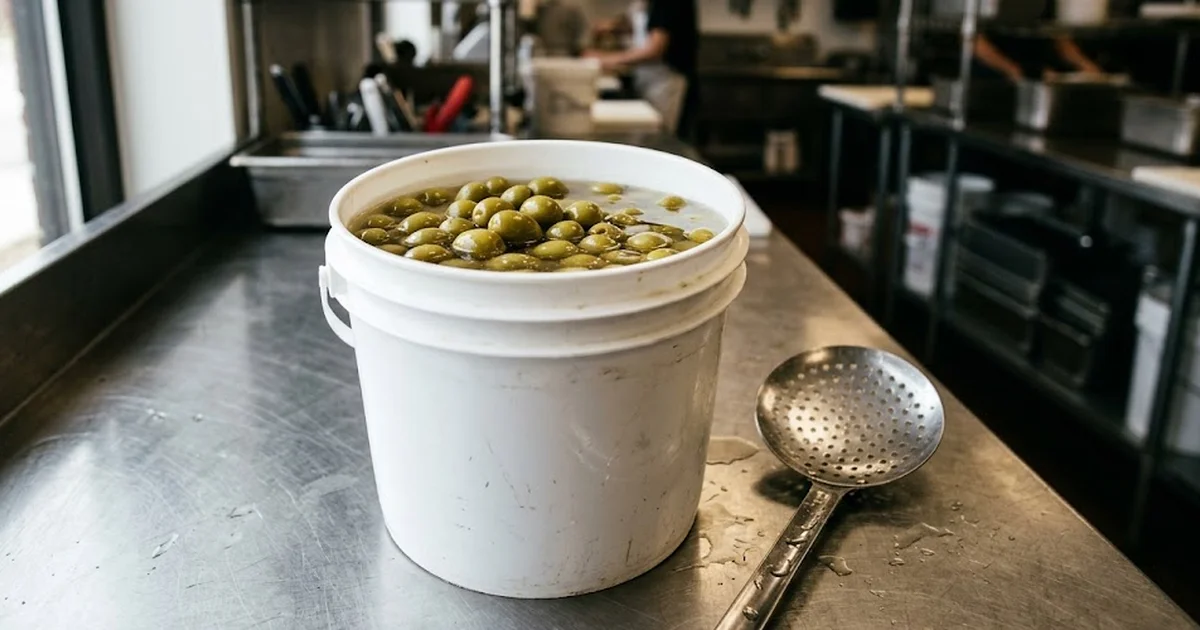
Seau d'olives entamé : durée de vie, saumure et gestion du reste
Comment conserver un seau d'olives entamé ? Rôle de la saumure, température, règles d'hygiène et gestion des tapenades : le guide professionnel Palimex.