
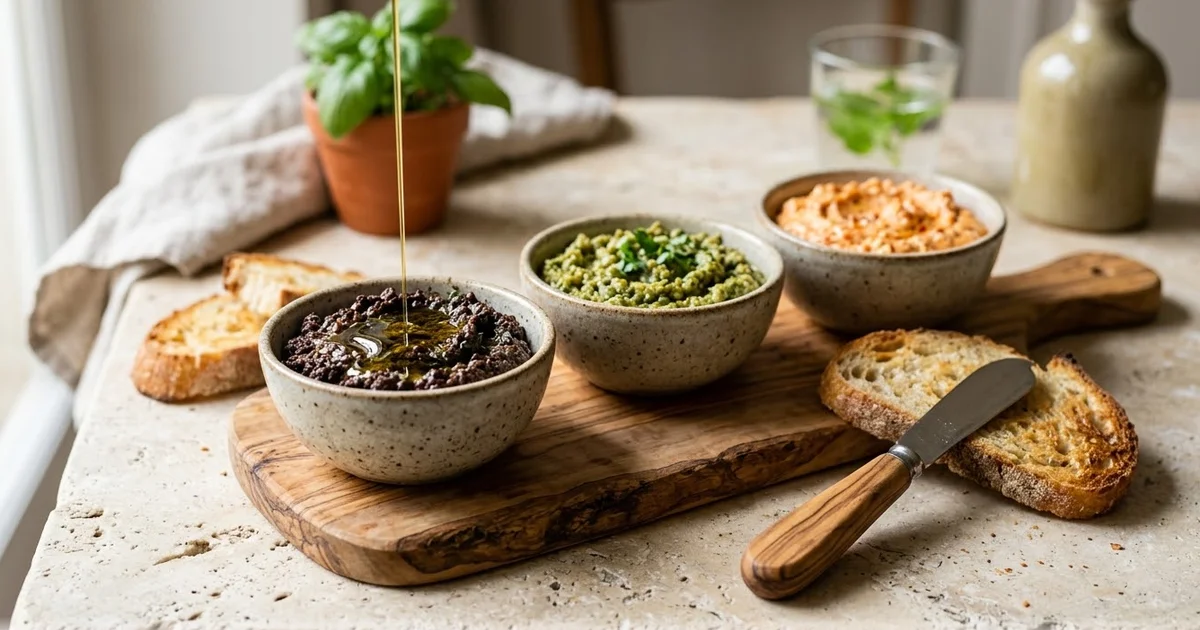
Bulk CHR Tapenades & Spreads | Formats & Shelf Life
Bulk tapenades and spreads for CHR: black olive, green olive, bell pepper, hummus. Bucket and jar formats, shelf life, storage, and foodservice uses.
On a restaurant menu, an appetizer board, or a catering buffet, tapenade holds a strategic position: low-cost to purchase, it generates high perceived value for the guest. For CHR professionals, gourmet grocers, and caterers, the choice of format, shelf life management, and knowledge of tapenade families directly impact the profitability and food safety of the service. This article reviews the essential guidelines for purchasing and using bulk tapenades and spreads in a professional setting.
Tapenade and spread families: an overview for professional foodservice
The term “tapenade” actually covers several families of spreads, each with a distinct flavor profile, ingredient base, and culinary uses. Understanding these families helps create a coherent offering on a menu or in a gourmet grocery section, without redundancy.
| Family | Main base | Flavor profile | Recommended use |
|---|---|---|---|
| Black tapenade | Black olives, capers, anchovies | Intense, salted, umami | Starter, charcuterie board |
| Green tapenade | Green olives, capers, olive oil | Brighter, slightly bitter | Sandwiches, cold sauces |
| Anchoïade | Anchovies, garlic, olive oil | Pronounced, salty, lingering | Raw vegetables, summer buffet |
| Bell pepper spread | Roasted bell pepper, olives, mild spices | Mild, slightly sweet | Vegetarian board, brunch |
| Artichoke spread | Artichoke hearts, olive oil | Mild, vegetal | Starter, verrine, cold buffet |
| Hummus | Chickpeas, tahini, lemon | Smooth, creamy | Sandwiches, vegetarian offering |
This diversity allows segmenting the offering based on consumption moments: a salted and robust starter with black tapenade, a mild and vegetarian alternative with bell pepper spread or hummus. To delve deeper into sourcing olives used in these recipes, consult our article on bulk olives, which details size and origin criteria.
Professional formats: bulk CHR buckets and jars for resale
The choice of packaging directly depends on the usage channel: production kitchen versus retail sale. Palimex systematically offers professional packaging, suited to the volumes of collective catering, CHR, and gourmet grocers purchasing for resale.
- CHR bucket (5 kg to 10 kg): economical format for production kitchens, used to garnish trays, prepare sandwiches in series, or supply a buffet. The price per kilo is optimized, and rotation must be quick once the bucket is opened.
- Resale jar (200 g to 1 kg): individual packaging for gourmet grocers and deli sections, with complete regulatory labeling and extended shelf life before opening, designed for shelf display.
- Multi-jar carton: practical for group orders and pallet logistics, it simplifies batch management upon receipt and storage in reserve.
The bucket format is preferred in central kitchens or fast-casual restaurants with high throughput, while the individual jar remains the standard for direct sales to the end consumer via a grocery or deli section. Find all these references in our category Olives & spreads – Tapenades.
"In the field, the most common mistake we see among our CHR clients is underestimating the bucket size relative to their service pace. A 5 kg bucket once opened must be consumed quickly: it’s better to adjust order frequency than to leave an open product too long in the cold room." — The Palimex team
Shelf life, storage after opening, and batch management in the kitchen
Documentary and sanitary management of bulk-purchased tapenades is a key focus for any establishment subject to HACCP. Unlike a dry product, tapenade is an oil-based product with vegetables or olives, sensitive to oxidation and cross-contamination once the container is opened.
- Systematically check the shelf life upon receipt and record it in the batch traceability plan.
- Store unopened products in a cool place, away from light, in accordance with the manufacturer’s label instructions.
- Once the bucket or jar is opened, transfer if necessary to a food-grade airtight container and significantly reduce the consumption period compared to the initial shelf life.
- Label the opening date on each opened container, an essential practice in collective kitchens for HACCP monitoring.
- Avoid any contact with unclean utensils on the opened product, which accelerates microbial growth on the surface.
To explore best storage practices applicable to the entire olive and spread range, our professional storage guide details the recommended storage conditions by product category. As a general regulatory reference on the distinction between use-by date and best-before date, the official page of the Ministry of Economy can be usefully consulted by quality teams.
Good stock rotation practices
The FIFO (first in, first out) rotation must be systematically applied to tapenades, especially for opened bucket formats in the kitchen. Poorly managed stock quickly results in material loss and a direct cost to the establishment.
Foodservice uses: starter, board, sandwiches, and buffet
The versatility of tapenades makes them a staple ingredient for many service formats, from individual place settings to large-capacity buffets. Adapting the tapenade family to the service context optimizes both food cost and customer satisfaction.
- Starter: a small amount of black tapenade or anchoïade on toast or blini, ideal as an amuse-bouche before the meal.
- Appetizer board: combining several families (black, green, bell pepper) to vary colors and textures on the same board.
- Sandwiches and snacking: green tapenade or hummus as a spread base, economical and quick to apply in series production.
- Buffet and event catering: jar or bucket format depending on guest volume, with the option to present in verrines for a more upscale appearance.
- Vegetarian offering: bell pepper spread, hummus, and artichoke spread meet growing demand without complicating procurement.
To create a balanced board, it is also relevant to pair tapenades with prepared olives: our article on bulk olives details the sizes and preparations that complement spreads.
Portion cost and profitability of bulk tapenades for professionals
Purchasing tapenades in bulk significantly reduces the food cost per portion compared to small packaging, provided rotation frequency is managed. Calculating the portion cost remains the central tool for choosing between bucket and jar formats based on service volume.
| Format | Weight | Typical use | Economic advantage |
|---|---|---|---|
| CHR bucket | 5 to 10 kg | Series production, buffet | Optimized cost per kilo, requires high rotation |
| Resale jar | 200 g to 1 kg | Gourmet grocery, direct sale | Resale margin, refined presentation |
| Multi-jar carton | Variable by reference | Pallet order, reserve | Free delivery logistics, transport pooling |
For an establishment serving a 10 g starter per cover, a 5 kg bucket represents about 500 portions, making the unit cost particularly competitive as long as the product is consumed within the recommended time after opening. This portion cost calculation logic applies equally to other spreads purchased in bulk by foodservice professionals.
Choosing the right bulk tapenade and spread wholesaler in B2B
Selecting a supplier for tapenade and spread procurement goes beyond price per kilo. Several criteria should guide the decision of a CHR professional, grocer, or caterer.
- Ability to provide packaging suited to the establishment’s volume (bucket, jar, carton).
- Batch traceability and transparency on raw material origins (olives, bell peppers, chickpeas).
- Logistical reliability: pallet delivery, free delivery above a certain volume, on-time delivery.
- Availability of a complete range to create a varied offering without multiplying suppliers.
- Documentary support for HACCP needs (technical sheets, shelf life, allergens).
A generalist supplier of dried fruits, spices, and olives, active for several decades in the B2B market, generally offers better procurement consistency than a scattered multi-sourcing approach, especially for boards combining tapenades, olives, and dried fruits.
Summary: structuring your tapenade and spread procurement
Purchasing tapenades and spreads in bulk follows a simple logic for professionals: choose the right format based on the usage channel, ensure batch traceability and shelf life management, and adapt the tapenade family to the service context. The CHR bucket remains the most economical solution for kitchen production, while the individual jar is essential for resale in gourmet groceries. Special attention to storage after opening and stock rotation ensures margin security and sanitary compliance. For more information, consult our category Olives & spreads – Tapenades and our article on bulk olives.
Further reading
Frequently asked questions
Everything you need to know about this topic.
A question?
Get in touch directly.

Marketing & Communications Manager — Palimex / Meyva
As Marketing & Communications Manager at Palimex / Meyva, Aude Moyne leads the company's communications and digital marketing strategy: editorial content, email campaigns and the promotion of its product ranges. Her experience at Palimex, a specialist in dried fruit, nuts, olives and spices for professionals, has given her in-depth knowledge of the products, their origins and uses, and the expectations of food-industry professionals. The blog articles are written or supervised by her, in collaboration with Palimex's sales and product teams whenever a topic calls for specific expertise.
Our advice related to Grocery & Recipes
 Grocery & Recipes
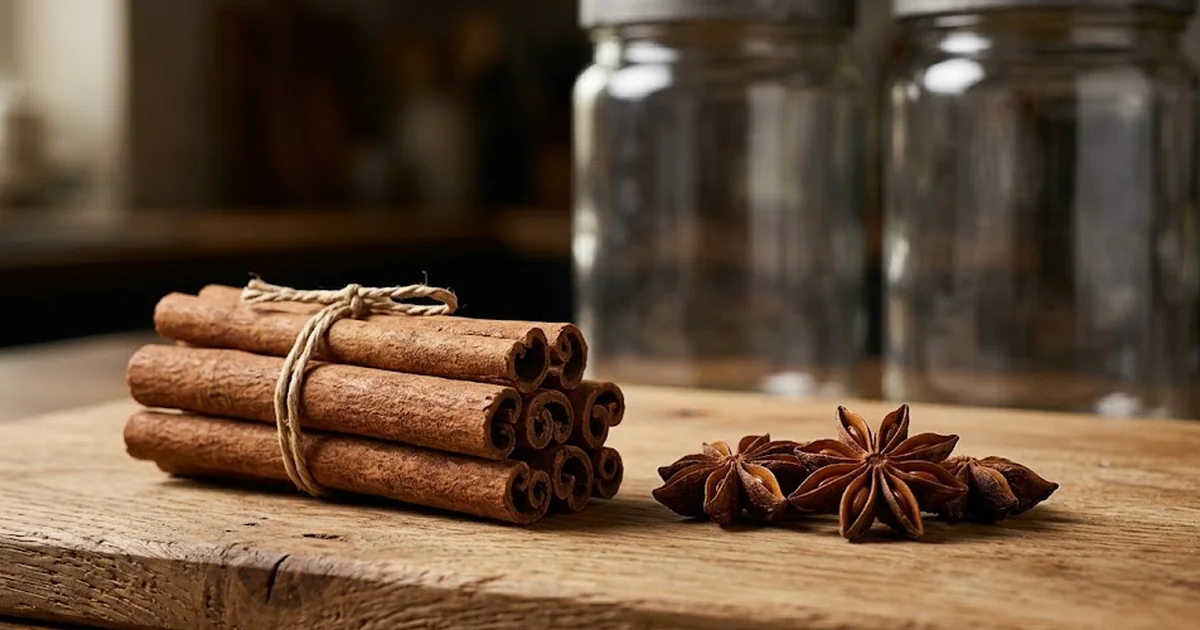
Épices de l'hiver : pain d'épices, vin chaud et pâtisserie de Noël, dosage et achat
Guide B2B des épices d'hiver pour boulangers, pâtissiers et CHR : dosages au kilo et au litre, mélanges vin chaud et pain d'épices, approvisionnement en gros.
 Grocery & Recipes
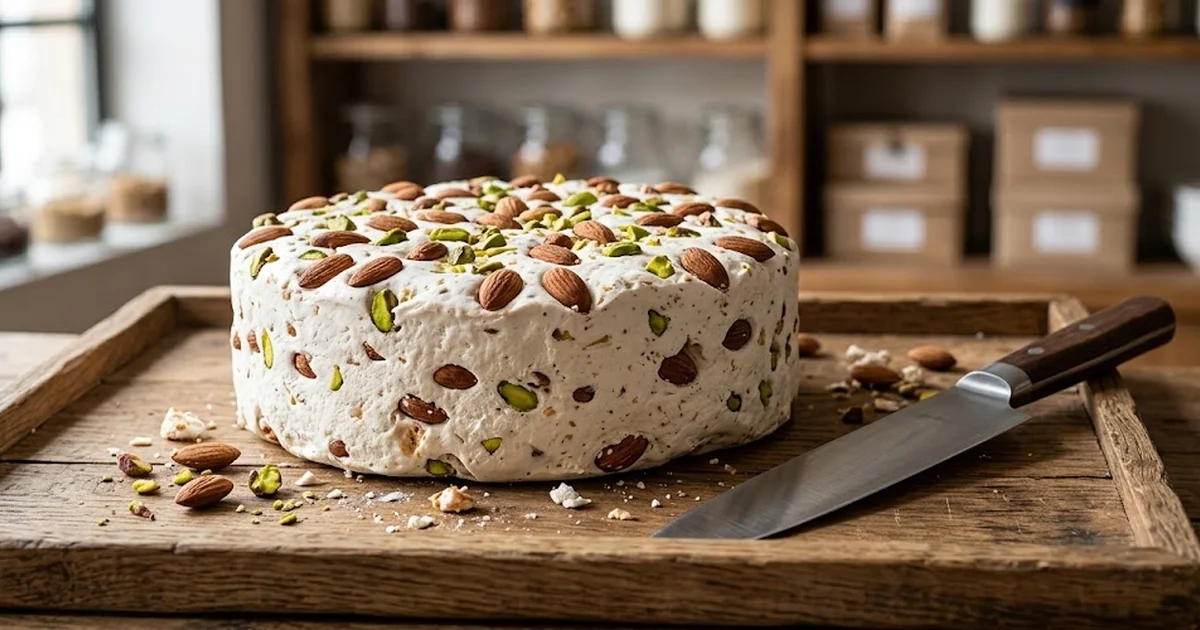
Nougat en meule : découpe à la coupe, conservation et vente au poids
Guide B2B pour épiceries et confiseries : réussir la découpe à la coupe du nougat en meule, limiter les pertes, maîtriser le stockage et l'affichage au poids.
 Grocery & Recipes
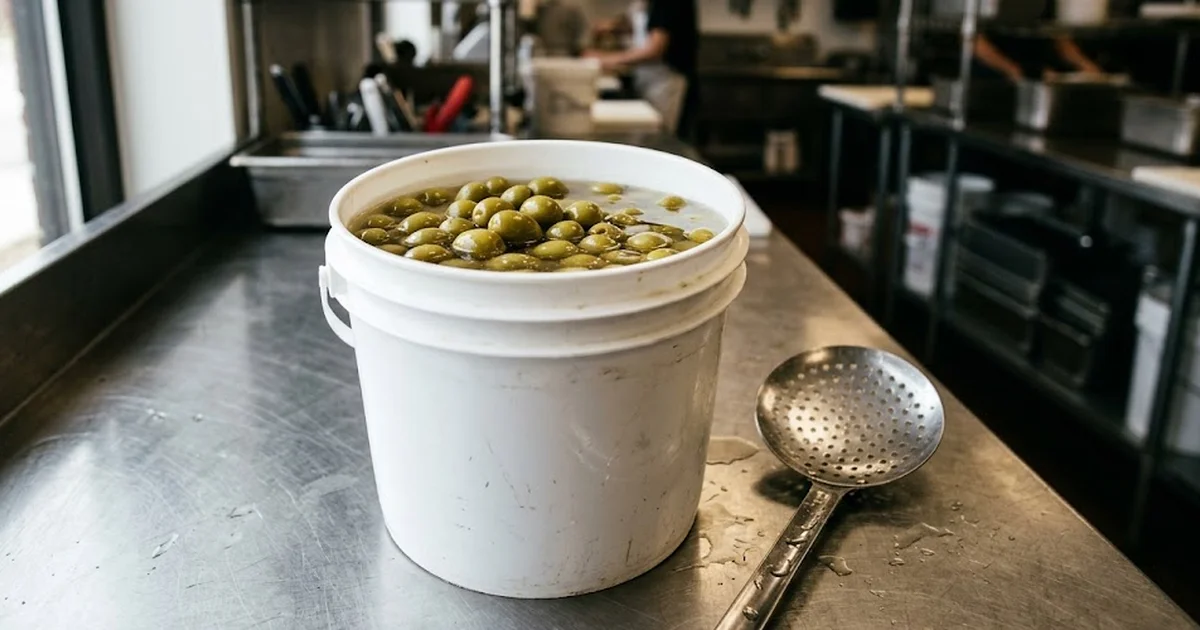
Seau d'olives entamé : durée de vie, saumure et gestion du reste
Comment conserver un seau d'olives entamé ? Rôle de la saumure, température, règles d'hygiène et gestion des tapenades : le guide professionnel Palimex.