
Épicerie fine : rendre un rayon vrac de fruits secs rentable
How many SKUs, which layout, and what restocking schedule for 5 kg bulk packaging: a professional guide to a high-turnover, high-margin bulk dried fruit section.
A well-designed bulk dried fruit section can account for a significant share of a gourmet grocery store’s turnover, provided it is managed as a procurement tool rather than just a display. Too many fixed SKUs, restocking misaligned with supplier packaging, or a layout that overlooks high-margin products—these are the three pitfalls that turn an appealing bulk bin into a silent markdown item. Here’s how to structure this section so it moves, sells, and protects your margins.
Why the bulk dried fruit section remains a profitability driver in gourmet grocery stores
Bulk appeals to both professional and retail customers who demand perceived freshness, on-demand quantities, and minimal packaging. For gourmet grocery stores, it’s also a differentiation tool against mass retailers—provided the section stays dynamic and bins don’t stagnate.
- A bulk section attracts through visuals and aroma, increasing dwell time and encouraging complementary purchases.
- The unit margin on dried fruits sold by weight from 5 kg bulk packaging typically exceeds that of pre-packaged SKUs.
- A controlled assortment minimises waste from oxidation, rancidity in nuts, and size degradation in soft fruits.
This profitability, however, hinges on a simple principle: every SKU in a bin must justify its presence by its sell-through rate, not just its visual appeal.
How many SKUs to keep to avoid dead stock in the bulk section
The temptation to multiply bins for a sense of abundance is the primary cause of dead stock. A high-performing bulk section relies on a clear trade-off between range depth and actual sales velocity, category by category.
| Product category | Recommended number of SKUs | Typical sales velocity | Role in the section |
|---|---|---|---|
| Almonds and nuts | 3 to 4 formats (whole, flaked, powdered) | Fast | Traffic driver and baking staple |
| Dates and soft fruits | 2 to 3 varieties | Medium, seasonal | Premium positioning and margin |
| Dried apricots and figs | 2 SKUs | Medium | Assortment complement |
| Mixes and aperitifs | 2 to 3 recipes | Fast during festive periods | Impulse rotation |
| Candied fruits | 1 to 2 SKUs | Slow outside holiday season | Niche, requires monitoring |
This table is not a fixed standard: it provides a benchmark for recalibrating a section with too many slow-moving SKUs. The goal remains the same: fewer bins, but bins that turn.
Traffic drivers and margin products: structuring bin placement
A profitable bulk section does not treat all products equally. Some SKUs drive footfall, while others boost average basket value. This distinction should guide the physical placement of bins, not just product selection.
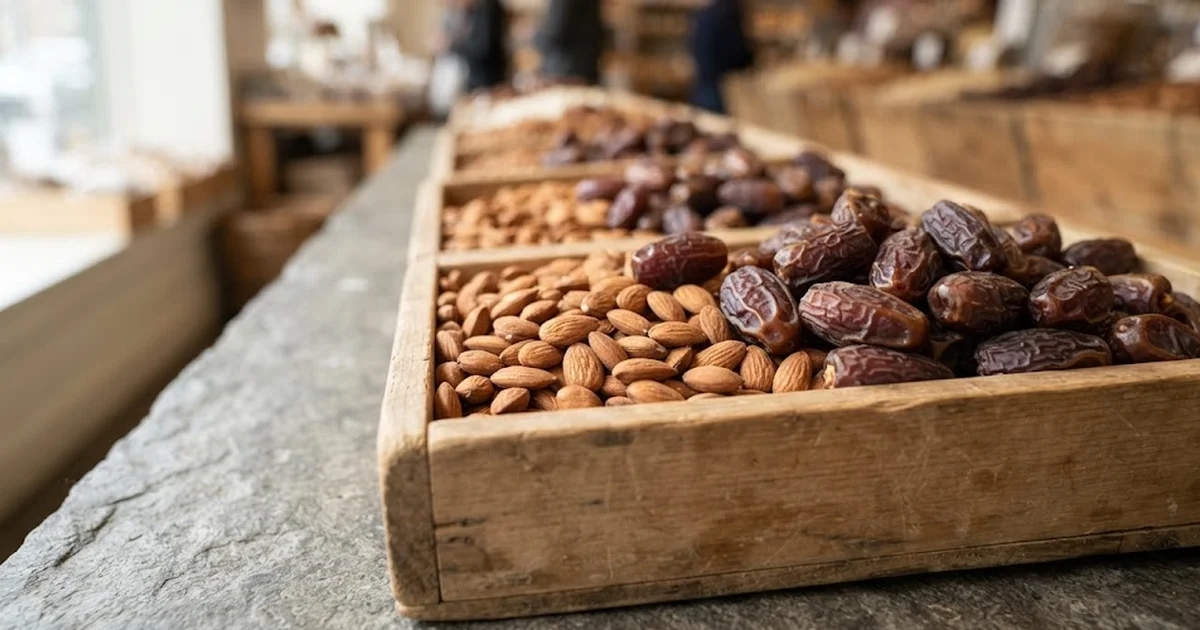
- Almonds act as a traffic driver: a well-known price anchor, versatile in use, they draw attention at the section’s entrance.
- Dried fruits with strong identity, like dates, are placed in secondary zones to capture attention after the initial price reference.
- A visually striking product like golden jumbo raisins can serve as a temporary endcap to revitalise a slower-moving area.
- Aperitif mixes are positioned at the end of the customer journey, as impulse purchases, rather than at the entrance where they would cannibalise traffic drivers.
This placement logic prevents high-margin products from going unnoticed due to poor positioning, and stops traffic drivers from monopolising space at the expense of overall rotation.
Restocking and bulk formats: anticipating procurement logistics
Purchasing in bulk formats requires a different ordering discipline than retail. Poorly planned restocking leads either to stockouts on fast-moving SKUs or overstock on slow-moving ones—both directly impacting section profitability.
"We often see gourmet grocery stores ordering small mixed quantities to test multiple products, whereas 5 kg bulk packaging is designed to secure a steady flow on a limited number of SKUs. It’s better to reorder frequently on three or four high-turnover categories than to spread a single order across ten different bins." — The Palimex team, dried fruit wholesaler at Rungis
To structure restocking, it’s useful to think in ordering cycles rather than reacting to shortages: anticipating sales frequency per SKU allows orders to be aligned with a regular rhythm rather than placed in urgency. Details on delivery rules for pallets or free-carriage thresholds are explained in our guide on free-carriage and pallet delivery, a critical factor when ordering multiple product categories together.
Size, grade, and best-before date: ensuring rotation without stockouts or waste
The profitability of a bulk section doesn’t just depend on product selection—it also relies on correctly interpreting size and storage information before ordering. A mismatch between size and intended use, or a best-before date too short for the store’s actual sales velocity, mechanically generates markdowns.
- Check the grade and size stated on the technical sheet before selecting a bulk SKU, particularly for oxidation-prone nuts.
- Align ordering frequency with the product’s actual best-before date rather than an unrevised habitual schedule.
- Monitor humidity and light exposure at the bin level—two factors that accelerate rancidity regardless of the date on the original carton.
For further details, our article sizes and grades of dried fruits: reading a technical sheet explains how to interpret this information before purchasing. On storage itself, the guide how to store dried fruits outlines the conditions suited to bulk section use.
Differentiating the bulk offering through customisation and global flavours
Once rotation is stabilised on core SKUs, additional margin often comes from products that stand out against direct competitors. Two levers are particularly effective in gourmet grocery stores.
- Customising packaging for small-quantity counter sales, which reinforces the store’s brand identity without complicating bulk procurement logistics.
- Introducing global flavour SKUs, which broaden the customer base without multiplying traditional bulk bins.
On the first point, our article custom-branded dried fruit pouches details practical options for stores looking to differentiate at the point of sale. On the second, the Oriental flavours range allows the introduction of standout products without disrupting the section’s existing organisation—a topic also covered in our article on Oriental products for professionals.
Managing the bulk section long-term: best practices to maintain
Beyond the initial layout, the profitability of a bulk section depends on its ability to be adjusted regularly based on actual sales rather than ordering habits. This adjustment requires few tools but consistent discipline.
- Review the SKU list at least quarterly, removing those whose rotation no longer justifies their space.
- Bundle orders by product category to benefit from free-carriage thresholds and reduce repeated logistics costs.
- Train in-store teams to spot signs of ageing in bins before they become a customer return issue.
For stores scaling up during the holiday season, it may be useful to consult dried fruit trends for the year-end holidays, a period when bulk section rotation can multiply for targeted SKUs.
On the regulatory front, hygiene principles for bulk food sales are outlined by French health authorities, notably on the official Ministry of Economy page on bulk sales, a useful resource for verifying compliance with signage and storage conditions specific to each store.
Key takeaways: actionable levers for a profitable bulk section
A bulk dried fruit section becomes profitable when three decisions are made deliberately: limit the number of SKUs to what actual sales velocity justifies, organise placement between traffic drivers and margin products, and align ordering frequency with available bulk formats rather than scattered purchasing habits. Rigorous interpretation of technical sheets and regular best-before date monitoring complete this system by preventing silent losses. It’s this combination—more than the choice of a standout product—that turns a bulk section into a sustainable profit centre for a gourmet grocery store.
Frequently asked questions
Everything you need to know about this topic.
A question?
Get in touch directly.

Marketing & Communications Manager — Palimex / Meyva
As Marketing & Communications Manager at Palimex / Meyva, Aude Moyne leads the company's communications and digital marketing strategy: editorial content, email campaigns and the promotion of its product ranges. Her experience at Palimex, a specialist in dried fruit, nuts, olives and spices for professionals, has given her in-depth knowledge of the products, their origins and uses, and the expectations of food-industry professionals. The blog articles are written or supervised by her, in collaboration with Palimex's sales and product teams whenever a topic calls for specific expertise.
Our advice related to Pro tips
 Pro tips
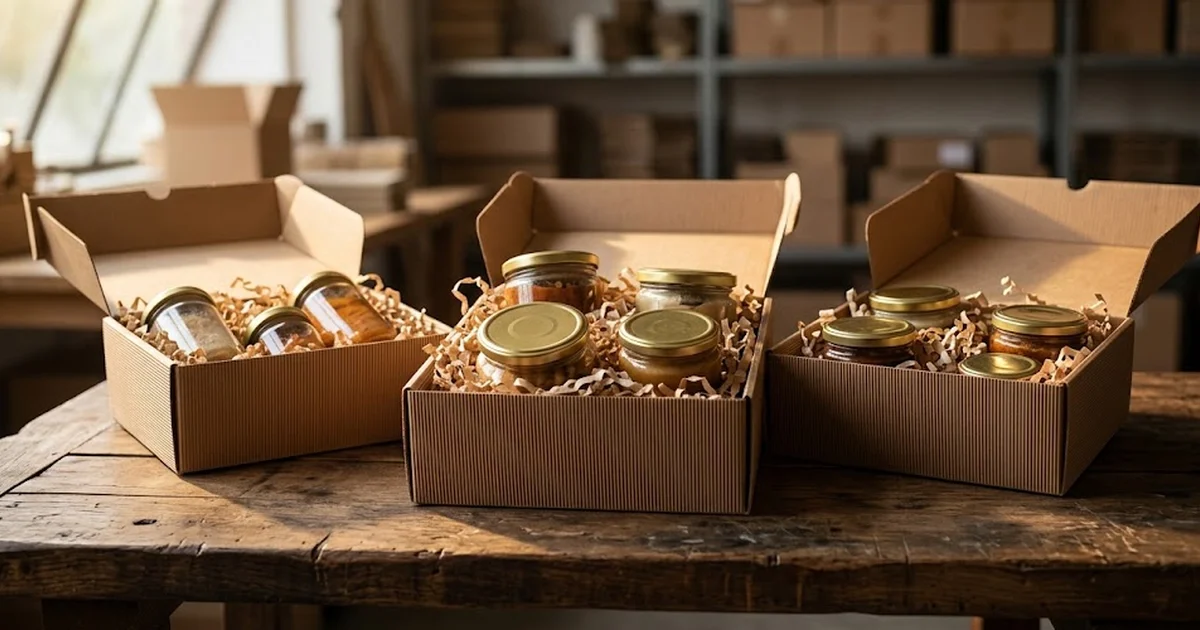
Paniers garnis de fin d'année pour les entreprises : les composer en épicerie fine
Composez des paniers garnis de fin d'année rentables pour entreprises et CSE : sélection de produits, formats stables, prix de revient et facturation B2B.
 Pro tips
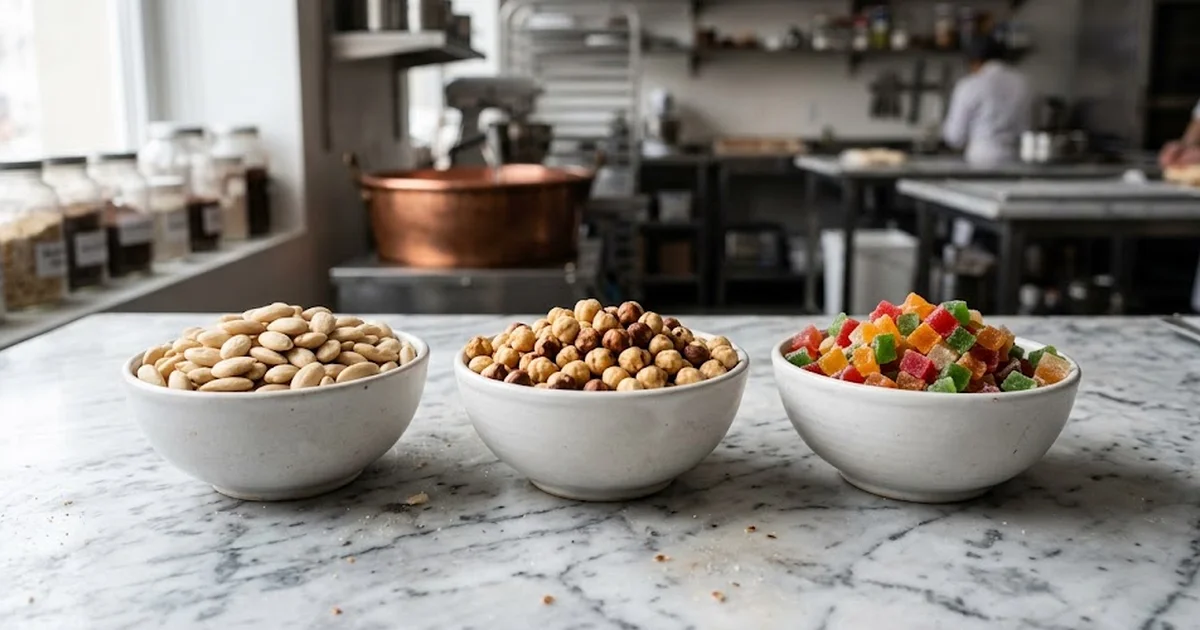
Commandes de fin d'année : le calendrier d'achat d'un pâtissier-chocolatier, d'octobre à décembre
Commandes de fin d'année : calendrier d'achat d'octobre à décembre pour pâtissier-chocolatier. Cadencez fruits secs, confits et marrons sans rupture.
 Pro tips
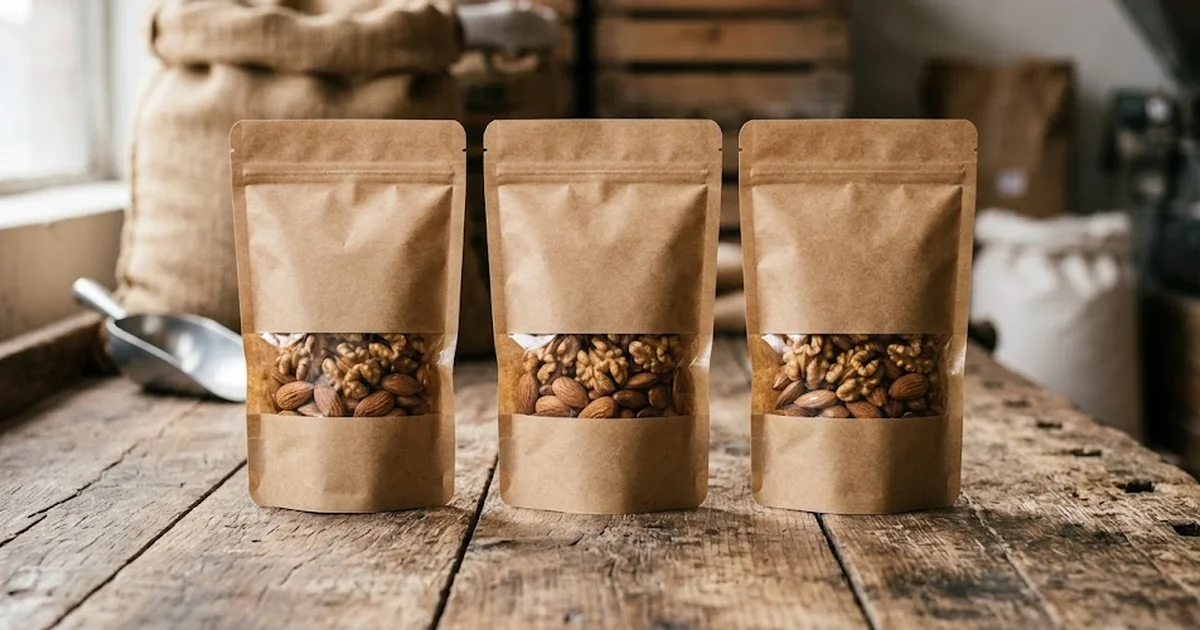
Triman, REP et éco-contribution : l'emballage d'un préemballé alimentaire
Reconditionnement de denrées et vente au consommateur : obligations REP, identifiant IDU, signalétique Triman et Info-tri. Le guide légal pour les professionnels.