
Agréage d'un lot : constituer un échantillon représentatif
Receiving a pallet: how many samples, how to distribute them, and which checkpoints to use for inspecting a lot of nuts, spices, or olives without opening everything.
Inspecting a lot of nuts, olives, or spices isn’t just about checking that the box isn’t crushed or the pallet wrap is intact. Once that first filter is passed, the next step is to assess the goods themselves: consistent sizing, compliant moisture levels, no foreign bodies, and a normal odour. All this without opening every bag or weighing every box on the pallet. That’s the challenge of a well-constructed sampling process: obtaining a reliable snapshot of a lot that can weigh several hundred kilograms in just a few minutes.
Why extend inspection beyond packaging
Intact packaging doesn’t guarantee anything about the contents. A perfectly sealed box may contain a lot that’s too moist, inconsistent in size, or contaminated with foreign bodies that slipped through the initial sorting. Inspection is precisely about opening a limited number of units to assess the goods, without having to unload the entire pallet—which would be neither realistic for daily receiving nor necessary if the sampling is correctly designed.
- The visual check of packaging protects against transport damage and cold chain breaks.
- Inspection protects against product quality defects that are invisible from the outside.
- The two checks are complementary and are done one after the other, never one instead of the other.
This method is even more critical for high-turnover SKUs, such as dehydrated apricots or dates, where a non-compliant lot discovered too late ties up a significant volume of stock.
How many samples to take and how to distribute them across the pallet
A single sample, even a generous one, tells you nothing about an inconsistent lot: it could hit the best or the worst part of the pallet. Representativeness comes from the number of samples and their distribution, not the quantity taken from one spot.
- Number of samples: As a working guideline, take at least one sample per layer of the pallet (bottom, middle, top), plus one additional sample for every ten boxes beyond a small lot.
- Distribution across the pallet: Avoid sampling only from the accessible side without depalletising. A box from the back of the first row, one from the centre, and one from the top give a more accurate picture than a series of samples taken side by side.
- Distribution within the box: Inside the same unit, sample from the surface, mid-depth, and the bottom—nuts and dehydrated fruits can settle and sort by gravity during transport.
- Consistency between samples: Note whether the samples look similar or differ. A marked difference between two samples from the same lot is already telling.
For a large-volume lot, such as a full pallet of dates, this three-level distribution remains the baseline, regardless of the product.
Checkpoints to verify on each sample
Once the samples are collected, the inspection follows a simple checklist that can be applied in minutes on the receiving dock, without lab equipment.
| Checkpoint | What to observe | What should raise concern |
|---|---|---|
| Sizing | Apparent size and weight of the fruits or pieces, compared within the same sample | Wide size variation in a lot marketed as sized |
| Moisture to the touch | Flexibility, stickiness, presence of moisture on the surface or at the bottom of the bag | Damp feel, clumped grains, condensation inside the packaging |
| Foreign bodies | Presence of plant debris, shells, dust, insects, or insect traces | Any visible foreign body, even isolated, warrants a broader lot examination |
| Odour | Characteristic product odour, absence of mouldy, rancid, or fermented smells | Unusual odour, even faint, in just one of the samples |
| Uniformity | Colour, texture, and general appearance consistent across samples | Clear difference in shade or texture between two boxes from the same lot |
For SKUs sold by grade, such as cashews, this sizing check directly ties into the supplier’s technical data sheet: see our article on sizing and grades for nuts to align field observations with the delivery note details.
What a sample can conclude—and its limitations
A well-constructed sample allows you to assess the general compliance of a lot with a reasonable level of confidence. It doesn’t cover everything, and confusing it with a full inspection is a common mistake in fast receiving.
- What it allows: Detecting clear non-compliance in sizing, moisture, or foreign bodies present in a significant portion of the lot.
- What it doesn’t allow: Guaranteeing the total absence of defects in every unit of the lot or detecting a diffuse, invisible risk to the eye, touch, or smell.
- What to do in case of doubt: Expand the sample before deciding, rather than ruling on a single ambiguous sample.
- What remains beyond visual inspection: Health risks related to mycotoxins, which are neither visible nor detectable by smell and require specific analysis, separate from visual inspection.
On this last point, a lot that passes visual inspection well may still present an undetectable risk at this stage—a topic covered in detail by the ANSES guidelines on aflatoxins, which should be consulted for anything related to actual health risks.
At Palimex, we train our receiving teams never to decide based on a single sample, even when the first opened box seems flawless. A lot of nuts is never perfectly homogeneous from one end of a pallet to the other, and it’s precisely the variation between several samples that provides the most insight. A rushed inspector who opens just one box thinks they’ve checked the lot; they’ve only checked one box.
Building a representative sample by product type
The sampling method varies slightly depending on the product: a whole nut isn’t sampled the same way as bulk powder or a bucket of olives. Here are practical guidelines by major product categories in the catalogue.
| Product type | Sampling guideline | Specific point of vigilance |
|---|---|---|
| Whole nuts (almonds, walnuts, pine nuts) | A handful per box, sampled from the surface and depth | Fragments and dust at the bottom of the bag, indicating repeated handling |
| Soft and dehydrated fruits | Samples from several bags within the same box | Excessive stickiness, indicating moisture or overheated storage |
| Spices in powder or grains | Small quantity taken from three levels of the container | Lumps, indicating moisture absorption |
| Olives and tapenades in buckets | Opening one bucket from several sampled in the lot | Cloudy brine or abnormal fermentation odour |
| Bulk bakery ingredients (powders, creams) | Core sample, from the top to the bottom of the container | Compaction or visible separation between the top and bottom |
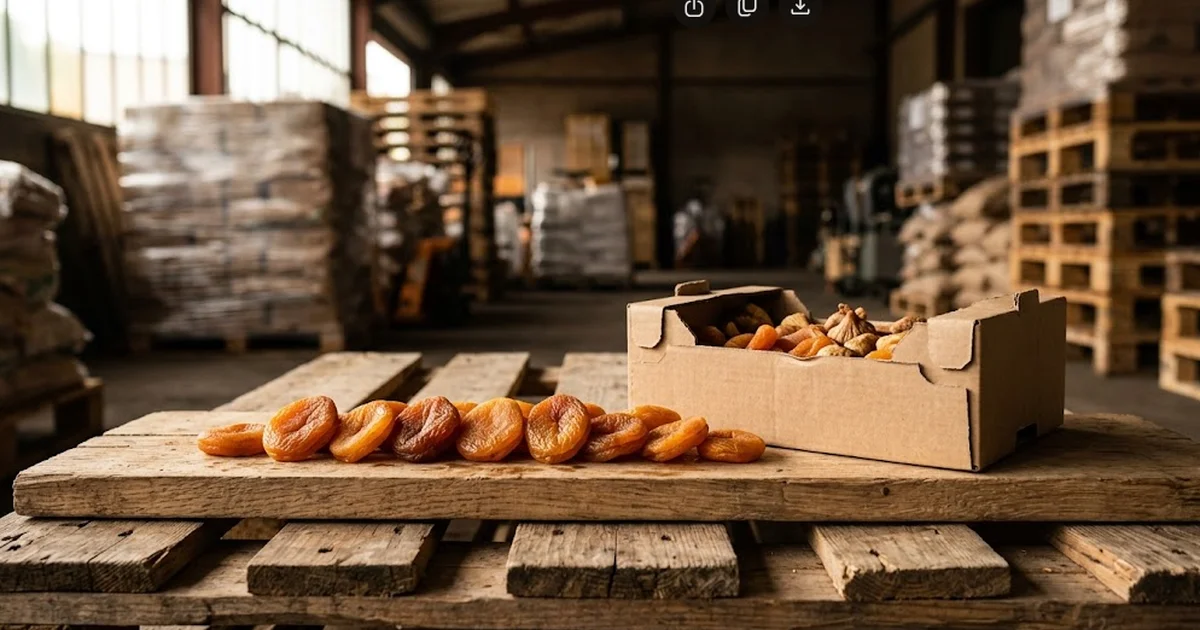
This sampling logic applies to both a single box and a full pallet, for example, on dehydrated apricots packed in 5 kg boxes, where each received box should theoretically be sampled if the ordered volume justifies it.
Documenting inspection for HACCP controls and traceability
A sample deemed compliant or non-compliant is useless if not documented. Inspection traceability is part of the records you may need to produce during an internal audit or customer complaint.
- Record the date, lot number or best-before date, and the inspector’s name.
- Note the number of samples taken and their distribution across the pallet.
- Document the results point by point (sizing, moisture, foreign bodies, odour, uniformity).
- Retain a reference sample if any doubt remains before the final decision.
- File the record with the delivery note for quick cross-referencing in case of dispute.
This documentation step is most valuable when integrated with upstream packaging and transport checks and downstream storage conditions: see our guide on storing nuts for the next steps once the lot is accepted.
Summary: A useful sample is a constructed one, not taken at random
Assessing a lot without opening it entirely is entirely possible, provided you follow a simple method: multiple samples, distributed across the pallet and within each box, checked against specific, objective criteria. A well-constructed sample provides a reliable picture of the lot’s overall compliance, but it has its limits: it doesn’t replace specific health analysis or vigilance if results are ambiguous between two samples. Properly conducted and documented, inspection complements the packaging check performed on receipt and fits into your professional stock management and traceability processes.
For further guidance on interpreting product specifications before receipt, our article on selecting bulk nuts for professionals details the criteria to request at the ordering stage, ahead of any dock inspection.
Further reading
Frequently asked questions
Everything you need to know about this topic.
A question?
Get in touch directly.

Marketing & Communications Manager — Palimex / Meyva
As Marketing & Communications Manager at Palimex / Meyva, Aude Moyne leads the company's communications and digital marketing strategy: editorial content, email campaigns and the promotion of its product ranges. Her experience at Palimex, a specialist in dried fruit, nuts, olives and spices for professionals, has given her in-depth knowledge of the products, their origins and uses, and the expectations of food-industry professionals. The blog articles are written or supervised by her, in collaboration with Palimex's sales and product teams whenever a topic calls for specific expertise.
Our advice related to Pro-tips
 pro-tips
Shrinkage and Breakage: Measuring Bulk Aisle Losses
Breakage, dehydration, sampling, weighing errors: the Palimex method to measure each bulk B2B loss item and adjust your pricing without guesswork.
 pro-tips
Cycle Counting: Counting Without Halting B2B Operations
Cycle counting method for grocery and foodservice: segmentation by product family, frequency based on turnover, acceptable discrepancies, and handling recurring variances.
 pro-tips
Safety Stock and Reorder Point in Foodservice Wholesale
Safety stock and reorder point in foodservice wholesale: the formula, a step-by-step numerical example, and how packaging impacts the calculation.