
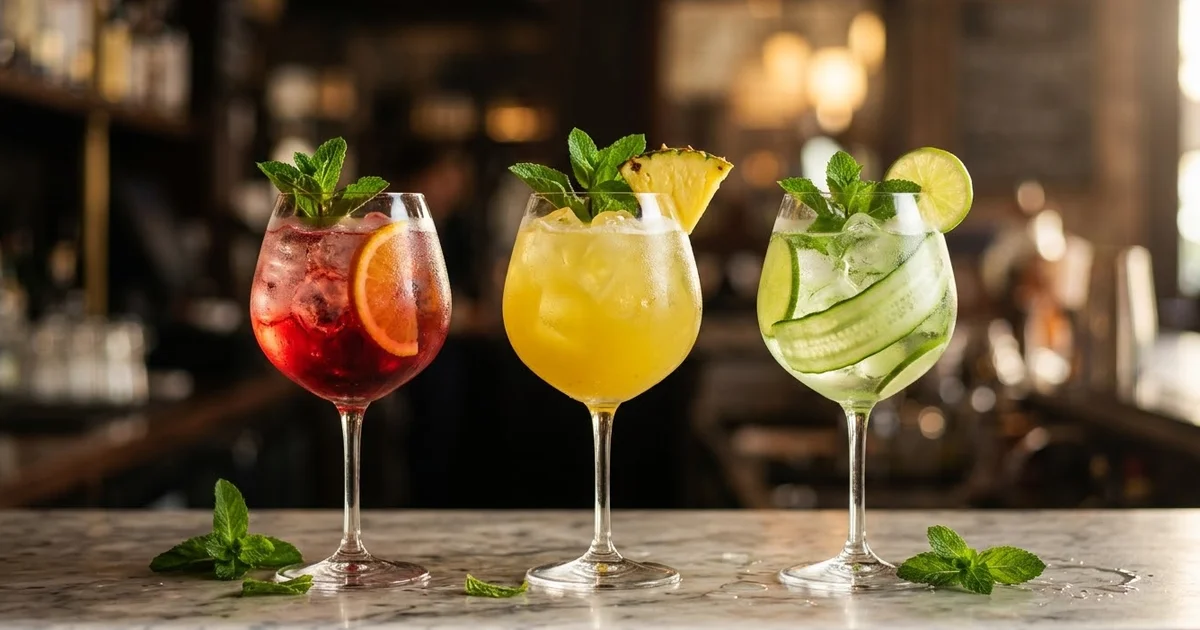
Bulk Non-Alcoholic Mocktails: CHR Menu Without License IV
Bulk non-alcoholic mocktails and juices for bars and restaurants: building a profitable menu without a License IV. Formats, portion cost, and storage.
The non-alcoholic beverage section is no longer just a checkbox on the menu for bars and restaurants: it has become a standalone profit centre. For establishments without a liquor licence, or those simply looking to diversify their offering without regulatory burdens, building a high-volume mocktail menu changes the game. This article details how to create a menu of 4 to 6 mocktails, the packaging formats suited to the foodservice industry, portion cost calculation, post-opening storage, and in-room service.
Why non-alcoholic demand is surging in foodservice
The sobriety trend is no longer a niche phenomenon. Customers are seeking quality alternatives to classic cocktails, not just settling for orange juice or generic soda. This shift in consumption habits opens up a commercial opportunity that many establishments still leave untapped due to a lack of a structured menu.
- Steady growth of "zero-alcohol" menus in cocktail bars and fine-dining restaurants
- Foodservice customers looking for premium options for designated drivers, pregnant women, specific diets, or personal choice
- Net margin often higher than that of a classic alcoholic cocktail, as ingredient costs remain controlled with fruit-based and spiced bases
- No liquor licence required to sell mocktails, allowing any establishment to offer a quality menu
For gourmet grocers and caterers supplying points of sale, this premiumisation of non-alcoholic options is accompanied by increased demand for dehydrated fruits and fruit syrups to create homemade bases.
Building a 4-to-6-mocktail menu for a profitable foodservice operation
A short, well-thought-out menu is more effective than a long list that’s difficult to manage in stock. The goal is to cover multiple flavour profiles (fruity, spiced, tangy, herbal) while relying on fast-rotating ingredients.
| Mocktail | Main Base | Flavour Profile | Differentiating Ingredient |
|---|---|---|---|
| Non-Alcoholic Piña Colada | Pineapple juice, coconut cream | Smooth, tropical | Dehydrated pineapple garnish |
| Non-Alcoholic Mule | Ginger beer, lime | Spicy, zesty | Candied ginger |
| Spiced Sunset | Orange juice, grenadine, cinnamon | Fruity, warm | Cinnamon stick, dried orange peel |
| Hibiscus Fizz | Hibiscus infusion, lemon, sparkling water | Tangy, floral | Dried hibiscus flowers |
| Passion Colada | Passion fruit juice, coconut | Tangy, indulgent | Dried passion fruit zest |
| Spiced Orchard (citrus-free) | Apple juice, star anise, clove | Warm, woody | Whole star anise garnish |
This menu structure allows you to draw from a common pool of ingredients (fruit juices, spices, dried garnish fruits) while offering perceived variety to the customer. It relies on the same sourcing as the cocktail menu, simplifying stock management and bulk orders from your wholesaler.
Packaging formats suited to bars and restaurants
Packaging choice directly impacts profitability and storage logistics. In B2B, three formats dominate based on service volume and turnover frequency.
| Format | Typical Volume | Main Advantage | Usage Context |
|---|---|---|---|
| Bottle | 1 L to 5 L | Precise dosing, direct service | Cocktail bars, on-the-fly service |
| Bag-in-box | 5 L to 20 L | Optimised airtight storage, reduced oxidation | High-turnover restaurants, brasseries |
| Flexible pouch | 3 L to 10 L | Reduced space, cold-room storage | Event catering, buffets |
The bag-in-box format often remains the best compromise for bars serving dozens of mocktails daily: it limits air exposure and extends the shelf life of opened products. The bottle format is better suited to establishments that emphasise the service gesture in front of the customer. For more on this choice, read our article on bag-in-box packaging in foodservice.
Portion cost and selling price: calculating margin without a liquor licence
The profitability of a mocktail hinges on the ingredient cost per portion, often significantly lower than that of an alcoholic cocktail due to the absence of taxed spirits and the simplicity of the base. Here’s an example cost structure for a 20 cl portion.
| Item | Indicative Cost per Portion | Note |
|---|---|---|
| Juice/syrup base | £0.25 to £0.45 | Depending on bulk purchase or bag-in-box format |
| Garnish (dried fruit, spice) | £0.10 to £0.20 | Dehydrated fruits or whole spices |
| Ice, sparkling water | £0.05 to £0.10 | Marginal cost |
| Total cost per portion | £0.40 to £0.75 | Excluding labour |
| Recommended selling price | £6 to £9 | Depending on positioning and location |
This margin level, often exceeding 85%, is explained by the absence of excise duties and controlled ingredient costs through bulk purchases of juices, syrups, and dried fruits. To refine this calculation for your menu, our guide to calculating ingredient costs in bars details the method step by step.
At Palimex, we’re seeing more and more restaurateurs reaching out to build a coherent non-alcoholic menu, not just a single mocktail at the end of the cocktail list. Our field feedback is clear: establishments that structure 4 to 6 recipes around a common base of juices, syrups, and dried fruits improve margins and simplify stock management—without ever needing a liquor licence.
Post-opening storage, shelf life, and stock rotation
Managing post-opening storage is a critical HACCP point, particularly for juice and syrup bases that lose freshness once the container is opened. Rigorous stock rotation prevents waste and non-compliance.
- Systematically record the opening date on each bottle, bag-in-box, or pouch
- Maintain the cold chain from opening for unpasteurised juices and syrups
- Prioritise the bag-in-box format for slow-turnover products, as it limits oxidation compared to a bottle reopened multiple times during service
- Organise stock using the first-expired, first-out (FEFO) method, based on batch numbers and use-by dates indicated on each package
- Train front-of-house and bar staff to read traceability labels to avoid discrepancies between theoretical and actual stock
A well-managed mocktail menu relies on the same principles of rigour as storing fruit juices for professional use: batch traceability, adherence to use-by dates, and methodical rotation prevent losses that erode the theoretical margin calculated upfront.
In-room service: glassware, ice, and garnish to enhance the menu
Mocktails sell through the service that accompanies them. Careful presentation justifies a higher selling price and builds customer loyalty, as non-alcoholic options are often perceived as secondary in many competing establishments.
- Choose dedicated glassware, distinct from that used for alcoholic cocktails, to visually highlight the non-alcoholic offering
- Use quality ice, in whole cubes or crushed, depending on the recipe, to maintain freshness without diluting the mocktail too quickly
- Enhance the garnish with dried or dehydrated fruits (pineapple, citrus, whole spices) to create a premium look without high ingredient costs
- Train staff to present the non-alcoholic menu with the same level of detail as the cocktail menu, without positioning it as a default option
This level of service transforms a simple fruit juice into a full tasting experience, aligned with the standards expected in cocktail bars and fine-dining restaurants. The dried and dehydrated fruits used as garnishes come from the same sourcing as those used in pastry and snacking, simplifying bulk order management for the establishment.
Anticipating the rise of non-alcoholic options across the foodservice menu
Non-alcoholic demand isn’t limited to bar mocktails: it also extends to premium juices served with meals, cold infusions, and non-alcoholic cocktail bases offered as digestifs. Anticipating this growth secures reliable sourcing and volumes adapted to seasonal activity.
- Plan bulk orders in advance before peak periods (summer, end-of-year holidays)
- Diversify suppliers for juice and syrup bases to secure supply in case of shortages
- Integrate mocktails into an overall menu strategy, linked to the existing offering of dried fruits, spices, and olives in the kitchen
To build a complete and coherent offering, all the references needed for these recipes are available in our Foodservice Selection section, designed specifically for professionals structuring a high-volume non-alcoholic menu.
Summary: a non-alcoholic menu as a profit centre without regulatory constraints
Building a structured mocktail menu, with appropriate packaging formats, rigorous portion cost calculation, and strict post-opening storage management, allows any foodservice establishment to generate significant margins without relying on a liquor licence. The key lies in consistency between sourcing, in-room service, and stock rotation, ensuring this menu is no longer an afterthought but a true profitability driver. For more, explore all our dedicated references in the Foodservice Selection section and our practical guides on stock management in restaurants.
Additional market data and sources available on FranceAgriMer, the reference for monitoring French agri-food sectors.
Further reading
Frequently asked questions
Everything you need to know about this topic.
A question?
Get in touch directly.

Marketing & Communications Manager — Palimex / Meyva
As Marketing & Communications Manager at Palimex / Meyva, Aude Moyne leads the company's communications and digital marketing strategy: editorial content, email campaigns and the promotion of its product ranges. Her experience at Palimex, a specialist in dried fruit, nuts, olives and spices for professionals, has given her in-depth knowledge of the products, their origins and uses, and the expectations of food-industry professionals. The blog articles are written or supervised by her, in collaboration with Palimex's sales and product teams whenever a topic calls for specific expertise.
Our advice related to Grocery & Recipes
 Grocery & Recipes
Épices de l'hiver : pain d'épices, vin chaud et pâtisserie de Noël, dosage et achat
Guide B2B des épices d'hiver pour boulangers, pâtissiers et CHR : dosages au kilo et au litre, mélanges vin chaud et pain d'épices, approvisionnement en gros.
 Grocery & Recipes
Nougat en meule : découpe à la coupe, conservation et vente au poids
Guide B2B pour épiceries et confiseries : réussir la découpe à la coupe du nougat en meule, limiter les pertes, maîtriser le stockage et l'affichage au poids.
 Grocery & Recipes
Seau d'olives entamé : durée de vie, saumure et gestion du reste
Comment conserver un seau d'olives entamé ? Rôle de la saumure, température, règles d'hygiène et gestion des tapenades : le guide professionnel Palimex.