
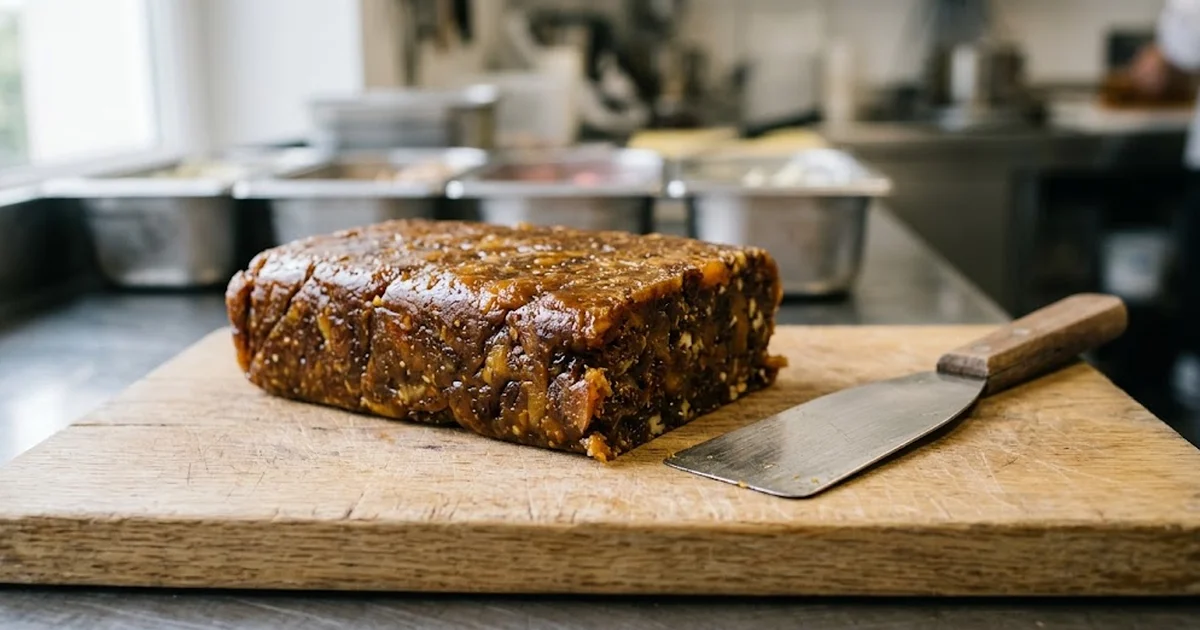
Glacier : praliné et pâtes de fruits secs, rendement et texture
Praline dosage, cold stability, overrun, cost per litre: the professional guide to pure paste vs sweetened preparation for B2B ice cream makers and pastry chefs.
Almond and nut pastes rank among the most technical ingredients in ice cream production. A slight miscalculation in dosage, an ill-suited choice between pure paste and sweetened preparation, or improperly stored raw materials can disrupt the entire mix balance—overrun, cold stability, and cost per litre. This article provides professional benchmarks for incorporating these vegetable fats into your ice cream and sorbet recipes, including the yield trade-offs every high-volume ice cream maker or pastry chef must master.
Pure paste or sweetened preparation: a composition difference that changes everything
Before discussing dosage, it’s essential to clarify what the terms “praline” or “nut paste” refer to on a technical data sheet, as composition variations between references are significant and directly impact the result in the mixing vat.
- Pure nut paste: roasted nuts ground alone, with no added sugar or cutting oil. Naturally high fat content (often 45 to 60% depending on the nut), concentrated flavour, and distinct colour.
- Classic praline: nuts caramelised with sugar and then ground, with a variable sugar-to-nut ratio depending on the supplier. The cooked sugar alters texture, bitterness, and colour.
- Sweetened preparation or “ice cream paste”: specifically formulated for the ice cream industry, sometimes incorporating sugar, glucose syrup, or a cutting vegetable oil to adjust cold fluidity.
Confusing these three categories is the most common mistake in the workshop. A 55% fat pure almond paste is neither dosed nor behaves like a 50% sugar praline: the former adds fat and aromatic intensity, while the latter also adds sugar, requiring recalculation of the recipe’s total solids. For ice cream makers producing multiple flavours simultaneously, it is recommended to maintain a technical data sheet per reference and per batch, using the categories from the bulk pastry and artisan supplies to clearly distinguish pure pastes from sweetened preparations upon warehouse receipt.
Praline dosage in ice cream production: incorporation rate and effect on overrun
Overrun—the volume of air incorporated during churning—is directly affected by the fat and solids content provided by the praline. Incorrect dosage can result in either a heavy, poorly aerated ice cream or a texture that collapses upon exiting the batch freezer.
In practice, professional ice cream makers typically work within the following indicative ranges, to be adjusted based on the base mix and the fat content of the paste used:
- Hazelnut or almond pure paste: 8 to 12% of the total mix weight for a “homemade praline”-style ice cream; beyond 14%, overrun drops significantly.
- Pure pistachio paste: lower dosage, 6 to 9%, as its aromatic intensity and fat content are higher by volume.
- Sweetened preparation like “ice cream paste”: higher possible dosage, 12 to 18%, as the sugar and cutting oil dilute the impact on texture, at the expense of a less pronounced flavour.
The general principle: the higher the fat content provided by the paste, the more it “weighs down” the mix and reduces overrun capacity, unless the recipe is rebalanced by reducing dairy fat or adjusting the sugar content. It’s a balancing act that each production facility must calibrate based on its churn and base mix.
At Palimex, we frequently see ice cream makers requesting a “more concentrated” paste, thinking it will enhance flavour, when the issue often stems from an unadjusted dosage after changing references. Our field advice: with every batch or supplier change, retest overrun on a small volume before launching full production. A 5-point difference in fat content between two pastes is enough to shift the final texture.
Cold stability: behaviour in the batch freezer, display case, and during service
Dosage alone isn’t enough to ensure good stability; the paste’s behaviour at low temperatures over the product’s lifespan in the negative display case must also be anticipated.
Pure pastes with high vegetable fat content tend to crystallise slightly at low temperatures, which can create a grainy sensation if the dosage is excessive or if the paste hasn’t been sufficiently smoothed beforehand. Sweetened preparations, while more fluid, often resist this phenomenon better but at the cost of reduced aromatic intensity.
- Display case stability test: remove a test tub and observe its texture after 24 to 48 hours at service temperature; a paste with excessive fat content hardens faster on the surface.
- Mix homogeneity: ensure the paste is well emulsified in the mix before churning to prevent fat pockets from migrating to the surface during storage.
- Sensitivity to thermal shocks: recipes with high pure paste content tolerate partial thawing/refreezing cycles less well due to poorly controlled storage.
The cold chain upstream, from raw material receipt, directly influences this final stability. A batch of nut paste improperly stored in the warehouse before delivery loses fat stability, which then affects the batch freezer performance. This is why batch traceability and adherence to the stated shelf life (best before date) on product data sheets are prerequisites, just as they are for the storage rules for nuts applied across the entire catalogue.
Cost per litre: balancing pure paste and sweetened preparation
The economic trade-off is often the deciding factor for a high-volume ice cream producer. The cost per litre of finished ice cream depends on both the price per kilogram of the paste, its incorporation rate, and the mix’s yield in litres.
A pure paste, more expensive per kilogram, may still be cheaper per litre if its required dosage is lower and its aromatic power higher. Conversely, a less expensive sweetened preparation per kilogram may increase costs if it requires double the dosage to achieve the same flavour profile.
| Paste type | Indicative dosage in the mix | Effect on overrun | Display case sensitivity |
|---|---|---|---|
| Pure almond or hazelnut paste | 8 to 12% | Moderate reduction if dosage is controlled | Good stability, slight risk of graininess if over-dosed |
| Pure pistachio paste | 6 to 9% | Sensitive from 10%, high fat content | Stable, powerful aroma even at low dosage |
| Classic caramelised praline | 10 to 14% | Intermediate impact, added sugar to factor into calculations | Stable, softer texture in the display case |
| Sweetened preparation (ice cream paste) | 12 to 18% | Minimal impact on overrun | Good stability, more diluted aroma |
| Mixed nut paste (almond-hazelnut praline) | 9 to 13% | Balance between aromatic power and texture | Intermediate stability, depends on the lot’s sugar-to-nut ratio |
To refine this calculation, each production facility must establish its own cost-per-litre sheet based on the actual negotiated price per kilogram, available packaging, and order frequency. On a B2B site, minimum order quantities and pallet logistics directly influence this final cost, particularly when the order is grouped with other references from the foodservice nut and olive selection to optimise free delivery thresholds.
Sourcing, stock rotation, and logistics for professional ice cream makers
Beyond dosage and texture, procurement management ensures recipe consistency from one season to the next. An ice cream maker who changes paste batch or size mid-season must systematically retest their mix, as two batches of the same nut can exhibit natural variations in fat content depending on the harvest and roasting process.
Key practical benchmarks to secure this rotation:
- Prioritise stable sourcing from a single supplier to limit composition variations between batches.
- Store nut pastes in a temperature-controlled space, protected from light and moisture, to prevent fat migration to the surface.
- Anticipate seasonal peaks (summer for ice cream makers, holidays for pastry chefs) by placing orders in advance, with bulk sacks making it easier to build buffer stock.
- Document each received batch (number, best before date, receipt date) to quickly trace the origin in case of texture discrepancies during production.
This sourcing discipline aligns with the principles applied more broadly to bulk nut procurement for professionals, where batch traceability remains an essential HACCP prerequisite for any foodservice establishment or production workshop.
Best practices for incorporation: from technical data sheets to vat testing
Finally, the success of a praline or nut paste ice cream recipe isn’t just theoretical—it’s validated in the vat, with systematic tests before production launch.
- Always weigh the paste rather than measuring by volume, as its density varies with fat and sugar content.
- Emulsify at moderate heat to homogenise the paste in the mix without degrading volatile aromas.
- Test actual overrun by weighing one litre of churned ice cream to verify the difference from the mix volume used.
- Systematically compare a pure paste version and a sweetened preparation version on a small volume before finalising the recipe.
To further explore texture and storage benchmarks applicable to all vegetable fats used in pastry and ice cream production, the reference technical documentation on ice cream overrun remains a useful resource: ice cream overrun.
Summary: key benchmarks for your ice cream recipes
The choice between pure paste and sweetened preparation, precise dosage in the mix, and anticipation of cold behaviour are three inseparable levers for a professional ice cream maker. A pure paste costs more per kilogram but often allows for a lower dosage and a more pronounced aromatic result; a sweetened preparation offers greater display case stability but dilutes flavour and may increase cost per litre if dosage rises. The right balance is built batch by batch, with systematic overrun tests and rigorous sourcing traceability. This discipline, applied from raw material receipt to display case service, ensures texture and cost consistency throughout the season.
Further reading
Frequently asked questions
Everything you need to know about this topic.
A question?
Get in touch directly.

Marketing & Communications Manager — Palimex / Meyva
As Marketing & Communications Manager at Palimex / Meyva, Aude Moyne leads the company's communications and digital marketing strategy: editorial content, email campaigns and the promotion of its product ranges. Her experience at Palimex, a specialist in dried fruit, nuts, olives and spices for professionals, has given her in-depth knowledge of the products, their origins and uses, and the expectations of food-industry professionals. The blog articles are written or supervised by her, in collaboration with Palimex's sales and product teams whenever a topic calls for specific expertise.
Our advice related to Grocery & Recipes
 Grocery & Recipes
Épices de l'hiver : pain d'épices, vin chaud et pâtisserie de Noël, dosage et achat
Guide B2B des épices d'hiver pour boulangers, pâtissiers et CHR : dosages au kilo et au litre, mélanges vin chaud et pain d'épices, approvisionnement en gros.
 Grocery & Recipes
Nougat en meule : découpe à la coupe, conservation et vente au poids
Guide B2B pour épiceries et confiseries : réussir la découpe à la coupe du nougat en meule, limiter les pertes, maîtriser le stockage et l'affichage au poids.
 Grocery & Recipes
Seau d'olives entamé : durée de vie, saumure et gestion du reste
Comment conserver un seau d'olives entamé ? Rôle de la saumure, température, règles d'hygiène et gestion des tapenades : le guide professionnel Palimex.