
CHR spice blends: ras el hanout, colombo, tandoori
Bulk spice blends for foodservice: ras el hanout, colombo, tandoori, curry. Dosage, storage, and batch-to-batch consistency in CHR kitchens.
Ras el hanout, colombo, tandoori, curry, garam masala, cajun, couscous seasoning: these blends hold a special place in professional kitchens. Unlike a single spice, a blend embodies a recipe, a flavor balance, and a dish’s signature. For a restaurateur, caterer, or collective kitchen chef, the question is not just “which spice to buy” but “how to ensure the same dish will taste the same, batch after batch, month after month.” This article specifically addresses compound blends used in professional foodservice: their composition, consistency, dosage, and bulk storage. For everything related to bulk spice purchasing in general—calibre, sourcing, unit packaging—refer to our reference article Bulk spices: purchasing guide for professionals.
The main spice blends used in professional foodservice
Each blend serves a specific culinary purpose and targets identified kitchen clients. Understanding their typical composition helps anticipate their cooking behavior, intensity, and compatibility with existing menus.
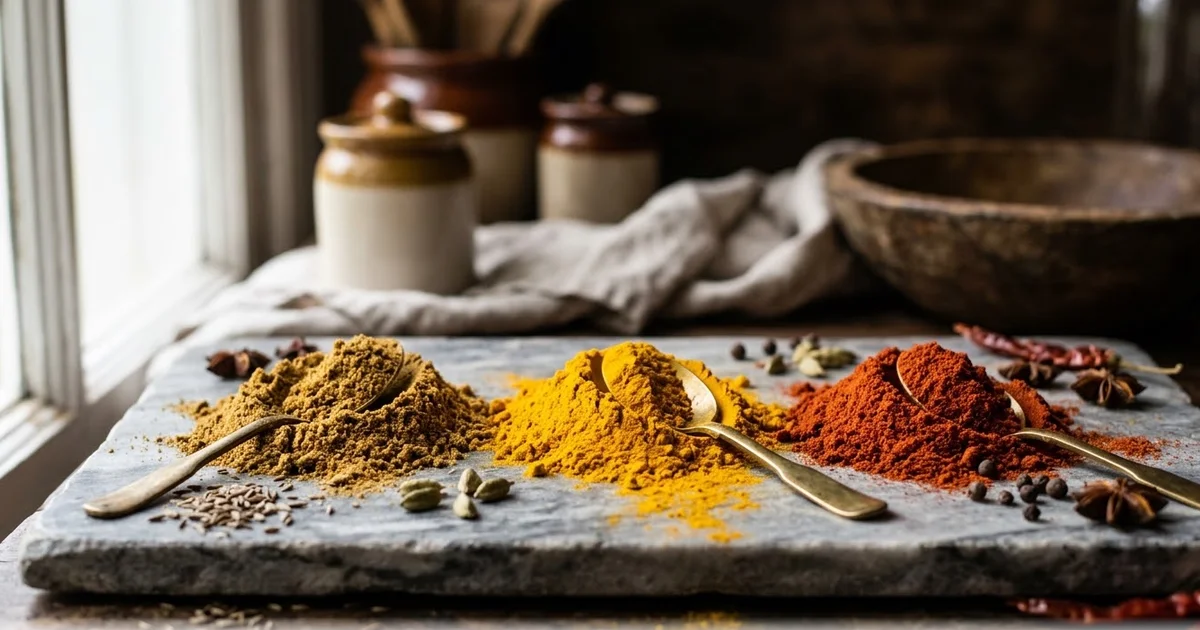
- Ras el hanout: a complex North African blend (up to fifteen to twenty spices depending on the composition), used for tagines, couscous, and slow-cooked dishes. Its aromatic complexity makes it particularly sensitive to batch variations.
- Colombo: a West Indian blend based on turmeric, coriander, cumin, and sometimes toasted rice, intended for slow-cooked meat, poultry, or fish dishes on Creole and exotic menus.
- Tandoori: an Indian blend, generally associated with paprika, turmeric, and ginger, used for marinating poultry and fish before high-temperature cooking.
- Curry: a generic term covering highly variable compositions (mild, medium, strong, madras), central to Asian and fusion cuisines.
- Garam masala: a warming Indian blend, typically added at the end of cooking to preserve its most volatile aromatic notes.
- Cajun: a spicy, smoked American blend, used for grilling, poultry, and street-food-style dishes.
- Couscous spices: a milder blend than ras el hanout, designed for the traditional preparation of semolina and broth.
For a professional kitchen, choosing a blend goes beyond the generic name: two “ras el hanout” blends can differ significantly in intensity and balance depending on their formulation. This is precisely the challenge addressed in the next section.
Recipe consistency from one batch to another: the core challenge in CHR
In collective or commercial foodservice, a dish must taste the same whether a customer orders it on a Monday or a Friday, in January or July. Yet spice blends are living compositions, made from agricultural raw materials whose aromatic intensity naturally varies from one harvest to another. This is where the difference lies between an occasional supplier and a bulk supply partner.
| Variation factor | Impact in the kitchen | Purchasing vigilance point |
|---|---|---|
| Origin of raw materials | Different intensity and aromatic notes from one origin to another | Check sourcing consistency on the product sheet |
| Blend formulation (recipe) | The same commercial name may cover different internal dosages | Prioritize a supplier that does not modify its recipe without notice |
| Freshness and grinding date | Gradual loss of volatile aromas, particularly in garam masala and curry | Monitor the best-before date and batch packaging date |
| Blend granulometry | Visual dosage disrupted if texture changes (finer or coarser) | Request stable granulometry between orders |
| Batch number | Traceability in case of customer complaint or HACCP control | Require systematic batch number labeling |
Consistency is not a marketing detail: it determines the reproducibility of technical sheets, customer satisfaction, and a menu’s credibility. A blend that changes aromatic profile from one restock to another forces the kitchen team to constantly readjust dosages, leading to time loss, waste, and a risk of non-compliance between declared technical sheets and the dish actually served.
At Palimex, we regularly receive feedback from chefs who notice that a ras el hanout or colombo “no longer tastes the same” after restocking. In the vast majority of cases, it is not the blend that has changed, but the supplier who modified its formulation without notice, or mixed raw materials from different origins based on market availability. Our field recommendation: always keep a reference sample of the current batch and compare it visually and olfactorily with the new batch before integrating it into production, especially for complex blends like ras el hanout or garam masala.
Dosage and incorporation order of spice blends in cooking
Proper dosage depends as much on quantity as on the timing of incorporation in the cooking process. Compound blends contain spices with different thermal behaviors: some release their aromas with heat, while others degrade if heated too long.
- Blends to toast at the start of cooking (curry, colombo, couscous spices): briefly sauté in fat before adding other ingredients to develop fat-soluble aromas.
- Marinade blends (tandoori, cajun): incorporate several hours before cooking to allow penetration into meat or fish fibers.
- Blends to add at the end of cooking (garam masala): added in the last few minutes to preserve the most volatile aromatic compounds, often altered by prolonged cooking.
- Blends for progressive dosage (ras el hanout): adjust during cooking in small increments, tasting regularly due to natural intensity variability between batches.
For a professional kitchen, formalizing these points in an internal technical sheet greatly reduces dependence on an individual cook’s memory and ensures dish reproducibility in case of staff rotation. It is recommended to weigh blends rather than measure by volume, as density may vary slightly from one batch to another depending on granulometry.
- Always dose by weight (grams per liter of preparation) rather than by spoon.
- Taste during cooking before final seasoning, especially for strong blends like cajun or tandoori.
- Note the validated dosage on the technical sheet, including the supplier reference and, if possible, the batch number used during validation.
Storage of spice blends and aroma loss in professional kitchens
A spice blend is more fragile than a single spice, as the aromatic compounds of its different ingredients do not degrade at the same rate. Poor storage in professional kitchens, where large volumes are stocked and rotations can be slow, accelerates aroma loss well before the best-before date.
The main degradation factors to monitor in the kitchen:
- Light: accelerates oxidation of pigments and essential oils, particularly in turmeric present in colombo, curry, and tandoori.
- Moisture: promotes blend compaction and mold growth if the container is not airtight.
- Heat: frequently present in professional kitchens near cooking areas, to be absolutely avoided for blend storage.
- Repeated container openings: each opening renews the air in contact with the product and accelerates aroma volatilization.
Operationally, best practice involves repackaging large formats into airtight daily-use containers, protected from light and heat, and enforcing strict first-in, first-out (FIFO) rotation between batches. This logistical discipline aligns with the general stock management principles detailed in our article on bulk spice purchasing for professionals.
Formats and packaging of spice blends for professionals
Packaging format choice directly depends on the establishment’s consumption rate and storage capacity. Palimex offers its compound blends in professional packaging, with delivery by pallet or free delivery depending on ordered volumes, in line with our logistics organization dedicated to professionals with SIRET.
| Format | Suitable establishment profile | Logistical advantage |
|---|---|---|
| 5 to 10 kg carton | Independent restaurants, medium-sized caterers | Regular rotation, limited storage, lower risk of aroma loss over time |
| 10 to 25 kg bulk bag | Central kitchens, collective foodservice, CHR chains | Optimized unit cost, suited to large production volumes |
| Full multi-reference pallet | Foodservice groups, secondary wholesalers, purchasing centers | Free delivery, logistical pooling across multiple blends |
The most economical format is not always the most relevant: poorly managed large packaging in the kitchen (exposure to air, heat) can generate more qualitative losses than an intermediate format renewed more frequently. It is recommended to align the order format with the blend’s actual usage frequency in the menu’s recipes.
Choosing a bulk spice blend supplier: professional criteria
Beyond price, several criteria determine the reliability of a compound blend supplier for a professional kitchen. These criteria align with general bulk spice purchasing requirements but apply specifically to blend recipe stability.
- Traceability by batch number and documentation adapted to HACCP control.
- Stability of blend formulation over time, without silent recipe modifications.
- Transparency on exact composition (list of spices and indicative proportions).
- Ability to supply regular volumes, even during raw material shortages.
- Packaging adapted to professional use (5 kg and above formats, pallet/free delivery).
To explore general bulk spice purchasing criteria—sourcing, calibre, unit packaging—refer to our dedicated article Bulk spices: the complete guide for professionals. You can also consult our full range on the category page Bulk spices and blends, as well as our resources on dry product storage in professional kitchens and FIFO stock rotation management for foodservice.
For kitchens wishing to explore the botanical classification and origin of spices in these blends, the FAO reference site offers general resources on global spice agricultural supply chains.
Summary: securing spice blend supply in professional kitchens
Spice blends—ras el hanout, colombo, tandoori, curry, garam masala, cajun, couscous spices—are both culinary signature tools and supply products. Their proper management in professional kitchens relies on three pillars: recipe consistency from one batch to another, controlled dosage adapted to incorporation order in cooking, and rigorous storage limiting aroma loss between receipt and use. Packaging format choice should align with the establishment’s actual consumption rate, and supplier choice should prioritize batch traceability and formulation stability over time. These principles complement the general purchasing recommendations detailed in our article Bulk spices for professionals, dedicated to simple and basic spice purchasing.
Further reading
Frequently asked questions
Everything you need to know about this topic.
A question?
Get in touch directly.

Marketing & Communications Manager — Palimex / Meyva
As Marketing & Communications Manager at Palimex / Meyva, Aude Moyne leads the company's communications and digital marketing strategy: editorial content, email campaigns and the promotion of its product ranges. Her experience at Palimex, a specialist in dried fruit, nuts, olives and spices for professionals, has given her in-depth knowledge of the products, their origins and uses, and the expectations of food-industry professionals. The blog articles are written or supervised by her, in collaboration with Palimex's sales and product teams whenever a topic calls for specific expertise.
Our advice related to Grocery & Recipes
 Grocery & Recipes
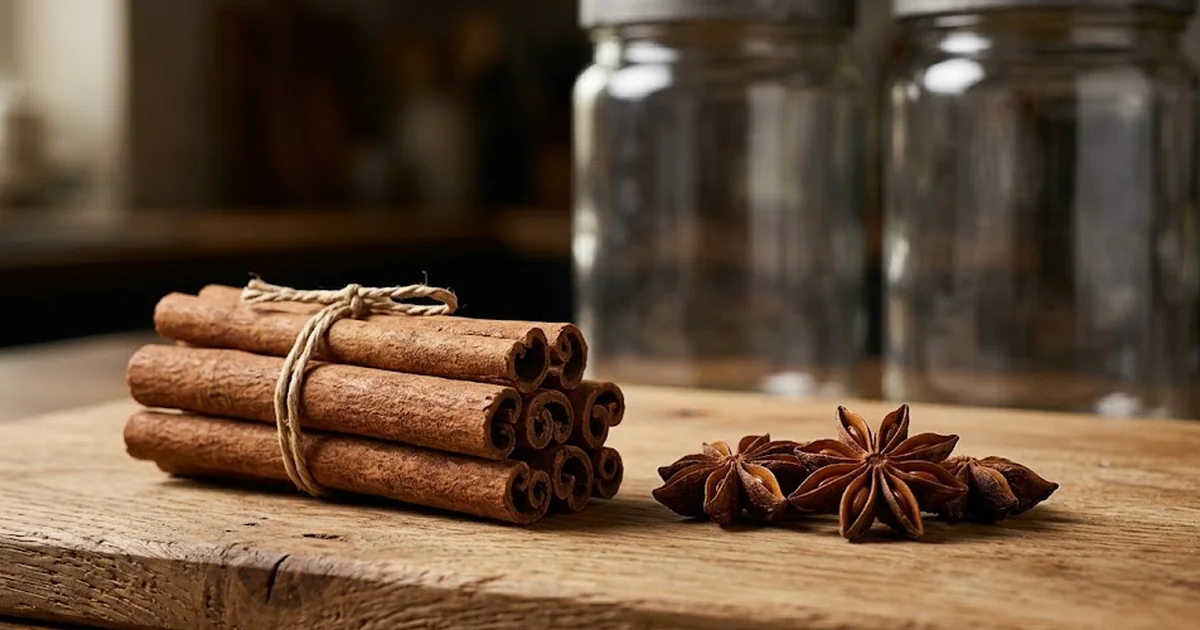
Épices de l'hiver : pain d'épices, vin chaud et pâtisserie de Noël, dosage et achat
Guide B2B des épices d'hiver pour boulangers, pâtissiers et CHR : dosages au kilo et au litre, mélanges vin chaud et pain d'épices, approvisionnement en gros.
 Grocery & Recipes
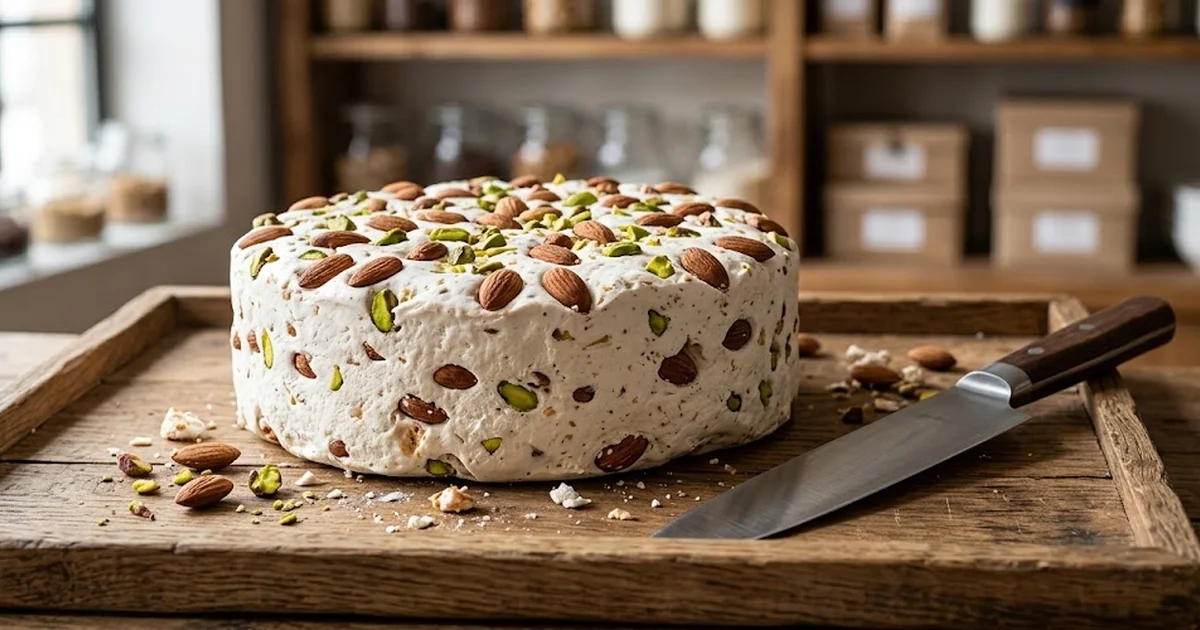
Nougat en meule : découpe à la coupe, conservation et vente au poids
Guide B2B pour épiceries et confiseries : réussir la découpe à la coupe du nougat en meule, limiter les pertes, maîtriser le stockage et l'affichage au poids.
 Grocery & Recipes
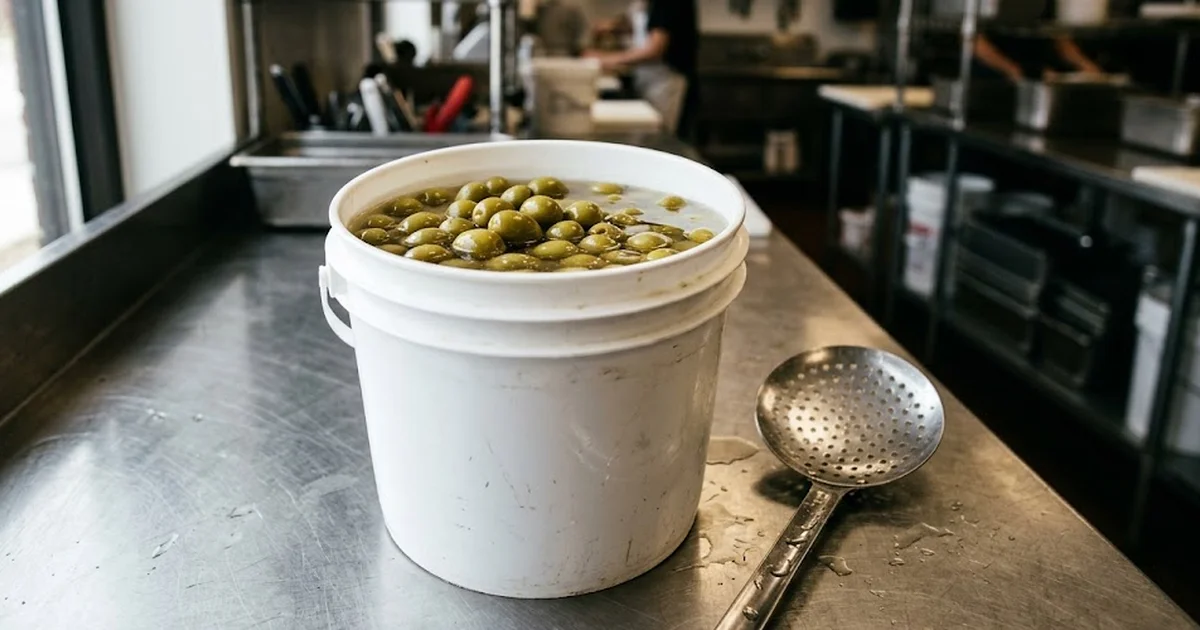
Seau d'olives entamé : durée de vie, saumure et gestion du reste
Comment conserver un seau d'olives entamé ? Rôle de la saumure, température, règles d'hygiène et gestion des tapenades : le guide professionnel Palimex.