
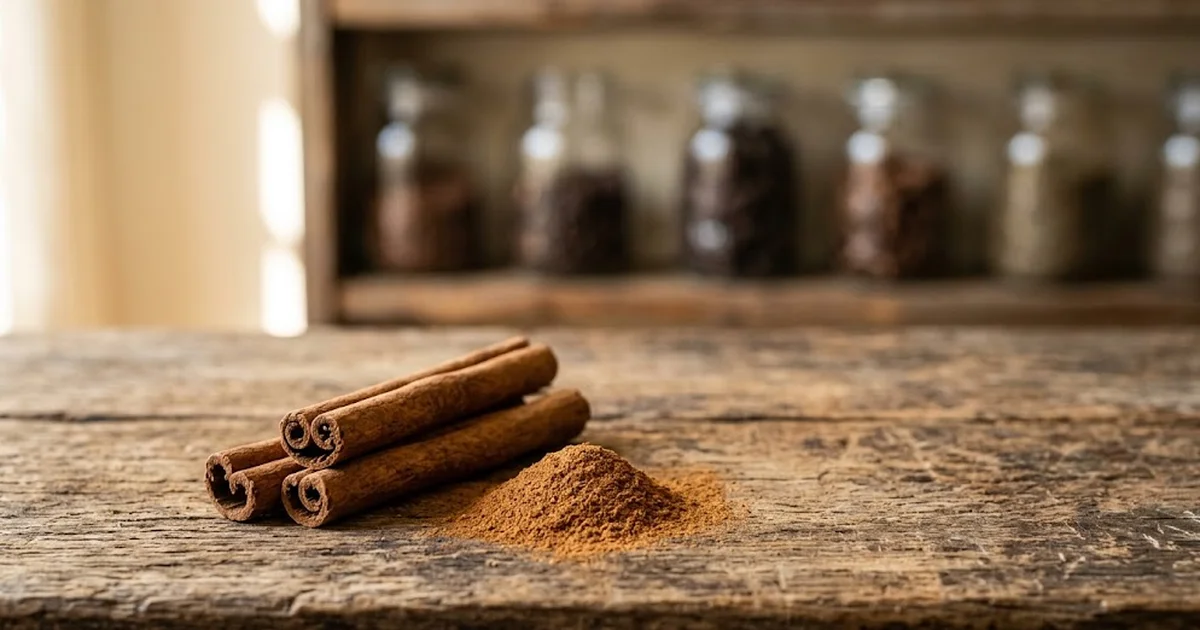
Épices entières ou moulues : ce que la mouture coûte en arôme
Why ground spice loses its aroma faster than whole: impact on stock rotation, purchasing format, and storage in foodservice kitchens.
In professional kitchens, the choice between a whole spice and a ground spice is not just about culinary technique: it directly determines the product’s aromatic shelf life, ordering frequency, and waste levels in the kitchen. A restaurant owner or caterer buying in bulk must understand this mechanism to balance immediate convenience with long-term aromatic yield.
Why ground spice loses its aroma faster than whole spice
A spice’s aroma comes from volatile compounds—essential oils, terpenes, aldehydes depending on the species—contained within the plant cells of the seed, peel, or fruit. As long as the structure remains intact, these compounds are protected from air and light. Grinding changes everything: it multiplies the surface area exposed to oxygen and instantly releases a large portion of the volatile compounds, which then begin to evaporate and oxidise.
- Increased contact surface: Grinding a seed into powder can multiply the surface area exposed to ambient air by several dozen times.
- Immediate release of essential oils: The scent detected when opening a freshly ground powder bag is precisely a sign that the compounds are already escaping.
- Accelerated oxidation: Aromatic molecules react with oxygen and degrade into less fragrant, sometimes more bitter or bland compounds.
- Increased sensitivity to light and heat: Powder heats up and absorbs light more easily than a whole seed, further accelerating the loss.
In practice, a whole spice stored under good conditions can retain a satisfactory aromatic profile for several years, whereas the same ground spice loses a significant portion of its intensity within a few months. This is not a question of product quality at purchase but of the physico-chemical kinetics inherent to grinding.
What aroma loss means in professional kitchens
For a chef or procurement manager, the direct consequence is that dosages must be reassessed over time when working with older powder stock. A recipe calibrated with freshly ground powder may become bland six months later with the same weight, requiring over-dosing—thus depleting the remaining stock faster or accepting a result below the expected standard in the dining room.
| Criteria | Whole spice | Ground spice |
|---|---|---|
| Optimal aromatic shelf life | Long, several years under good conditions | Short to medium, typically a few months |
| Aroma loss rate | Slow | Rapid from the moment the container is opened |
| Typical culinary use | Infusion, broth, long marinade, roasting before grinding | Quick seasoning, breading, dry mix, sprinkling |
| Recommended stock rotation frequency | Moderate rotation, larger volume purchases possible | Fast rotation, more frequent and smaller purchases |
| Sensitivity to prolonged storage | Low | High |
This analysis should guide the decision between the two formats based on production volume and the frequency of use for each spice in the menu.
Stock rotation: adapting whole vs. ground purchasing formats in foodservice
Stock rotation is the primary lever to limit aroma loss linked to grinding. An establishment that consumes a ground spice in large quantities and quickly has different needs than one that uses it occasionally for a signature recipe.
- Identify high-turnover spices (pepper, paprika, ground cumin) and those used occasionally (saffron, cardamom, rare berries).
- For high-turnover spices, prioritise purchasing ground spices in packaging adapted to actual consumption over a few weeks rather than an overly large stock.
- For spices used occasionally or in preparations where aromatic intensity is critical, prioritise purchasing whole spices and grinding them in-house just before use.
- Implement batch tracking upon stock entry to avoid mixing a new batch of ground spice with older remaining stock.
- Periodically reassess recipe dosages based on the age of the opened powder batch.
This rotation logic aligns with classic principles of stock management in fine dining and foodservice: it is better to restock more frequently in small quantities than to hold dormant stock that loses usability without the physical quantity decreasing.
Storage, packaging, and best-before dates: preserving aroma until the plate
Storage conditions directly influence the rate of aromatic degradation, regardless of format. Poor packaging or unsuitable storage location can cause aroma loss within weeks that careful packaging would have preserved for months.
- Opaque and airtight container: Light and ambient air are the two primary degradation factors, particularly for powders.
- Temperature-controlled storage area: Avoid proximity to ovens, hobs, or high-heat zones that accelerate the evaporation of volatile compounds.
- Systematic closure after each use: A container left open in the kitchen loses its aroma much faster than one resealed after use.
- Respect the best-before date indicated on each batch: The best-before date reflects the expected stability of the product under correct storage conditions, not a strict safety expiry date for this type of product.
- Batch traceability: Keeping batch identification until the container is empty facilitates HACCP tracking and allows quick identification of origin in case of quality issues.
At Palimex, we regularly see professional kitchens storing leftover ground spice for several months in a transparent container near the cooktop. This is the worst possible combination for aroma retention. Our field recommendation is simple: purchase ground spices in quantities close to actual consumption over four to six weeks, and reserve whole spices for items that can be stored without losing intensity.
To explore storage principles applicable to all bulk dry goods, see our dedicated article on spice storage in warehouses and professional kitchens, as well as our guide on understanding best-before dates for dry goods in B2B.
Choosing between whole and ground based on culinary use and packaging format
The purchasing format decision is not just about storage: it also depends on the nature of the preparation, available cooking time, and the aromatic requirements of the final dish. Some preparations tolerate—or even require—ground spice for even and quick flavour distribution, while others benefit significantly from whole spice infused or roasted and ground just before serving.
- Broths, stocks, and long marinades: Whole spice gradually releases its aroma without burning or dispersing too soon.
- Breading, dry marinades, and seasoning mixes: Powder ensures even distribution and consistent adhesion to the raw material.
- Long-simmered dishes: Whole spice withstands prolonged cooking better without losing all its intensity during the process.
- Finishing and plating: Freshly ground spice, processed just before service, restores an aromatic intensity close to the original product.
For larger production volumes, having a dedicated grinder in the kitchen and purchasing whole spice in professional packaging often allows for a balance between convenience and aroma preservation, with grinding done as needed rather than all at once at purchase.
All these references, both whole and ground, are available in our spices category, in professional formats from retail bags sold by the case to bulk sacks, deliverable on pallets or with free delivery depending on order volumes.
Summary: balancing convenience and aromatic yield with full awareness
Grinding is not just a preparation step: it is a physico-chemical transformation that triggers a race against oxidation and evaporation of aromatic compounds. For a foodservice establishment or fine grocery, this translates into concrete choices regarding purchasing format, ordering frequency, and storage conditions.
- Prioritise whole spice for low-turnover uses or preparations requiring high aromatic intensity.
- Reserve ground spice for high-turnover uses, adjusting the purchased volume to actual consumption over a few weeks.
- Carefully manage packaging, storage location, and batch tracking, regardless of the format chosen.
A well-informed decision between whole and ground spice is not just about the purchase price per kilogram but about the actual aromatic yield achieved until the final dish served to the customer.
Further reading
Frequently asked questions
Everything you need to know about this topic.
A question?
Get in touch directly.

Marketing & Communications Manager — Palimex / Meyva
As Marketing & Communications Manager at Palimex / Meyva, Aude Moyne leads the company's communications and digital marketing strategy: editorial content, email campaigns and the promotion of its product ranges. Her experience at Palimex, a specialist in dried fruit, nuts, olives and spices for professionals, has given her in-depth knowledge of the products, their origins and uses, and the expectations of food-industry professionals. The blog articles are written or supervised by her, in collaboration with Palimex's sales and product teams whenever a topic calls for specific expertise.
Our advice related to Grocery & Recipes
 Grocery & Recipes
Épices de l'hiver : pain d'épices, vin chaud et pâtisserie de Noël, dosage et achat
Guide B2B des épices d'hiver pour boulangers, pâtissiers et CHR : dosages au kilo et au litre, mélanges vin chaud et pain d'épices, approvisionnement en gros.
 Grocery & Recipes
Nougat en meule : découpe à la coupe, conservation et vente au poids
Guide B2B pour épiceries et confiseries : réussir la découpe à la coupe du nougat en meule, limiter les pertes, maîtriser le stockage et l'affichage au poids.
 Grocery & Recipes
Seau d'olives entamé : durée de vie, saumure et gestion du reste
Comment conserver un seau d'olives entamé ? Rôle de la saumure, température, règles d'hygiène et gestion des tapenades : le guide professionnel Palimex.