

Dry fruit trends for end-of-year celebrations
Discover the trends in dried fruits for the holidays: essential, gourmet, and nutritious products to enhance your end-of-year festivities!
Key points for professionals to remember
- Transparent sourcing: require batch-by-batch analyses from the supplier
- Stable storage: 12 to 18 °C with 50 to 60 % humidity
- Strict FIFO: labeling of 3 dates (entry, production, best-before)
- Repackaging: vacuum or nitrogen packaging depending on volume
- Quality control: hygrometer + organoleptic tests on each delivery
The world cuisine stands out with its rich and flavorful recipes. Each bite is an invitation to explore unique traditions and taste the essence of diverse cultures. The world cuisines and flavors are so unique and invite themselves to our tables, offering a sensational experience that goes beyond a simple meal.
According to FranceAgriMer — observatoire des marchés agricoles, the quality and traceability of professional dried fruits rely on a controlled logistics chain and storage standards consistent with the international norms of the Codex Alimentarius.
Flavor discovery: embark on a culinary journey around the world!
International cuisine invites us on a culinary journey through world flavors. Between iconic spices and typical ingredients, each region has unique gastronomic treasures that delight our taste buds. The diversity of world flavors allows us to explore distant horizons while staying at home.
Palimex, your trusted partner for exceptional international products
Do you aspire to enhance your creations by exploring the richness of world cuisines? Palimex, your trusted partner, offers a selection of authentic and premium products, perfect for awakening your customers' taste buds. As a specialized importer and wholesaler, we provide exceptional ingredients such as flavorful dehydrated fruits and rare spices with captivating aromas.
Trust Palimex to enrich your dishes with exotic flavors and offer your guests an unforgettable culinary experience. Your world spices wholesaler offers a wide range of spices and other rare products to transform your recipes into unforgettable taste experiences. Our exotic spices and flavors give you the opportunity to create cuisine that takes you on a journey. Pink berries, black peppercorns, Espelette chili: each spice is carefully selected for its quality, freshness, and incomparable taste.
Explore the online store of your world products grocery and discover a rigorous selection of delicacies and nutrients that span continents. Dates from Algeria and Tunisia, figs, prunes, cashew nuts, raisins, almonds, apricots, pistachios, pecan nuts, and Golden Choice raisins from South Africa: our range of dehydrated fruits meets all your creative desires.
Travel through international flavors with Palimex
Transform your kitchen into a culinary stopover with sunny accents thanks to our carefully selected products: semolina with varied textures, crushed wheat for an authentic Algerian chorba frik, fresh mint from Morocco, refined couscous, captivating spices, delicate angel hair pasta, and much more. Also discover our flavored teas, savory broths, gourmet syrups, traditional charcuterie, golden honeys, and pure cow ghee.
Let these ingredients, true treasures of Moroccan, Syrian, and Lebanese cuisine, infuse warmth and authenticity into your dishes. Take your taste buds on a journey and add a touch of exoticism to your table!
Bring Moroccan excellence to your table with our exceptional products!
Discover the must-have Safaa olives from Morocco, renowned for their unmatched taste and exceptional quality. Harvested from the best Moroccan terroirs, these olives embody the soul of authentic Moroccan flavors. Enhance your dishes with their richness and unique character, and let each bite transport you to the heart of Moroccan tradition. With our products, exoticism and gourmet delights are invited into your kitchen!
Add a Mediterranean touch to your recipes with our treasures of Greece. Our online store is filled with nuts, dried figs, and other exceptional dried fruits. They add a unique authenticity and natural sweetness to every bite. These products bring an authentic taste to your recipes that evokes the warmth and generosity of the Mediterranean.
Summary table of B2B standards
| Criterion | B2B Standard | Best Practice |
|---|---|---|
| Sourcing | Traced origins (Morocco, Tunisia, Iran, California) | Samples + batch-by-batch analyses |
| Quality | Moisture < 6 %, aflatoxin below EU threshold | Hygrometer + ISO 712 |
| Storage | 12-18 °C, 50-60 % ambient humidity | Vacuum or nitrogen for fatty products |
| Packaging | Multilayer bags, INCO labeling | Allergens + supplier traceability |
| Logistics | Strict FIFO, 15-day inventory for sensitive items | 3 readable dates per container |
Practical advice for professionals
For wholesalers, greengrocers, and restaurateurs, the challenge lies in daily routines — rigorous supplier selection, quality control on each delivery, and documented traceability. Those who structure these processes achieve product consistency that builds customer loyalty.
Essential B2B quality criteria for dried fruits
Three dimensions structure the quality of a professional dried fruit: origin (terroir, producer, harvesting method), post-harvest (drying, calibration, storage), and logistics (transport, storage, packaging). Mastering these three areas simultaneously sets serious players apart in the market.
Optimizing your margin on B2B dried fruits
The margin on professional dried fruits is not built solely on purchasing: it is maintained by reducing storage losses (3-5 % of annual stock recoverable), accelerating product rotation, and premium sourcing that justifies higher selling prices to demanding customers.
To go further
Additional resources on our blog:
- breakfast trends
- diversifying the B2B offering
- choosing a wholesaler
- storage guide
B2B context and sector best practices
In a B2B market where quality requirements continue to rise — traceability, food safety, end-customer expectations — mastering these fundamentals provides a tangible and measurable competitive advantage. Players who secure their supply chain upstream protect their net margin downstream, and this often makes the difference between a wholesaler who maintains their order book over 5 years and one who sees customers leave at the first cheaper competitor. The 2024-2026 period saw an 18 % increase in DDPP inspections in the dried fruit sector in France, a sign that regulation is tightening alongside consumer expectations. Penalties for non-compliance can quickly amount to several months of gross margin, not to mention the reputational impact.
For a wholesaler, greengrocer, or restaurateur, translating these standards into weekly operational routines makes the difference between a reliable supplier and a fragile player. The best practices described in this article apply regardless of your volume — from 50 kg per week to several pallets per day — with proportional adjustments in equipment and investment, but with the same methodological rigor. Quality does not scale down as volume increases; on the contrary, it becomes an even more strategic issue. This is precisely the philosophy that distinguishes the leading players in the professional dried fruit market in France.
On the commercial side, B2B customer satisfaction largely depends on consistency — a dried fruit must have the same taste, texture, and color from one batch to another. It is precisely this consistency that is compromised by common storage and management errors. Investing in staff training in reception and storage areas generally yields more than new equipment, at a much lower cost. Bakers, pastry chefs, caterers, and restaurateurs who are your end customers do not buy a price — they buy a guarantee of consistency, and they are willing to pay 10 to 15 % more for it.
The systemic approach remains the best: auditing your warehouse twice a year, measuring your losses as a percentage of stock, comparing these metrics to industry standards (3-4 % for a well-managed wholesaler, 1-2 % for the best players). These figures, once highlighted, immediately reveal the real levers for improvement and help prioritize investments. Many operators focus on the purchase price, while the biggest savings are hidden in reducing storage and downstream logistics losses. A quick calculation: if you buy 200 tons per year at 8 €/kg and lose 5 % in storage, that's 80,000 € thrown away each year — far more than what a 10,000 € investment in well-chosen equipment costs over 5 years.
Upstream sourcing also plays a decisive role: a supplier transparent about their delivery moisture, drying times, and aflatoxin controls saves you several weeks of commercial shelf life. Favor supply chains that agree to share their batch-by-batch analyses rather than those that settle for a generic certificate. This difference in transparency directly translates into margin over 12 months of operation. Moroccan, Tunisian, Turkish, and Iranian supply chains are currently among the most structured on these issues, provided you choose your contact carefully — a broker or a direct importer are not equal in terms of traceability information access.
On the regulatory front, DGCCRF and DDPP inspections focus on traceability chains, allergen labeling (nuts must be declared under regulation INCO 1169/2011), and packaging compliance with migration standards. Non-compliance in dried fruits is generally due to incomplete labeling rather than a product defect. An internal audit of your labeling process every six months eliminates 80 % of regulatory risk at almost no cost. Fines can go up to 1,500 € per non-compliant batch, and the media coverage of a product recall generally costs much more in lost trust than the fine itself.
Further reading
Frequently asked questions
Everything you need to know about this topic.
A question?
Get in touch directly.

Marketing & Communications Manager — Palimex / Meyva
As Marketing & Communications Manager at Palimex / Meyva, Aude Moyne leads the company's communications and digital marketing strategy: editorial content, email campaigns and the promotion of its product ranges. Her experience at Palimex, a specialist in dried fruit, nuts, olives and spices for professionals, has given her in-depth knowledge of the products, their origins and uses, and the expectations of food-industry professionals. The blog articles are written or supervised by her, in collaboration with Palimex's sales and product teams whenever a topic calls for specific expertise.
Our advice related to Pro tips
 Pro tips
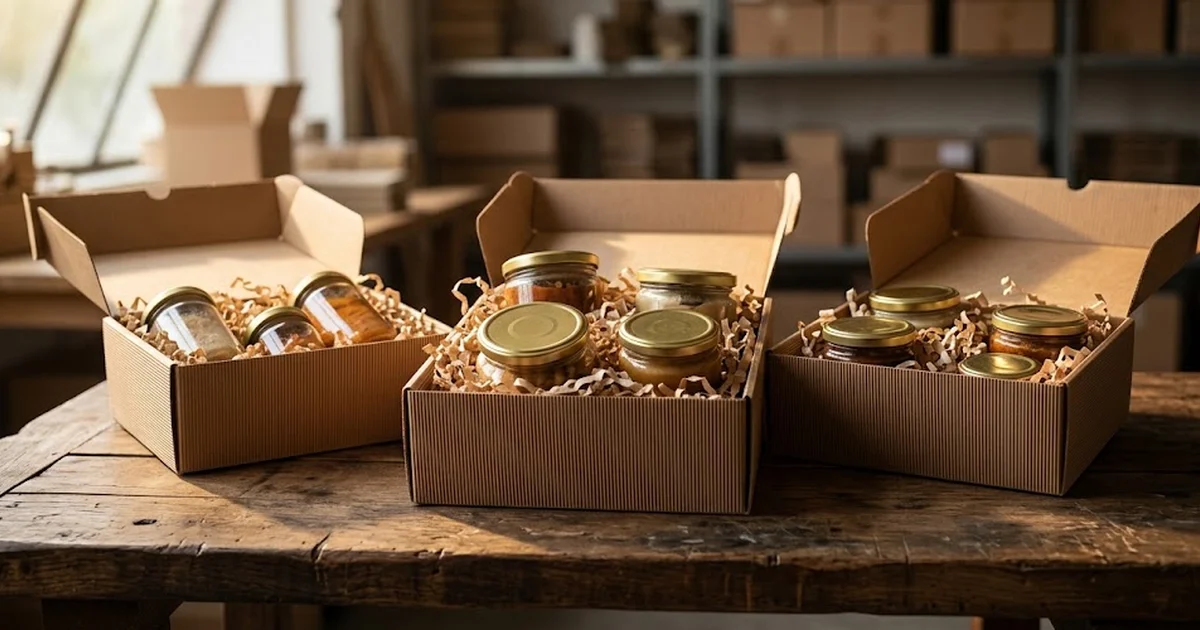
Paniers garnis de fin d'année pour les entreprises : les composer en épicerie fine
Composez des paniers garnis de fin d'année rentables pour entreprises et CSE : sélection de produits, formats stables, prix de revient et facturation B2B.
 Pro tips
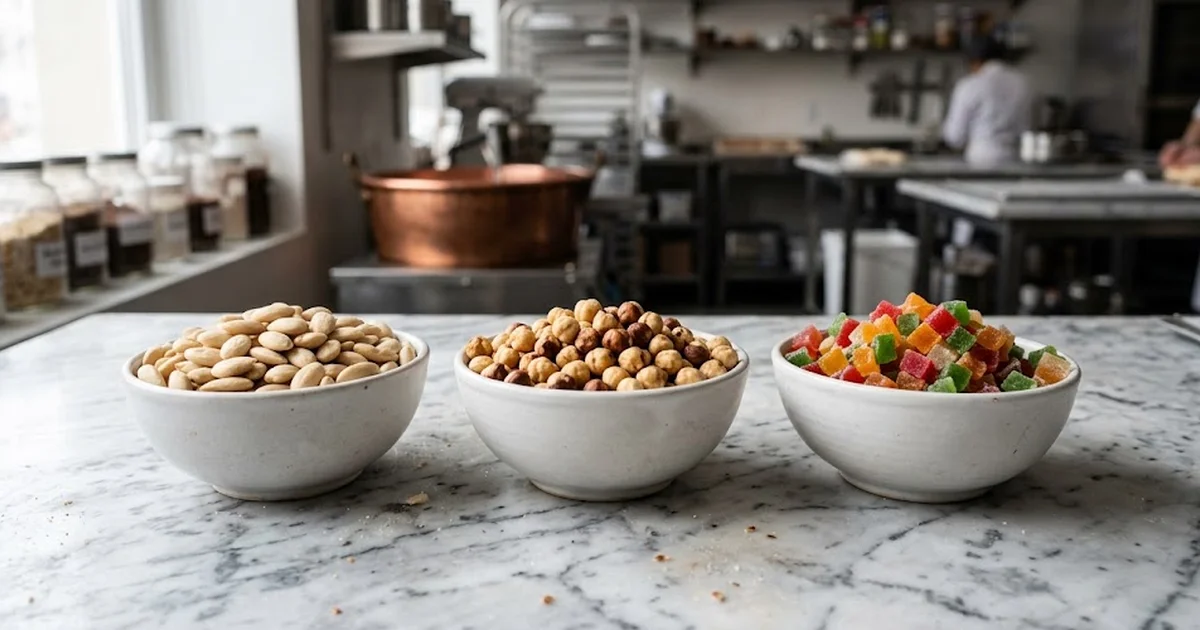
Commandes de fin d'année : le calendrier d'achat d'un pâtissier-chocolatier, d'octobre à décembre
Commandes de fin d'année : calendrier d'achat d'octobre à décembre pour pâtissier-chocolatier. Cadencez fruits secs, confits et marrons sans rupture.
 Pro tips
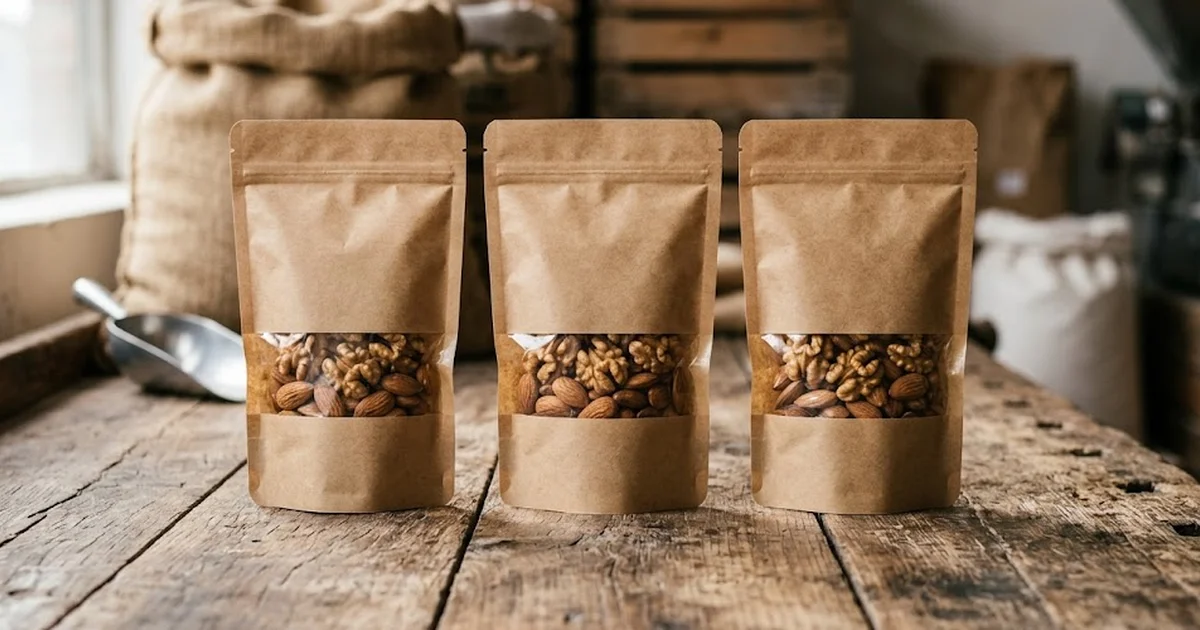
Triman, REP et éco-contribution : l'emballage d'un préemballé alimentaire
Reconditionnement de denrées et vente au consommateur : obligations REP, identifiant IDU, signalétique Triman et Info-tri. Le guide légal pour les professionnels.