Pistachio Cream: the essential ingredient for gourmet creations
Professional pistachio cream: discover its uses in pastry, CHR, and catering. Recipe, selection tips, and benefits for professionals.
What is professional pistachio cream?
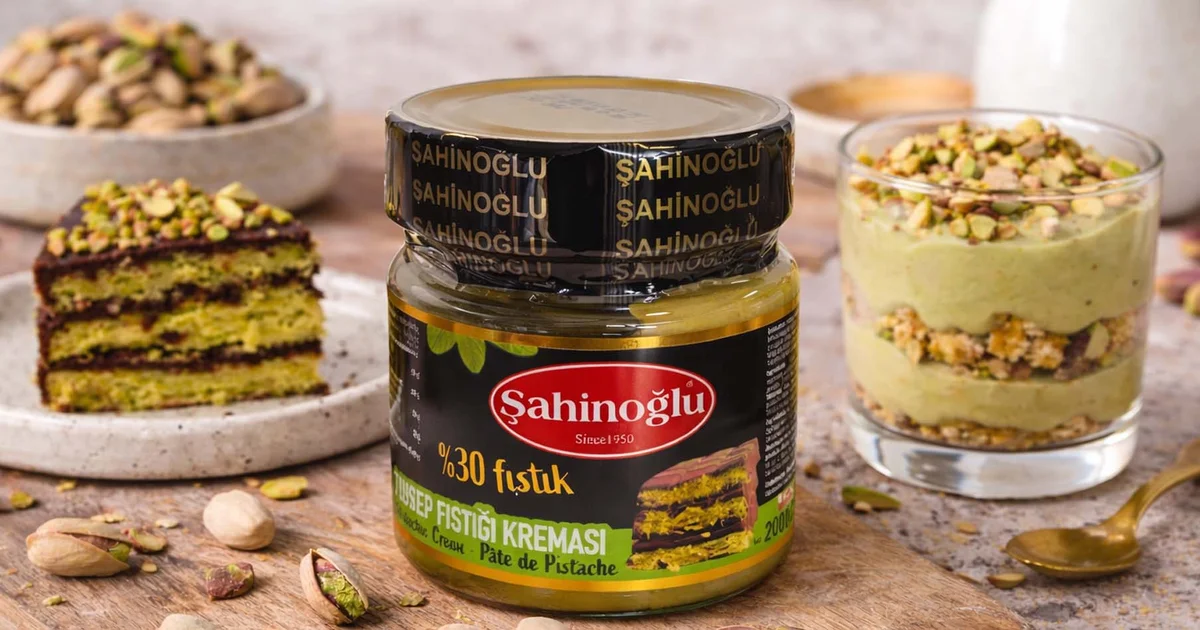
Pistachio cream is a smooth preparation made from finely ground pistachios, typically blended with sugar syrup and sometimes enriched with vegetable oil to achieve a smooth, spreadable texture. Unlike pure pistachio pastes used for concentrated flavoring, pistachio cream offers a balance between aromatic intensity and ease of use, making it a versatile ingredient in pastry, catering, and specialized food retail.
For professionals — pastry chefs, restaurateurs, ice cream makers, and fine grocers — the quality of the raw material is decisive. Professional pistachio cream stands out based on several criteria:
- A high percentage of pistachios (minimum 40 to 60% for a quality product), ensuring a naturally green color and authentic taste
- No artificial colorants: the green hue must come exclusively from the fruit, not from additives E102 or E133
- A homogeneous and stable texture, suitable for pastry incorporation without phase separation
- Verifiable traceability of pistachio origin (Sicily, Iran, Turkey, California), with each terroir offering a distinct aromatic profile
- Professional packaging (buckets of 1 kg, 3 kg, or 5 kg) adapted to artisanal and semi-industrial production volumes
« The Bronte pistachio, grown on the volcanic soils of Mount Etna, develops a concentration of chlorophyll and aromatic compounds that give it this intense emerald color and unique taste, recognized by the DOP designation since 2009. »
— Consorzio di Tutela del Pistacchio Verde di Bronte DOP, specification booklet for the designation
This protected designation of origin illustrates the importance of sourcing for demanding professionals. Choosing a pistachio cream means first choosing a pistachio — and this decision directly influences the quality perceived by the end customer.
Uses of pistachio cream in pastry and bakery
In professional pastry, pistachio cream has established itself as a differentiating ingredient. It allows the creation of high value-added products that stand out in a market where the demand for authentic flavors and premium quality continues to grow. Here are the main applications that artisan pastry chefs and bakers use daily.
Fillings and stuffings
Pistachio cream is an exceptional filling for high-end viennoiseries. Incorporated into croissants, puff pastries, or turnovers, it provides a smoothness and flavor that builds customer loyalty. Its high melting point makes it particularly suitable for oven baking: it does not liquefy and retains its creamy texture after high-temperature exposure.
Entremets and travel cakes
In modern entremets, pistachio cream is used as a creamy insert, as a layer in multi-texture assemblies, or as flavored whipped ganache. For travel cakes — financiers, cakes, madeleines — it is incorporated directly into the batter and provides remarkable softness as well as an extended shelf life thanks to the fat content of the pistachio.
Macarons and confectionery
The pistachio macaron remains one of the most requested flavors in shops. Pistachio cream, used as ganache between the two shells, offers a superior result to artificial flavors in both taste and color. It is also used in making truffles, pralines, and revisited fruit pastes.
- Filled croissants and viennoiseries: 20 to 30 g of cream per piece, piped before shaping
- Entremets: creamy insert or pistachio mousse (30% cream / 70% whipped cream ratio)
- Macarons: pistachio ganache (pistachio cream + white chocolate + liquid cream)
- Financiers: partial substitution of almond powder with pistachio cream (15 to 20%)
- Cakes and madeleines: direct incorporation into the batter (8 to 12% of total weight)
- Decoration and finishing: coating, piping bag, visual touch on tarts and éclairs
The versatility of this ingredient makes it a cost-effective investment for any pastry kitchen looking to enrich its menu without multiplying storage references. A single product covers about ten distinct applications.
Pistachio cream in catering and CHR: applications and margins
Beyond pure pastry, pistachio cream has established itself in the CHR sector (Cafés, Hotels, Restaurants) as a high-perceived-value ingredient. Its natural color, immediately recognizable taste, and premium positioning make it an asset for dessert menus, as well as for increasingly popular sweet-savory applications.
Dessert menus and ice creams
In catering, pistachio cream allows for the creation of spectacular plated desserts with minimal technical effort. A simple drizzle of pistachio cream on a plate transforms a classic dessert into a gourmet creation. Artisan ice cream makers use it as a flavoring base for their sorbets and ice creams, achieving a result incomparably superior to industrial bases.
Sweet-savory applications
Innovative chefs incorporate pistachio cream into savory preparations: pistachio crusts on lamb squares, sauces for white fish, creamy pistachio risottos. This trend, driven by Mediterranean and Middle Eastern cuisine, opens new culinary territories for establishments seeking to differentiate themselves.
| CHR Application | Quantity per portion | Estimated material cost | Average selling price | Gross margin |
|---|---|---|---|---|
| Plated dessert (gourmet restaurant) | 15 to 25 g | 0.60 to 1.00 € | 12 to 16 € | 90%+ |
| Artisan pistachio ice cream scoop | 8 to 12 g per scoop | 0.35 to 0.50 € | 3.50 to 4.50 € | 85%+ |
| Filled viennoiserie (bakery-pastry) | 20 to 30 g | 0.80 to 1.20 € | 3.50 to 5.00 € | 70 to 75% |
| Pistachio latte or flavored hot drink | 10 to 15 g | 0.40 to 0.60 € | 5.50 to 7.00 € | 88%+ |
| Pistachio crust (main dish) | 20 to 35 g | 0.80 to 1.40 € | Included in a dish priced at 22-30 € | Variable |
These figures illustrate why pistachio cream is a particularly effective margin lever for professionals. The material cost remains contained while the perceived value for the customer is high — pistachio benefits from an image of a noble and rare product in the consumer's mind.
How to choose your pistachio cream: selection criteria for professionals
Faced with the multiplication of references on the market, selecting the right pistachio cream requires a rigorous approach. Not all products are equal, and quality differences directly affect the final result in the shop or kitchen. Here are the key criteria to evaluate before referencing a supplier.
Composition and pistachio percentage
The first step is to read the ingredient list. A quality professional pistachio cream contains a minimum of 40% pistachios. Entry-level products sometimes drop to 15-20%, compensating for the lack of fruit with sugar, almonds, hazelnuts, or artificial flavors. This dilution results in a dull color, bland taste, and loss of credibility with informed customers.
Origin and traceability
Each pistachio origin has a distinct sensory profile. The Bronte pistachio (Sicily) is renowned for its aromatic intensity and emerald color. Iranian pistachios offer an excellent quality-price ratio with a slightly milder taste. Turkish pistachios from Antep and Californian pistachios have intermediate profiles. The choice depends on the establishment's positioning and the budget allocated to this raw material.
Comparative evaluation grid
| Criterion | Entry-level | Mid-range | Premium / DOP |
|---|---|---|---|
| Pistachio percentage | 15 to 25% | 40 to 55% | 60 to 100% |
| Added colorants | Yes (E102, E133) | Sometimes | No |
| Traceable origin | Not specified | Country indicated | Certified terroir (DOP, IGP) |
| Indicative price per kg | 12 to 20 € | 25 to 45 € | 50 to 90 € |
| Natural color | Bright artificial green | Olive green | Deep emerald green |
| Shelf life | 12 to 18 months | 12 months | 6 to 12 months |
| Recommended use | Decoration, mass distribution | Artisan pastry, CHR | High pastry, gastronomy |
- Check the ingredient list: pistachio should be listed first
- Request a sample before referencing a new supplier — test under real production conditions
- Evaluate stability: after 48 hours in the refrigerator, the cream should not show oil separation
- Compare blindly: color and taste do not lie — organize a comparative tasting with your team
- Verify certifications: manufacturer's HACCP, organic or DOP certifications where applicable, compliance with EFSA standards on food additives
- Negotiate packaging: professional formats (3 kg, 5 kg) significantly reduce the cost per kilo
At Palimex, each pistachio cream reference undergoes rigorous selection based on these criteria. Our expertise as a wholesale pistachio supplier allows us to assess quality at the source and offer products with transparent and verifiable composition.
Professional recipe: homemade pistachio cream for artisans
For pastry chefs and restaurateurs who want full control over their production chain, making homemade pistachio cream is feasible provided you have quality pistachios and suitable equipment. Here is a proven recipe, calibrated for professional use.
Ingredients (for approximately 1 kg of cream)
- 500 g of unsalted shelled pistachios, preferably blanched (without skin) for optimal color
- 200 g of icing sugar
- 150 ml of grapeseed oil (neutral in taste, promotes smoothness)
- 100 g of cocoa butter (melted, for stability and crunch upon cooling)
- 50 ml of pistachio oil (optional, to intensify flavor)
- A pinch of fleur (natural flavor enhancer)
Manufacturing method
- Light roasting: spread the pistachios on a tray and bake at 150 °C for 8 to 10 minutes. They should release their aroma without browning. This step develops flavors and facilitates grinding.
- Initial grinding: transfer the still-warm pistachios to a professional food processor or high-power blender. Pulse for 30 seconds until a fine powder is obtained.
- Emulsion phase: continue mixing continuously. After 3 to 5 minutes, the powder begins to release its oil and turns into a paste. Gradually add the grapeseed oil.
- Adding sugar: incorporate the icing sugar in three batches, mixing between each addition. The texture should remain smooth and homogeneous.
- Finishing: add the melted cocoa butter and pistachio oil. Mix for an additional 2 minutes at maximum speed. Adjust the fleur.
- Packaging: pour immediately into sterilized airtight containers. Store in the refrigerator between 4 and 8 °C.
Shelf life: 3 to 4 weeks in the refrigerator in an airtight container. The cream can be frozen for up to 3 months without significant alteration of texture or taste.
This artisanal approach offers complete control over the composition and allows you to adapt the sweet-salty profile to your customers' preferences. It is particularly suitable for establishments that want to highlight a "homemade" approach to their clientele. For larger volumes or to ensure absolute consistency, using a ready-to-use professional pistachio cream remains the most efficient solution.
Storage, preservation, and supply management
Pistachio cream is a living product whose quality directly depends on storage conditions. Poor storage management leads to rapid oxidation, phase separation, and aromatic loss, making the product unusable in production. Professionals must integrate these parameters into their daily management.
Optimal storage conditions
- Temperature: between 4 and 15 °C depending on the type of cream (creams with a high pistachio content require colder storage)
- Light: store away from direct light, as pistachio chlorophyll is photosensitive
- Container: airtight, preferably opaque, made of inert food-grade material (stainless steel, glass, HDPE)
- Humidity: ambient, avoid humid environments that promote condensation in the container
- FIFO: strictly apply the "first in, first out" method and label each container with the opening date
Order management and cost optimization
Pistachio is a raw material subject to significant price fluctuations, linked to harvests (mainly in September-October for Mediterranean and Iranian origins). Savvy professionals anticipate their needs and order in bulk during the most favorable periods. Working with a specialized dried fruit wholesaler allows you to benefit from volume discounts and a steady supply, even during market tensions.
Pistachio cream freezes very well: maintaining a buffer stock of 2 to 4 weeks' consumption in the freezer secures your production without compromising quality. Ensure slow thawing in the refrigerator (24h) and homogenize with a whisk before use.
Market trends and opportunities for professionals
The pistachio and its derivatives market is experiencing sustained growth, driven by several converging dynamics that food professionals have every interest in understanding and anticipating.
The pistachio wave in catering and coffee shops
Since 2023, pistachio has established itself as the trending flavor in coffee shops, artisan bakeries, and urban pastry shops. The "pistachio latte," pistachio cream-filled croissant, and white chocolate-pistachio cookie have become staples of the most photographed displays on social media. This trend, far from being fleeting, is rooted in a deeper demand for authentic flavors and products perceived as premium.
Bulk and fine grocery: a growth driver
Bulk stores and fine groceries are seeing increasing demand for pistachio cream in jars, offered as a premium alternative to classic spreads. This segment targets customers concerned about product composition and willing to invest in quality ingredients. For bulk professionals, stocking a quality pistachio cream meets this expectation while generating higher margins than commodity products.
Structural growth factors
- Upmarket shift in artisan bakery-pastry: consumers are willing to pay more for products with identifiable, quality ingredients
- Influence of Mediterranean and Middle Eastern cuisine: baklava, loukoums, artisan ice creams — these specialties are popularizing pistachio with a broader audience
- Demand for naturalness: artificial colorants and flavors are increasingly rejected by informed consumers, favoring pistachio creams with a short ingredient list
- Instagram and TikTok effect: the natural green color of pistachio is highly photogenic, a major marketing asset for establishments on social media
- Diversification of uses: sweet-savory applications and hot beverages open new markets beyond pastry alone
For professionals, the opportunity window is clear: integrating pistachio cream into their offering today means responding to proven demand while positioning themselves in a high value-added segment.
Frequently asked questions
Everything you need to know about this topic.
A question?
Get in touch directly.

Our advice related to Grocery
groceryPâtissier : substituer la poudre d'amande, coûts et limites
Hazelnut, sunflower, flour: when to replace almond powder in the workshop, impact on taste, texture, shelf life, cost — and where substitution fails.
groceryTraiteur : plateau apéritif, grammage par convive et coût
Portion size per guest, salty/sweet balance, products that withstand waiting times, and cost-per-person calculation: the caterer's guide to bulk aperitif trays.
groceryGlacier : praliné et pâtes de fruits secs, rendement et texture
Praline dosage, cold stability, overrun, cost per litre: the professional guide to pure paste vs sweetened preparation for B2B ice cream makers and pastry chefs.